

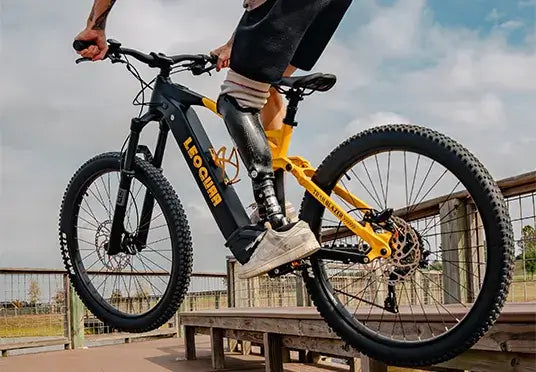


Electric MTB Guide: Lightweight Power for Downhill Riders
The Gravity Rider's Dream?
We all know the feeling. The perfect run happens when everything clicks - berms, roots, and drops flow together while the electric mtb bicycle disappears beneath you. It's pure magic. That's exactly why we ride these trails day after day. Then reality hits hard: the long, painful fire road climb or the slow push back to the top awaits us.
We've spent years riding dedicated downhill rigs and enduro bikes. Like many of you, we looked at the typical mtb electric bicycle with doubt and worry. These bikes seemed too heavy, too numb, and too much of a compromise when the trail pointed down.
But a new category has appeared, and it's forcing us to think differently. This article isn't written for casual weekend riders who just want an easy cruise. It's for us - the riders who live for gravity and speed. We're here to find out if the new breed of lightweight electric mtb bicycle can truly give us the uphill help we want without killing the downhill magic we crave.
Full-Power vs. Lightweight
Not all electric mtb bicycles are built the same way. The bike industry has split into two very different approaches, and knowing this difference matters a lot for any gravity rider. Your worry about a heavy, dead-feeling bike makes complete sense - but only if you're looking at the wrong type.
The Beast: Full-Power E-MTBs
These bikes are designed for maximum everything you can imagine. Think big batteries that hold 700Wh or more, high-torque motors putting out 85Nm or more power, and total weights that often go over 23kg (50+ lbs). Their main job is to deliver raw power and all-day riding range. They can pull you up the steepest climbs without breaking a sweat. But all that weight comes with a real cost when you're heading back down. On descents, they feel incredibly planted and stable at high speed, smashing through rough sections like a monster truck would.
However, they lack the quick handling to be easily flicked around tight corners or popped off trail features. They demand a more careful, point-and-shoot riding style that many gravity riders find limiting.
The Athlete: Lightweight E-MTBs
This category should grab every downhiller's attention right away. These bikes are built around smaller batteries (typically 360-600Wh), less powerful but more natural-feeling motors (50-60Nm), and target weights of 17-20kg (37-44 lbs). The goal isn't to remove all effort from climbing, but to boost what you're already putting in. The design approach is simple: make an electric mtb bicycle that rides and feels as close to a traditional enduro bike as possible. The result is a bike that still requires you to work on climbs but rewards you with playful, agile, and familiar handling on the way down.
| Characteristic | Lightweight E-MTB | Full-Power E-MTB |
|---|---|---|
| Typical Weight Range | 17-20 kg (37-44 lbs) | 23-26 kg (50-57 lbs) |
| Motor Feel | Natural & Supportive | Powerful Surge |
| Downhill Handling | Agile & Playful | Planted & Stable |
| Uphill Experience | Assisted Pedal | Effortless Winch |
| Best For... | Self-Shuttling Laps | All-Day Epics & Raw Power |
The Tech Behind the Thrill
The magic of lightweight electric mtb bicycle systems lies in their highly integrated and refined drive units. These aren't just smaller versions of their full-power cousins; they are built from scratch for a specific feel and performance goal. Understanding how each system works helps you pick the right trail partner for your riding style.
The Fazua Ride 60 System
This system is known for strong 60Nm of torque that hits harder than you'd expect. The 430Wh battery can often be removed, which makes charging easier or even lets you ride without the motor system entirely.
Rider Feel: The power delivery is helpful but noticeable. You feel a clear boost that builds naturally with your pedaling speed, giving a "supercharged" feeling without seeming fake or robotic. It strikes a great balance between raw power and natural bike feel.
The TQ HPR50 System
This system is famous for incredibly quiet operation and compact, frame-hidden design. The "harmonic pin ring" transmission delivers power smoothly and almost invisibly to the rider.
Rider Feel: This system gets described as "your legs on a really good day" more than any other. The 50Nm of torque flows so smoothly that it's often hard to tell where your power ends and the motor's begins. It's the top choice for purists who want help without the noise or sudden surge of a traditional motor.
The Specialized SL System
This system is known for seamless integration into the bike frame and highly customizable software. The Mission Control app allows for deep tuning of power delivery for each assistance mode you use.
Rider Feel: This system provides a very connected-to-the-trail experience that feels natural. The power feels like a direct extension of your own leg strength and input. Because Specialized develops the motor, battery, and software all in-house, the entire package feels exceptionally well-matched and refined.
These systems have been put through their paces in various in-depth eMTB shootout tests, consistently proving their ability to provide meaningful assistance without detracting from the ride.
Adapting Your Technique
Riding a lightweight electric mtb bicycle is not exactly the same as riding your regular enduro bike. While it's much closer than a full-power model would be, the small differences in weight and power delivery need small but important changes to your riding technique. Learning these changes will unlock the bike's full potential on every ride.
Cornering with a Lower CG
The motor and battery sit low and central in the frame, creating a lower center of gravity than normal. This makes the bike feel incredibly planted and stable in high-speed, sweeping corners that would normally challenge your grip.
Tip: You can lean the bike over further and with more confidence, trusting the added weight to press the tires into the dirt for amazing grip. However, be ready for slightly slower reaction time when snapping the bike between tight, back-to-back switchbacks. It needs a more deliberate handlebar input to start each turn.
Getting Airborne
Even a lightweight e-MTB weighs more than a comparable non-electric bike, and you can't fight basic physics. This extra mass changes how the bike behaves on jumps and drops in noticeable ways.
Tip: You need to use more body movement and force. A stronger, more explosive "pop" is required on takeoff to get the bike airborne properly. Loading the suspension with more force before the jump is key to success.
In the air, the bike feels incredibly stable due to the spinning wheels and added mass, but it's less responsive to mid-air corrections or stylish "whips." It rewards a smooth, committed approach rather than last-second adjustments.
Line Choice and Power
The instant torque available on an electric mtb bicycle changes how you approach trails, even on descents. A quick pedal stroke out of a corner provides an immediate surge of acceleration that your regular bike simply can't match.
Tip: Learn to use this power boost to your advantage on every ride. A half-crank out of a slow, tight corner can get you back up to speed instantly without losing momentum. On rolling descents, try keeping the bike in a low-assist mode like "Trail" or "Eco" to smooth out the terrain.
This provides just enough power to overcome the motor's subtle drag, making the bike feel more like a fast-rolling gravity machine.
Key Factors for Downhill
When looking at a lightweight electric mtb bicycle, a gravity rider's priorities are completely different from casual riders. We're not just reading spec sheets; we're looking at how those numbers translate to real performance when the trail points down and speed builds up. Here's what to focus on during your search.
Suspension and Geometry
These remain the most important factors, period. No motor can fix a bike with bad geometry or poorly performing suspension, no matter how much power it puts out. Fortunately, manufacturers finally understand this basic truth.
Suspension Travel: Look for models with at least 150mm of rear travel as your starting point. Many of the best lightweight options now push firmly into enduro territory with 160mm or even 170mm of travel, paired with robust, tunable shocks designed to handle the extra mass and higher speeds.
Geometry: The numbers should look familiar to any serious rider. A slack head tube angle (64.5 degrees or less) is absolutely required for downhill stability at speed. This should be paired with a steep seat tube angle (77 degrees or more) to keep you in an efficient position for those motor-assisted climbs.
As confirmed by recent reviews of top-tier e-MTBs, modern e-MTB geometry is no longer a compromise and directly mirrors that of the most aggressive analog enduro bikes.
Battery Life in Laps
Forget what the manufacturer claims in miles or kilometers of range. For a downhill-focused rider, electric bike battery life is measured in exactly one unit: laps. How many times can it get you back to the top of your favorite run before dying?
Real-World Data: This number varies wildly based on rider weight, trail steepness, and which assist mode you choose. However, as a realistic baseline, for a 1000-foot (approximately 300-meter) climb on a fire road, a typical rider might expect to get 4-6 laps from a 400Wh battery using a medium-assist mode. Plan your riding sessions around lap counts, not total distance covered.
Brakes and Components
The added weight of an electric mtb bicycle, even a lightweight one, places much higher demands on your components. This is especially true for the brakes, which work harder on every single descent.
Brakes: This is absolutely not the place to save money or cut corners. Four-piston brakes should be considered the absolute minimum for safety and performance. Pair them with large rotors - 200mm should be your starting point, with many experienced riders choosing 220mm on the front for maximum heat control and stopping power on long descents.
Wheels and Tires: Look for e-bike-rated wheelsets with stronger rims and higher spoke counts than normal. For tires, a durable casing (like Maxxis DoubleDown or Schwalbe Super Gravity) is essential to prevent flats and provide proper sidewall support under the increased cornering forces.

Your Ticket to More Trail
The landscape of the electric mtb bicycle has changed completely. The debate is no longer about whether an e-bike can be fun to ride, but rather which type of e-bike matches your specific riding style and goals. For the purist, the gravity enthusiast, and the rider who truly lives for the descent, the answer is crystal clear.
A modern lightweight electric mtb bicycle is not a compromise or settling for less. It is a purpose-built tool designed to eliminate the worst part of our rides - the painful grind back up - and multiply the best part exponentially. It's a way to buy more time on the trails, more laps per day, and simply more fun per ride.
The shuttle truck is you. The chairlifts are your own legs boosted by smart technology. The future of lapping your favorite descents has finally arrived, and it's lighter and more capable than ever before.
FAQ
Q: How much heavier is a lightweight electric mtb bicycle compared to a regular mountain bike?
A: A lightweight electric mtb bicycle typically weighs 17-20kg (37-44 lbs), which is about 6-10 lbs heavier than a comparable non-electric enduro bike. This extra weight is mostly from the motor and battery positioned low in the frame.
Q: How many laps can I expect to get from one battery charge?
A: Battery life depends on many factors, but for a typical 1000-foot climb, expect 4-6 laps from a 400Wh battery using medium assist mode. Steeper climbs, heavier riders, and higher assist modes will reduce this number.
Q: Do I need special components for a lightweight electric mtb bicycle?
A: Yes, especially brakes and wheels. You'll want four-piston brakes with large rotors (200mm minimum) and e-bike-rated wheels with stronger rims and more spokes to handle the extra weight and speed.
Q: How does the motor affect downhill handling compared to a regular bike?
A: The lower center of gravity from the motor and battery actually improves stability in high-speed corners. However, the bike requires more effort to get airborne and is less responsive to quick direction changes between tight turns.
Q: Which motor system is best for gravity-focused riding?
A: All three main systems (Fazua Ride 60, TQ HPR50, and Specialized SL) work well for gravity riding. The TQ system feels most natural, the Fazua provides the most power, and the Specialized offers the most customization through their app.


Leave a comment