





The 2026 Buyer’s Guide to Choosing the Best Electric Bike Trekking Features
Why do so many electric bikes that look amazing on paper turn out to be frustrating on a real multi-day trek? A quick test ride around a parking lot can never reveal the real-world realities of long-distance touring. By day three of a trip, you quickly discover the hidden headaches: a proprietary charger that's impossible to replace in a small town, heavy panniers that cause frame wobble, a battery that can't be removed for indoor charging at your hotel, or uncommon wheel specs that leave rural bike shops helpless.
That is why choosing the right touring e-bike isn't just about chasing maximum motor wattage or lab-tested range claims—it’s about choosing a complete, reliable system. The best e-bike for long-distance travel is one where the frame geometry, battery management, rack placement, replacement part availability, and transport compatibility all work seamlessly together, even when fully loaded and far from home.
Define Your Electric Bike Trekking Mission
Do not begin with a model comparison. Write down the job the bike must perform.
Define the longest day, total climbing, expected surface, overnight charging access, rider-and-luggage weight, and any train, elevator, vehicle rack, or hotel doorway the bike must pass through. A mostly paved inn-to-inn route requires a different system from a remote route with rocky connectors and limited outlets.
Use three route conditions when comparing bikes:
· Normal day: the distance and elevation you expect most often.
· Hard day: headwind, cold weather, extra climbing, or a missed charging stop.
· Fallback day: the distance you can pedal or push if electrical assistance becomes unavailable.
This framework prevents a common buying mistake: selecting for a perfect day while ignoring the conditions that determine whether the trip can continue.
Evaluate Loaded Handling for Electric Bike Trekking
A five-minute unloaded ride cannot show how a bike behaves with several days of equipment. Weight behind the rear axle can lighten the steering, increase frame movement, and make the front wheel wander on steep climbs. High-mounted luggage also increases the bike's tendency to lean during slow turns and stops.
Ask the seller for the bike's total weight limit, then subtract the rider, water, locks, tools, and every piece of luggage. Leave a margin instead of planning exactly at the limit. The tire, wheel, rack, and bag limits may be lower than the frame's headline number, so the lowest applicable rating controls the system.
During a loaded test ride, check these behaviors:
1. Start uphill without the front end wandering.
2. Ride slowly in a straight line without constant correction.
3. Brake firmly without the rear load swaying.
4. Dismount and hold the bike on a side slope.
5. Push it through a narrow doorway and turn it around.
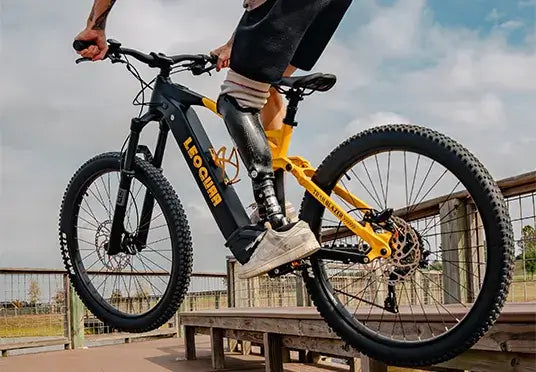
For reference, the Leoguar Trailblazer Mid-Drive EMTB lists a 275-pound total weight limit and a 55-pound bike weight including its battery. Those numbers are useful inputs, but they do not replace a test with your actual load.
Check Cargo Compatibility on a Trekking Electric Bike
Mounting points are only useful when the luggage clears the rider, wheels, suspension, cables, and drivetrain throughout their full movement. Before buying, confirm rack attachment points, heel clearance, tire clearance, and whether a bag can be removed without disturbing other equipment.
Prefer a low, symmetrical load. Dense items belong close to the bike's centerline and below lighter items. Do not assume that any rack or trailer is compatible merely because it can be physically attached. Confirm axle type, frame approval, rack rating, and the effect on warranty with the manufacturer.
If a route requires substantially more cargo, compare a purpose-built utility platform rather than improvising mounts. The Sprint Fat Tire Utility Ebike, for example, uses a 3-in-1 rear mount and publishes a 275-pound payload capacity. It represents a different mission from a technical trail bike and may be the more logical starting point for gear-heavy, less technical routes.
RangePlan Electric Bike Charging for Multi-Day Trekking
Claimed range is not an itinerary. A useful trekking calculation begins with the distance between dependable charging points, not the maximum figure shown on a product page.
Verify that the battery is removable and can be carried into accommodation. Record charger input voltage, connector type, charging time, and whether the manufacturer sells a replacement charger. Check the rules for batteries at every train, bus, ferry, or airline connection; large e-bike batteries are commonly restricted, and policies vary by operator.
Build a charging plan with three layers:
· Primary: a confirmed outlet at the overnight stop.
· Backup: a second location reachable with a conservative energy reserve.
· Contingency: a shorter route or low-assist exit that does not depend on finding an unverified outlet.
The Trailblazer product specifications list a removable 720Wh UL 2271-certified battery, approximately five hours of charging, and a 100–240V AC charger. Those are concrete planning inputs. Its published range still varies with assistance level and conditions, so itinerary design should use a conservative figure and retain a reserve. For a broader explanation of those variables, see the electric bike range guide.
Choose Repairable Components for Electric Bike Trekking
For multi-day travel, serviceability can matter more than an exotic feature. Ask for a parts list and manual before purchasing. You should be able to identify the tire size, tube or valve type, brake-pad pattern, chain specification, cassette, derailleur, spoke size, axle format, and charger model without disassembling the bike.
Standard, clearly documented wear parts are easier for an independent bicycle shop to source. Proprietary electrical parts are sometimes unavoidable, but the manufacturer should provide diagnostic support and replacement availability. A display that provides useful error information can shorten troubleshooting, while accessible connectors and a removable battery simplify inspection.

The Trailblazer page, for instance, identifies its Shimano Deore drivetrain, Shimano hydraulic brakes, Maxxis tires, thru-axle dimensions, battery model, charger specification, and CANbus system. That level of documentation is more valuable for trip planning than a vague claim that a bike is “touring ready.” Download the manual and check whether nearby shops can service the mechanical parts before committing to a remote itinerary.
Inspect Weather Protection Beyond a Single Rating
Weather resistance is a chain: battery enclosure, charging port, display, connectors, cable routing, frame openings, and luggage must all survive the conditions you expect. An ingress rating, where provided, applies only to the specified component and test; it does not make the entire bike waterproof.
Look for protected connector locations, secure port covers, cable strain relief, drainage paths, and a battery lock that remains usable when dirty. Ask what the manual permits for rain, washing, storage, and charging. Never charge a wet battery or connector; dry and inspect them first according to the manufacturer’s instructions.
After a wet test ride, inspect where mud collects and whether normal cleaning requires removing luggage. Trekking reliability is often determined by these small interfaces rather than by the largest component.
Assess Weather Protection for Trekking E-Bikes
Electric bike trekking includes time when nobody is riding. A 55-pound bicycle becomes a different object on stairs, in a rail station, across a washed-out trail section, or while being lifted onto a rack.
Before purchase, perform a non-riding test:
· Remove and reinstall the battery without placing it on the ground.
· Push the loaded bike up a short ramp with assistance off.
· Lift each end high enough to clear a step.
· Measure overall length, handlebar width, wheelbase, and loaded width.
· Confirm a vehicle rack's per-bike rating, wheelbase range, tire capacity, and approved bike type.
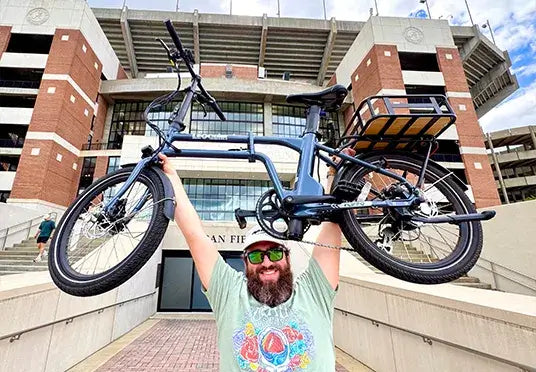
A folding model may make storage connections easier, but folded dimensions and lift weight still need verification. Review the Flippo folding ebike when compact multimodal storage is central to the route. For vehicle transfers, use the manufacturer's ratings rather than assuming a standard bicycle rack can carry an e-bike.
Check Electric Bike Trekking Routes and Local Rules
A technically capable bike may not be permitted on every trail. Access can depend on jurisdiction, land manager, motor classification, assisted speed, and local definitions. Verify the rules for every managed segment instead of applying one city's rules to an entire trip.
Also check whether the bike's class and configuration remain compliant after any changes. Do not plan around unlocking speed or altering power settings. If a route combines public roads, shared-use paths, and natural-surface trails, keep a route sheet that identifies restrictions and legal alternatives.
The Leoguar electric bike collection includes models for different riding missions. Choose the legal route first, then select the platform that fits it—not the reverse.
Electric Bike Trekking FAQ
What is the most overlooked electric bike trekking feature?
Loaded handling is frequently overlooked. A bike that feels stable when empty may steer or brake differently after luggage is mounted high or behind the rear axle. Test with representative weight before buying.
Is a removable battery important for multi-day trekking?
It is highly useful when bikes must remain in garages or outdoor storage while charging occurs indoors. Confirm that removal remains possible with luggage installed and that the lodging permits battery charging.
How much battery reserve should a trekking route include?
There is no universal percentage because climbing, temperature, surfaces, load, assistance, and wind vary. Plan from conservative real-world use and preserve enough energy to reach a verified backup stop or shorter exit.
Should repairability influence the purchase decision?
Yes. Documented, identifiable wear parts make roadside diagnosis and independent shop service easier. Check the manual, component specifications, replacement support, and nearby service options before the trip.
Can any e-bike be transported on a standard bike rack?
No. Confirm per-bike weight, total capacity, wheelbase, tire width, attachment method, and the rack maker's e-bike approval. Remove the battery only when both manufacturers permit it and secure every removable item.


Leave a comment