




Ebike Commute Range: How Far Is a Realistic Distance?
A Quick, Realistic Answer
Let's get straight to the point. For most people, a realistic ebike commute distance is between 5 and 15 miles one-way. This is the sweet spot where everything works well. This range strikes a perfect balance between manageable time, practical electric bike battery life, and rider comfort. It's a distance that stays enjoyable every single day, turning your commute from a chore into a highlight.
While longer ebike commutes are possible, they need more planning and commitment. This number is your starting point, and the rest of this guide will help you make it personal.

Distance vs. Time
To truly understand ebike commuting distance, think in terms of time instead of miles. The ebike commute time often decides whether a route works long-term. This table gives you a quick reference, assuming an average speed of 15 mph with some stops.
| One-Way Distance | Typical Time (Approx.) | Daily Practicality |
|---|---|---|
| 1–5 miles | 10–25 minutes | Excellent: Easy, minimal effort, almost always faster than a car in traffic. |
| 5–10 miles | 25–40 minutes | Ideal: The sweet spot for most daily commuters. A great way to get exercise. |
| 10–15 miles | 40–60 minutes | Manageable: A significant but achievable commitment. Requires a good bike and some fitness. |
| 15–20 miles | 60–80 minutes | Challenging: Becomes a major lifestyle choice. Requires planning for weather and battery. |
| 20+ miles | 80+ minutes | Expert-Level: Generally not recommended for a daily round trip unless you are highly dedicated. |
Time Over Miles
We've found that successful e-bike commuters focus less on raw distance and more on time and enjoyment. The real question isn't "Can my bike make it?" but "Will I want to do this every day?" Here's a better way to think about it:
The "Will I Do This Tomorrow?" Test: The best commute is one you look forward to. If a 12-mile ride leaves you energized, it's better than a 7-mile ride that leaves you stressed.
A commute that feels like a chore is one you'll abandon after a few weeks. Your route matters a lot. A shorter, 8-mile commute through busy city traffic with constant stops can be far more draining than a longer, 12-mile ride along a scenic bike path. The goal is to arrive at work feeling refreshed, not tired.
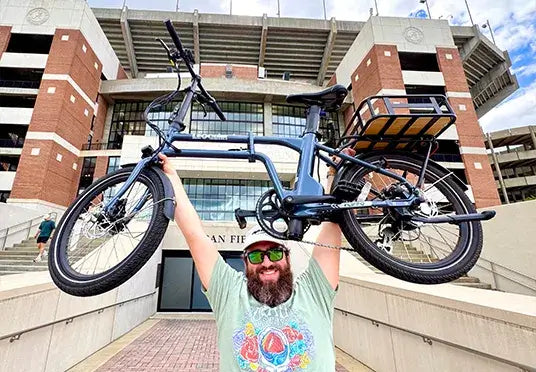
You can always buy a bigger battery, but you can't buy more time. A commute that takes over an hour each way can seriously cut into your personal time, affecting work-life balance. The weight and portability of your bike also matter more than most expect. A compact folding ebike is much easier to carry into your apartment, stash in the office, or bring on public transit—especially if your commute includes stairs or elevators.

Factors That Define Distance
That 5-to-15-mile rule is a great starting point, but it's an average. Your personal sweet spot will be defined by four key factors. These variables will determine whether you land on the lower or higher end of that range—or if you can push beyond it.
Battery and Real-World Range
Think of your e-bike battery as its gas tank. The capacity is measured in Watt-hours (Wh). A bigger number means more fuel. However, the advertised range is like a car's highway MPG—it's based on perfect conditions. The real-world range is always different.
- Watt-hours (Wh) are Your "Gas Tank": Common electric bike battery sizes are 400Wh, 500Wh, and 750Wh. As a realistic benchmark, a standard 500Wh battery will typically give you 25-50 miles of mixed-use riding. Real-world numbers back this up. The Leoguar Flippo ebike, with a 480Wh battery, tested at over 45 miles on low assist and around 20 miles at full throttle. That range flexibility is exactly what you want when balancing speed, distance, and battery life across the workweek. This is far more honest than the "up to 70 miles" you might see in ads. How far can an ebike go on one charge depends heavily on how you ride.
- Your Input is Crucial: Your e-bike isn't a motorcycle. The more you pedal and the lower the assist level you use, the farther you'll go. If your ebike uses a torque sensor instead of a cadence sensor, you'll likely get smoother power delivery and better battery economy. It responds to how hard you pedal, not just whether you're pedaling—especially helpful in stop-and-go city traffic. Relying heavily on the throttle or riding everywhere in "Turbo" mode will drain your battery much faster.
Your Route and Terrain
Your route is a huge variable in battery use. A flat, 10-mile ride can use less energy than a hilly 5-mile one.
- Hills are Range-Killers: Climbing is the single biggest drain on an e-bike battery. If your commute involves significant hills, your effective range will be much lower. Range in hills can be 30-50% less than on flat ground.
- Surface Matters: Riding on smooth, paved roads is the most efficient. A route that includes gravel paths, rough roads, or cobblestones creates more resistance, forcing the motor to work harder.
- Stop-and-Go Traffic: Constant acceleration uses far more energy than maintaining a steady speed. A route with dozens of stop signs and red lights will use more battery than a clear e bike path, even if the distance is the same.

Rider Comfort is Key
This is the factor most new commuters overlook. The bike's capability is one thing; your body's is another. For many new to long distance ebike commuting, a "comfort wall" appears.
- The 10-Mile Threshold: from our experience, the first 10 miles on an e-bike feel almost effortless. After that, minor discomforts can become major distractions. If your 15-mile commute feels great on day one but painful by day three, it's not sustainable.
- Common Comfort Issues: These are the real-world problems that stop people from commuting long distances: saddle soreness is the number one complaint. A stock saddle might be fine for 5 miles but can become unbearable over 10 or 15 miles. Hand and Wrist Numbness happens from leaning on the handlebars for 45-60 minutes. Back and Neck Strain occurs when a riding position isn't properly fitted to your body.
These issues are fixable with padded shorts, better grips, and a proper bike fit, but they are critical for determining your true, sustainable comfort.
The Weather Multiplier
Bad weather doesn't just make a ride less pleasant; it actively works against you and multiplies the perceived effort and distance. Headwinds are like riding constantly uphill. They can slash your speed and battery range by 20-30% or more, forcing the motor into a higher-assist mode just to maintain normal pace.
- Cold Temperatures: Batteries hate the cold. In near-freezing temperatures, you can expect your battery to lose 20% or more of its effective range. This is critical for anyone planning a year-round commute.
- Rain and Wet Roads: Rain adds mental stress, and wet roads increase your electric bike tire rolling resistance. Everything feels slower, harder, and longer.
When planning your commute, you have to account for the worst-case scenario, not the best.

How Far is Too Far?
So, how do you know if your potential ebike commute distance is too ambitious? Instead of a single number, use this practical test. Ask yourself these questions. Your commute might be too far if: it takes more than an hour each way. This is a common barrier.
Over two hours of travel per day is a significant time commitment that can quickly lead to burnout. You would arrive at work exhausted or drenched in sweat. An e-bike should make your commute easier. If you still need a shower and a 20-minute recovery period, the purpose is defeated. Your battery is below 30% upon one-way arrival. This leaves no buffer for headwinds, a quick errand on the way home, or natural battery wear over time.
The thought of doing it in bad weather makes you want to call a ride-share. A sustainable commute plan has to be tough. If it only works on perfect, sunny days, it's a hobby, not reliable transportation.
Tips for Longer Commutes
If your commute is on the longer side (15+ miles), don't be discouraged. With the right approach, you can make it work. Here are some tips to increase range for commuting.
- Invest in Comfort: This is non-negotiable. Get a high-quality, comfortable ebike saddle, padded cycling shorts, and better handlebar grips. Consider a professional bike fitting to dial in your position perfectly.
- Master "Eco" Mode: Learn to love the lowest electric bike assist level. Use it on flat sections and save the higher power modes for accelerating and climbing hills. This is the single best way to save battery on a commute.
- Plan for Charging: Can you bring your charger and power up your battery at work? This is the ultimate range-anxiety killer. It effectively doubles your daily range and ensures you always have a full tank for the ride home.
- Maintain Your eBike: Simple e-bike maintenance has a real impact. Properly inflated tires can improve your efficiency by 5-10%. A clean and lubricated chain also reduces drag, making for more efficient riding.
- Use Your Gears: Don't let the motor do all the work. Use your bike's gears just as you would on a regular bike. Shifting to a lower gear on a hill reduces the strain on the motor, making it more efficient and saving battery.
Final Thoughts: Your Commute, Your Rules
Most people thrive with a 5–15 mile e-bike commute—long enough to feel the wind, short enough to stay fun. It’s not just about whether your bike can make the distance, but whether you enjoy the ride day after day. And if you're looking for something compact, easy to store, and built for daily commutes? A lightweight folding ebike with real-world 45-mile range and comfort-focused design might be worth a look. Pick something that fits your rhythm—not just your route.
Frequently Asked Questions
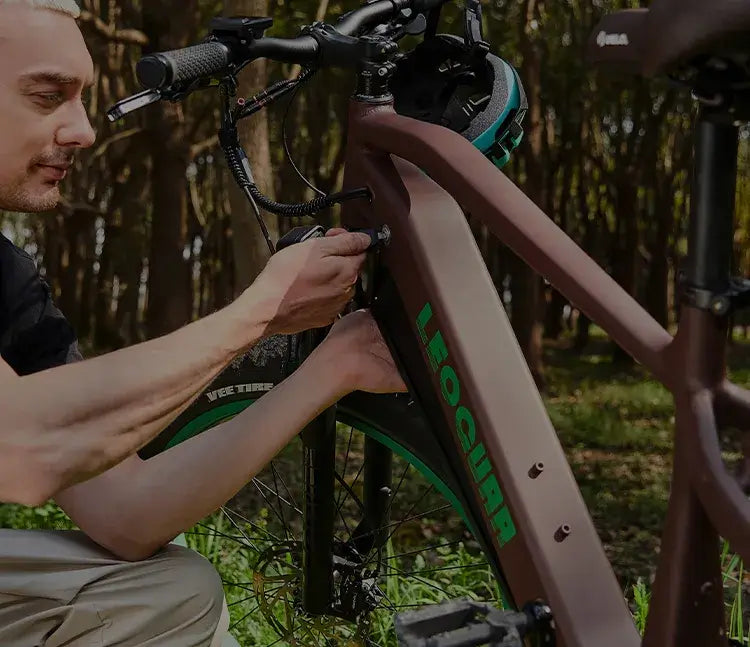
Is a 10, 15, or 20-mile ebike commute realistic?![Flippo Folding Ebike]()
A 10-mile one-way commute is ideal for most people. A 15-mile commute is very manageable with a good bike and some planning. A 20-mile commute is challenging and requires significant commitment, a high-capacity battery, and often the ability to charge at work.
How far can you go on an ebike on one charge?
The real-world range for a typical 500Wh battery is 25-50 miles. This varies greatly depending on assist level, terrain, rider weight, and weather. Always be skeptical of "up to" range claims from manufacturers.
How long does it take to commute 10 miles on an ebike?
An average commute time for 10 miles is typically between 30 and 45 minutes, depending on traffic lights, hills, and your average speed.
Does cold weather reduce ebike commuting range?
Yes, absolutely. In temperatures near freezing (32°F / 0°C), you can expect your battery's effective range to decrease by 20% or more. Always factor this in for winter riding.
What's the best way to extend battery life during long commutes?
Use the lowest assist level possible, maintain proper tire pressure, keep your bike clean and lubricated, use your gears effectively, and avoid using throttle mode unless necessary. These simple steps can significantly increase your range.


Leave a comment