





Electric Bike Battery Charging Time: 0–100% vs 0–80%
You asked, "How long does it take to charge my e-bike battery?" The simple answer is typically 3 to 7 hours for a full 0-100% charge. But as experienced riders, we know that's not the whole story.
The real question isn't just about reaching 100%, but about charging smarter. This is where the debate between a 0-100% charge and a 0-80% charge begins. It's a crucial choice between getting maximum range for a single ride versus maximizing your electric bike battery's lifespan for years of adventures.
This guide is about optimizing your electric bike battery charging time for better time efficiency, long-term battery health, and adopting a smart charging strategy.
Beyond Reaching 100%
The first thing to understand about modern e-bike batteries is to forget the old rules. The "memory effect"—where older nickel-cadmium batteries needed to be fully drained to retain capacity—is not an issue for the lithium-ion cells in your e-bike. In fact, the opposite is true.
Charging puts a small amount of stress on your battery's internal parts. This stress is most pronounced at the extreme ends of the charge spectrum: below 20% and above 80%. Consistently pushing your battery to 100% or letting it die completely speeds up its aging process.
This is why the 20-80% rule has become the gold standard for lithium-ion battery care. Keeping your battery within this range is the "sweet spot" that minimizes stress and maximizes its longevity. As many leading cycling experts recommend, avoiding the extremes is the single most effective habit for preserving battery health.
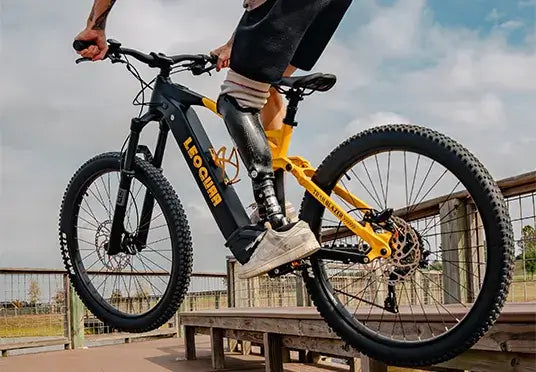
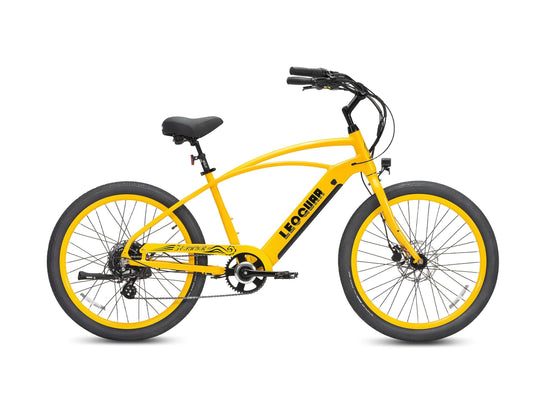
This 20–80% charging philosophy is also reflected in how modern e-bikes are designed. For example, Leoguar electric bike models use high-quality lithium-ion cells paired with an intelligent BMS that actively manages heat, voltage balance, and charge limits. This makes them especially well-suited for riders who follow smart charging habits rather than pushing to 100% every day.
The 0-100% Full Charge
Before we can appreciate the shortcut, we need to understand the full journey. Calculating the time for a full charge is straightforward. You just need two numbers: your battery's capacity in Amp-hours (Ah) and your charger's output in Amps (A).
The formula is:
Battery Capacity (Ah) / Charger Output (A) = Charging Time (Hours)
For a practical example, if you have a common 15Ah battery and a standard 3A charger, your estimated time to 100% is about 5 hours (15Ah / 3A = 5 hours). This is a great baseline for planning, but consistently charging to 100% has hidden costs.
- Increased Heat: The final 10-20% of the charging process generates significantly more heat. Heat is the primary enemy of a lithium-ion battery, as it speeds up the chemical breakdown of the cells, permanently reducing capacity.
- Cell Stress: A fully charged cell sits at a high voltage, typically around 4.2V. Holding a battery at this peak voltage for extended periods puts constant stress on its parts, leading to faster capacity loss over time compared to resting it at a lower voltage (like at 80%).
- Diminishing Returns: As you'll see in a moment, that last 20% takes a disproportionately long time to complete. You spend a lot of extra time at the outlet for a marginal gain in range, all while adding extra wear to your battery.

The 0-80% Smart Shortcut
For the vast majority of your rides, charging to 80% is the superior strategy. This approach offers two powerful benefits that every e-bike owner should know: It's significantly faster and It drastically improves long-term battery health.
Because of the way lithium-ion batteries charge, reaching 80% can often be done in just 60-70% of the time it takes to reach a full 100%. For that 5-hour charge we mentioned, you could be at 80% and ready to ride in just over 3 hours.
This isn't a secret hack; it's the same principle electric vehicle manufacturers use to manage the health of their massive battery packs. By setting a default charge limit to 80% or 90% for daily use, they ensure their batteries last for hundreds of thousands of miles. By adopting this habit, you can potentially double the number of charge cycles your battery can endure before its capacity noticeably degrades.
The Slow Final 20%
Ever notice your phone or laptop charges quickly at first, then seems to slow to a crawl for the last few percent? Your e-bike battery does the same thing, and it's by design. This process is governed by two main phases: Constant Current and Constant Voltage.
Think of it like filling a parking lot:
Phase 1: Constant Current (CC) | 0–80%: The parking lot is empty. Cars (energy) can drive in and park anywhere quickly. The flow is fast and unrestricted. The charger sends a steady, high current into the battery, filling it up rapidly.
Phase 2: Constant Voltage (CV) | 80–100%: The lot is nearly full. A parking attendant (the BMS) must now carefully direct the last few cars into the remaining tight spots to avoid collisions (damage). To do this, the flow of cars must slow down. The charger holds the voltage steady and gradually reduces the current to safely top off each cell without overcharging or overheating.
The sophisticated Battery Management System (BMS) in a premium power pack carefully manages this final stage to protect your investment.
| Charge Level | Charging Phase | Analogy |
|---|---|---|
| 0% → 80% | Constant Current (Fast Stage) | Filling an empty parking lot |
| 80% → 100% | Constant Voltage (Slow Stage) | Finding the last few parking spots |
This slowdown is a crucial safety feature. Rushing this final phase would generate excessive heat and risk permanent damage to the battery cells.
Lifespan: 80% vs 100%
When it comes to maximizing your battery's lifespan, the verdict is clear: charging to 80% is unquestionably better. Experienced riders and fleet users often echo this conclusion. In long-running discussions on r/ebikes, many point out that while occasional 100% charges cause minimal short-term wear, consistently staying within the 20–80% range offers the best balance between usable range, heat control, and long-term battery health.
Your battery's life is measured in "charge cycles." A full cycle is one complete 0-100% charge and discharge. However, partial charges only use a fraction of a cycle. More importantly, they put far less strain on the battery's chemistry.
According to research from Battery University, a leading authority on battery technology, charging habits have a dramatic impact on cycle life. Their data shows that a lithium-ion battery regularly charged to 100% may only last 300-500 cycles. In contrast, the very same battery charged only to 80% can last for 1,000-2,000 cycles before showing the same level of degradation.
By making 80% your new "full" for daily rides, you aren't just saving time—you are potentially tripling or quadrupling the useful life of your most expensive component.
Fast Charging Limits
Fast chargers (e.g., 4A or 5A) are excellent tools for reducing your electric bike battery charging time, but they must be used wisely. A fast charger is most effective during the Constant Current (0-80%) phase, where it can quickly fill the battery without issue.
However, attempting to "rush" to 100% with a fast charger can amplify the stress on the battery. The BMS will still force the current to taper off in the final Constant Voltage stage, but the higher initial power can generate more heat throughout the process.
The best strategy with an electric bike charger is to use it for what it's best at: getting you to 80% in record time. For a quick top-up before a ride, a fast charger is your best friend. For an overnight charge, a standard, slower charger is often gentler on the battery.

Smart Charging Scenarios
So, how do you apply this in the real world? It's about matching your charge level to your intended ride. There's no need to carry the weight and stress of a 100% charge if you're only riding 10 miles.
Here is your smart charging cheat sheet:
| Scenario | Recommended Charge Level | The "Why" |
|---|---|---|
| Daily Commute (e.g., 10-15 miles) | 80% | You don't need the full range. This saves charging time and significantly extends battery lifespan. |
| Long Weekend Ride or Tour | 100% | You need maximum range. Charge to 100% just before you leave to minimize the time it sits at high voltage. |
| Storing the Bike (1+ week) | 40-60% | This is the most stable state for a lithium-ion battery. It minimizes self-discharge and degradation during storage. |
Final Charging Tips
To wrap it all up, here are the key takeaways for smart e-bike battery care and efficient charging:
- Aim for 80%: Make 80% your default for daily charging.
- Charge to 100% Only When Needed: Save the full charge for epic rides where you need every mile of range.
- Avoid Deep Discharges: Try not to let your battery fall below 20% regularly.
- Charge at Room Temperature: A cold or hot battery will not charge efficiently and can be damaged. Let it acclimate indoors before plugging it in.
- Use the Right Charger: Always use the charger designed for your battery to ensure the voltage and BMS communication are correct.
- Store it Smart: For long-term storage, keep the battery in a cool, dry place at a 40-60% charge level.

Final Takeaway
Charging an e-bike battery is not just about hitting 100 percent. For everyday riding, charging to around 80 percent saves time, reduces heat and voltage stress, and helps extend battery life over the long run. Full charges still make sense when you need maximum range, but they work best when used intentionally.
Bikes designed with real-world charging in mind make this habit easier to follow. With a Leoguar long range electric bike, the removable battery allows you to charge indoors, at a stable temperature, and unplug at the right time, turning smart battery care into a simple part of daily riding.
E-bike Charging FAQs
Should I charge my ebike battery to 100% every time?
No, you shouldn't charge to 100% every time. For daily use, charging to 80% is better for the battery's long-term health and saves you time. Only charge to 100% when you need the absolute maximum range for a long ride.
Is it bad to only charge to 80%?
Not at all-it's actually the best thing you can do for your battery's lifespan. The only "downside" is slightly less range for that specific ride, which is often more than you need anyway.
How long does it take to charge my e-bike battery to 80% versus 100%?
Charging to 80% typically takes about 60-70% of the time needed for a full charge. For example, if a full charge takes 5 hours, you can reach 80% in just over 3 hours due to how lithium-ion batteries charge.
Does fast charging shorten battery life?
It can, if used improperly since fast charging generates more heat. Fast charging to 80% is generally fine, but consistently fast-charging to 100% will likely reduce your battery's lifespan compared to using a standard charger.
What's the best charge level for storing my e-bike battery?
For storage longer than a week, keep your battery at 40-60% charge in a cool, dry place. This is the most stable state for lithium-ion batteries and minimizes degradation during storage periods.


Leave a comment