






Buying a Used eBike on Facebook Marketplace: Battery and Safety Checklist
Use this used ebike buying checklist before you message a Facebook Marketplace seller: verify the battery age, charger, serial number, wiring, brake condition, and UL safety status before you bring cash. Walk away from swollen batteries, missing chargers, altered wiring, scratched-off serial numbers, or a seller who won’t meet for a ride and inspection.
Used ebike buying checklist
Check the used eBike in this order: battery condition, original charger, serial number, UL status, wiring, brakes, tires, and test-ride behavior. If the seller can’t prove the battery history or the bike shows swelling, heat damage, cut wires, or a removed serial number, don’t negotiate. Leave.
| Check | What good looks like | Walk away if |
|---|---|---|
| Battery | Original pack, clean case, no swelling, no rattling | Bulging, dents, heat marks, leaks, chemical smell |
| Charger | Original charger with matching voltage and connector | “Lost charger,” random Amazon charger, taped plug |
| Serial number | Frame serial is visible and matches the receipt | Scratched, painted over, missing, or seller dodges |
| Certification | Model has verifiable UL 2849 or equivalent listing | Sticker-only claim with no model proof |
| Wiring | Factory connectors, tidy routing, no exposed copper | Splices, electrical tape, bypassed limiter, loose controller |
| Ride test | Smooth assist, firm braking, no motor cutouts | Error codes, surging, grinding, brake fade |
Ask for photos before meeting: battery label, charger label, frame serial, odometer screen, drivetrain, brake pads, and both sides of the bike. A real owner can take those in five minutes. A reseller with ten mystery eBikes in a storage unit usually can’t.
One more thing: don’t charge a used battery “just to see.” If the battery is swollen, hot, leaking, hissing, smelling sweet or metallic, or making odd noises, stop handling it and follow local lithium-ion battery disposal guidance.
Battery Age And Range
Battery condition decides whether the deal is smart or expensive. The frame may look clean, the tires may still have little rubber hairs on them, and the seller may say “barely used.” Then you lift the battery and hear cells shifting inside the case. Done.
Start with watt-hours. Volts x amp-hours = watt-hours, so a 48V 10Ah battery is about 480Wh, while a 48V 15Ah battery is about 720Wh. That number doesn’t tell the whole story, but it keeps the seller honest. If a throttle-heavy fat tire bike with a 480Wh pack is advertised as “70-mile range,” ask what speed, rider weight, terrain, and assist level produced that number.
A healthy battery should also charge to the expected full voltage. Most 48V lithium-ion eBike packs charge to about 54.6V. If the display stops far below that, the pack may be unbalanced, aged, or limited by the battery management system. You don’t need to become an electrical engineer in the parking lot. You do need to notice when the numbers don’t fit.
Ask the seller:
- When was the eBike purchased?
- Is the battery original to the bike?
- How was it stored during winter?
- Was it ever dropped, flooded, rebuilt, or opened?
- Can they show the original charger working?
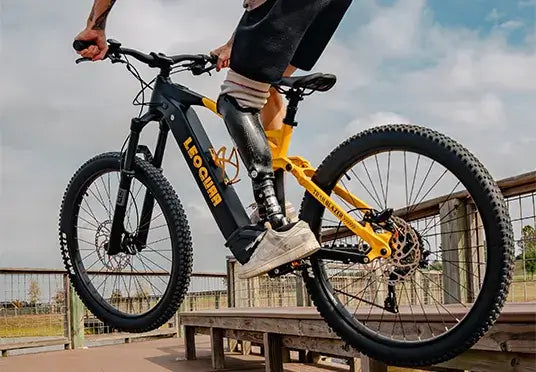
For trail riders, battery capacity matters even more because climbing pulls hard. A performance mid drive ebike like Leoguar Trailblazer uses a 720Wh battery and is rated up to 100 miles in the right conditions; a used eBike with a tired 500Wh pack belongs in a different conversation. Price it that way.
UL Certification Check
UL certification is where Facebook Marketplace gets messy. A charger may have a UL mark. A battery cell may come from a known supplier. Neither proves the whole eBike electrical system was tested as a complete unit.
Look for UL 2849. UL Solutions describes UL 2849 as a standard for the eBike electrical system, including the drive system, battery system, and charger system. UL 2271 is battery-focused. Both can matter, but for a full eBike purchase, UL 2849 is the stronger buyer signal.
The National Fire Protection Association e-bike safety guidance also points riders toward manufacturer-approved chargers and away from damaged batteries. That lines up with what we tell riders in plain language: mixing batteries, controllers, and chargers from unknown sources is where small savings can turn ugly.
Ask for proof tied to the exact model, not a blurry sticker. The seller should be able to send the brand’s product page, manual, certification listing, or original purchase record. If the answer is “all eBikes are basically the same,” keep your cash in your pocket.
For Leoguar Bikes, treat certification as model-specific evidence. Check the current product page for the exact UL scope listed on the model you are comparing, because the battery, charger, motor, controller, and wiring have to work as one system. A used eBike can still be a good buy, but unverifiable certification should lower the price or end the deal.
Frame And Wiring Red Flags
A used eBike can hide crash damage better than a regular bike because the electrical assist masks drag, wobble, and drivetrain wear. The motor pulls. You smile. Then the rear wheel hops under braking and the controller throws an error code two blocks later.
Start with the frame. Check welds around the head tube, bottom bracket, rear dropouts, and battery mount. Look for rippled paint, hairline cracks, dents near the battery rail, and bolts that don’t match. On a used fat tire ebike, pay close attention to the rear wheel, spokes, axle nuts, and dropout area because heavy tires plus motor torque can loosen neglected hardware.
Then inspect wiring like you’re looking for a shortcut someone made at midnight.
| Red flag | Why it matters |
|---|---|
| Electrical tape near controller | May hide splices, heat damage, or water entry |
| Aftermarket speed display | Could mean class limit changes or controller swaps |
| Mismatched connectors | Battery, motor, and controller may not be designed together |
| Corrosion inside charge port | Water exposure can damage battery contacts |
| Loose battery mount | Vibration can arc contacts and cause power cutouts |
If you see altered wiring, don’t ask the seller to “prove it works” with a fast test ride. Electrical problems can show up under load, during charging, or after vibration. For any uncertain electrical system, pay a qualified eBike shop to inspect it before purchase. If no local shop will touch that brand or setup, that’s useful information.
Mechanical safety still counts. Check brake pad thickness, rotor warping, tire cracks, chain stretch, fork play, and throttle response. A 60-pound eBike that can cruise at city speed needs better brakes than a dusty garage cruiser.
Marketplace Theft Checks
No serial number, no sale.
Ask for the frame serial number before meeting, then compare it with the number on the bike when you arrive. Search Bike Index, Project 529, and any local stolen-bike registry your city uses. If the seller refuses to share the serial number, says “I don’t know where it is,” or claims the bike was a gift from a friend who moved away, treat that as a real answer.
Meet in daylight at a bike shop, police-station exchange zone, or busy public place with space for a test ride. Don’t send a deposit. Don’t meet in a parking garage. Don’t let the seller rush you with “someone else is coming in 20 minutes.”
Ask for four things:
- Original receipt or order confirmation
- Charger and keys
- Manual or app account access
- Seller ID that matches the receipt name, if they claim to be the original owner
A missing charger can mean theft. It can also mean the charger failed and the seller has been using a mismatched replacement. Either way, you’re taking on battery risk. The safest answer is boring: original charger, original keys, visible serial number, clean purchase record.
New eBike Safer Cases
Used makes sense when the seller has proof, the battery is healthy, the charger is original, and the price leaves room for service. Buy new when the battery story is foggy, the brand has poor parts support, or the seller’s discount disappears after basic repairs.
Here’s the quick math:
| Possible after-purchase cost | Rough US range |
|---|---|
| eBike shop inspection | $75-$150 |
| Replacement charger | $50-$150 |
| Brake pads, tires, tune-up | $80-$250 |
| Replacement battery | $400-$900+ |
That $900 Marketplace “deal” can become a $1,600 project fast. And warranties often don’t transfer, or they require the original proof of purchase. Check the brand’s warranty terms before you assume coverage.
For daily pavement miles, a known-new commuter ebike often beats a used unknown because the brake wear, battery history, charger, and warranty all start clean. Apartment riders should also compare a used folder against a new folding ebike before paying for a replacement battery and a tune-up.
Leoguar’s advantage for a cautious buyer is clearer model documentation and a direct support path. Instead of trusting a stranger’s memory of charge habits, you can compare current product specs, battery size, warranty coverage, and service guidance before choosing a new bike or pricing a used one.
FAQ
Is a used eBike worth it?
A used eBike is worth it when the battery is original, the charger matches, the serial number checks out, and the price leaves room for service. If any battery or wiring detail is unclear, the discount probably isn’t enough.
How old is too old?
A three- to five-year-old eBike can be fine if stored well and lightly ridden. Age becomes a problem when the seller can’t prove charging habits, storage conditions, battery health, or replacement-part availability.
Can I replace any battery?
No. Use only a battery approved for that exact eBike system. Voltage, connector shape, battery management, mounting rails, and charger specs all need to match, or you can damage the system and create a fire risk.
Should I test ride first?
Yes, but only after the battery, frame, brakes, tires, and wiring pass a visual check. Do not test ride an eBike with a swollen battery, exposed wiring, loose wheel hardware, missing brakes, or an unreadable serial number.
Before your next Marketplace meet-up, set one rule: if the bike fails the battery, charger, serial, wiring, or certification check, walk. If you’d rather start with known battery history, model-specific specs, and factory-backed support, explore Leoguar Bikes by riding style and compare each model against the same checklist.


Leave a comment