

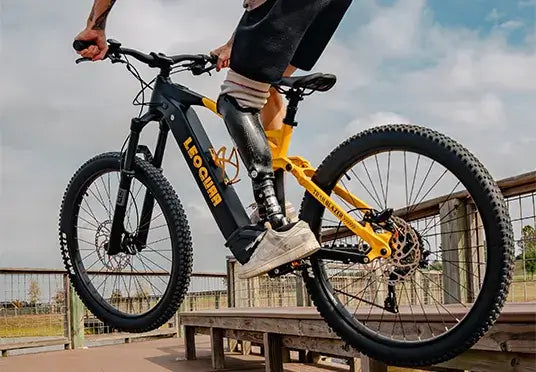


How to Make DoorDash Delivery Easier with an Electric Bike?
If you work for DoorDash in a busy city, using a bike can make a lot of sense. You do not have to worry as much about parking, you can move through traffic more easily, and you can avoid some of the costs that come with driving a car.
A Long Range Electric Bikes can make the job even easier. You still get the benefits of bike delivery, but you do not have to pedal hard all day. This matters if you ride for long hours, carry food, and want to complete more orders in less time.
If you're considering the use of an e-bike for DoorDash you might well have some questions: is it worth doing so? How much money can you earn? What sort of bike do you need? What kind of gear should you take with you? And how can you prevent yourself from wasting time between orders?
The guide explains the basics in a simple manner. You'll find out how to begin using DoorDash on a bicycle, which setup is best, what delivery equipment to take with you, and how to make each shift more efficient.
We'll also provide some practical advice regarding riding in the city, ordering items, battery range, safety, and the common errors that new bike delivery riders make. Once you've finished, you'll know how to make e-bike deliveries smoother, quicker, and more profitable.
| Factor | Car Delivery | DoorDash on a Bike |
|---|---|---|
| Average Delivery Radius | 5–8 miles | 2–4 miles |
| Time Spent in Traffic | High | Low |
| Parking Time per Order | 3–10 minutes | 0–2 minutes |
| Order Acceptance Speed | Slower due to navigation | Faster in dense restaurant zones |
| Peak Hour Flexibility | Often delayed by congestion | Immediate dispatch |
| Avg. Tips per Order | $2–4 | $3–6 (urban dense areas) |
When asked, most riders start by inquiring about the pay that DoorDash bike drivers receive; in many crowded markets bike drivers usually earn between $15 and $25 per hour and end up with a higher net profit than car drivers because of their lower operating costs.
We’ll look at the positive and negative aspects, show you how to get going step by step, explain the ways in which you can earn more money, and point out the mistakes that waste your time and money. Imagine this as your guide to earning more and spending less on two-wheel vehicles. The first step towards making a wise choice is to consider what delivery work is really like on a day-to-day basis. It’s a job that comes with substantial financial advantages and lifestyle benefits, but it also has particular difficulties that you’ll need to be prepared for. Here’s what you can expect.
| Bike Delivery Benefits: Why You'll Love It | The Downside: What to Prepare For |
|---|---|
| Massive Savings: Your largest operational expense—gas—is eliminated. Car insurance, frequent oil changes, and wear-and-tear repairs are replaced by minimal electricity costs and basic bike maintenance. This translates directly to higher net profit on every single delivery. | Weather Dependency: You are completely exposed to the elements. Rain, snow, high winds, and extreme heat can make a shift miserable, unsafe, or altogether impossible. Your earning potential is directly tied to the forecast. |
| Higher Hourly Potential: In congested cities, speed is determined by maneuverability, not horsepower. A DoorDash report found that in top urban markets, Dashers on two wheels can earn about 10% more than those in cars. You spend more time delivering and less time stuck in traffic. | Physical Demands: Even with pedal-assist, this is a physically active job. You'll be pedaling for hours, navigating hills, and carrying orders. It requires a solid level of fitness and can be exhausting, especially when you're just starting out. |
| Beat the Traffic: This is your superpower. Gridlock becomes irrelevant. You can utilize bike lanes, legally filter through stopped traffic in many areas, and find "parking" instantly right at the restaurant or customer's door. This time saved equals more deliveries per hour. | Limited Order Capacity & Range: You can't accept large catering orders, multiple large pizzas, or deliveries with numerous drinks. Your delivery radius is also smaller, typically limited to a few miles, which can restrict you from lucrative long-distance orders. |
| Health and Environment: Each shift is a built-in workout, improving your cardiovascular health without needing a gym membership. You're also running a zero-emission business, which is a significant environmental benefit and a personal point of pride for many couriers. | Safety Concerns: Navigating city streets with distracted drivers, pedestrians, and road hazards requires constant, unwavering vigilance. Your personal safety is paramount and depends entirely on your defensive riding skills and awareness. |
| Access to More Orders: In some of America's key bike-delivery hotspots like New York City and San Francisco, the DoorDash algorithm often prioritizes couriers on two wheels for shorter-range, high-density orders, creating a steady stream of bike-friendly work. | Initial Investment: While cheaper than a car, a reliable, delivery-ready e-bike is a significant upfront cost. When you add a quality helmet, insulated bag, phone mount, locks, and rain gear, the initial investment can easily exceed $1,500-$2,000. |
City-by-City Performance: New York vs San Francisco vs Chicago
- In New York City (specifically in Manhattan and Brooklyn) the routes are short and have a high frequency. A great many riders say that they are able to complete 20 or more orders during a shift because of the concentrated pickups and the continuous demand in Midtown and the Lower East Side.
- In San Francisco, because the terrain is hilly and this affects the battery range, the majority of Dashers use mid-drive motors or have dual-battery systems so that they can manage steep inclines while remaining efficient.
- In Chicago the layout featuring a flat grid system enables rapid consecutive drops along corridors such as The Loop and River North, which makes it easy to keep up the pace during the lunch rush.
Hint: If you're going to start up bike deliveries on DoorDash in New York or in any other crowded area, take the time to explore the area and identify the main locations for deliveries—each city requires a different approach to riding.
 The initial outlay, although less than that of a car, still represents a substantial upfront expense if you choose a reliable e-bike that is ready for delivery. If you then buy a good helmet, an insulated bag, a phone mount, locks, and rainwear, the total initial cost can easily go above $1,500 to $2,000 (unless you use short-term e-bike rental services which are available in certain cities).
Getting Started: How to DoorDash on a Bike (Step-by-Step)
If you're ready to go, this five-step plan will show you how to progress from signing up to your first delivery and will help you get off to the right start.
Step 1: Can You DoorDash on a Bike? Requirements Explained
Before purchasing any equipment, check that you are able to carry out the job. According to DoorDash's official requirements, you have to be at least 18 years of age. A big advantage with bicycle delivery is that you don't need a driver's license or any kind of vehicle registration—just a valid ID and agreement to have a background check carried out. The most important thing is to verify that bicycle delivery is available in your city. DoorDash allows you to register as a bike courier in most cities where bicycle delivery is offered. It is not necessary to have a car if you want to start delivering through DoorDash. Many Dashers in the United States use e-bikes or even traditional bicycles, particularly in urban areas where traffic and parking are major problems. Not all zones support bicycle delivery, so always make sure that "Bicycle" is one of the options when you select your type of vehicle. This choice is usually available to you when you begin the process of signing up in the Dasher app. If you are in the US and agree to have a background check, you will have to provide your Social Security Number.
Step 2: Choosing the Best E-Bike for DoorDash Delivery
Your Fat Tire Electric Bikes is your most important tool and they vary from one another. Although there are no official DoorDash bike specifications, your bike should be fast, safe, and capable of securely carrying food. Selecting the best bike for DoorDash can greatly increase your efficiency, while a low-quality setup can hinder your performance and result in financial loss. We'll go into this in more detail later on, but the three most important factors are battery range, reliability, and the ability to safely carry cargo. Do not buy cheap equipment if the bike is to be your main source of income.
Key Specs for a Delivery-Ready E-Bike
| Feature | Minimum Recommendation |
|---|---|
| Battery | 600–750Wh / 40+ miles per charge |
| Motor Type | Mid-drive for hills, hub for cost |
| Frame | Aluminum with rear rack mount |
| Brake System | Disc brakes (prefer hydraulic) |
| Tires | Puncture-resistant with good grip |
| Comfort | Upright seat + ergonomic grips |
Step 3: DoorDash E-Bike Setup — Must-Have Gear
Safety first: It's important not only to have the right equipment but also to understand the rules regarding bike lane safety and the local requirements for deliveries, since in some cities it is legally necessary to have front lights, reflective clothing, or a bell/horn. Typical regulations require you to stay within marked bike lanes, to use both front and rear lights when it's dark, to keep one ear free to listen for traffic, and to adhere to the local restrictions on e-bikes (which are classified as Class 1, 2, or 3 depending on the state). A certified helmet is a must. Bright front and rear lights help others see you, whether it's day or night, and you need a sturdy and reliable phone mount that secures your device during bumpy journeys so that you can get directions.
Essential for delivery: a standard backpack won't do. You'll need an insulated food delivery bag of high quality. The best type is one that is boxy and backpack-style since it keeps the food at the correct temperature, prevents spills and keeps your hands free.
For personal comfort, a portable power bank ensures that your phone doesn't run out of charge while you're working, a solid-duty bike lock guards your bicycle when you're collecting it, and weather equipment—particularly good waterproof clothing—can decide whether you have a profitable day or have to go home early.
When it comes to theft, one of the main worries of bike Dashers is that their bikes and their food orders will be stolen. Make sure to lock your bike even if the drop-off is short and don't leave food unattended. Using a delivery bag that is tamper-proof and has lockable zippers provides extra security and shows that you take your job seriously. Many of the suggestions given here are in line with the insights provided by top-rated Dashers and delivery equipment experts in various forums and communities.
- Helmet (certified & reflective)
- Insulated delivery backpack
- Phone mount for navigation
- Power bank for long shifts
- Heavy-duty lock
💡 Handy tip: This arrangement is not optional it determines whether you come across as an expert or a beginner.
Step 4: Sign Up on the App — How to Sign Up for DoorDash with Bike
Get the DoorDash Dasher app and begin applying; the process is simple. The key step is to select 'Bicycle' as your vehicle type since this ensures that the app assigns you the appropriate, short-distance orders that are suitable for biking. If you select 'Car', you will end up with orders that you won't be able to complete. Those who are asking how to sign up for DoorDash using a bike should simply pick 'Bicycle' when choosing your vehicle to receive orders that are bike-friendly.
If you're concerned about receiving long-distance orders which exceed your capabilities, you should remember that selecting 'Bicycle' as your mode of transport will exclude such orders. That said, it is a good idea to establish your own 'soft range limit'—that is, a distance which you know you can cover several times an hour without becoming exhausted.
Step 5: Do a Practice Run
Before you place your first order by going online, carry out a trial run. Choose a busy period and cycle to the area where you want deliveries to be made. Visit a number of well-known restaurants. Check that your phone mount works, use an app such as Google Maps in bicycle mode to assess your route-planning abilities, and become familiar with the way traffic moves. Taking this simple step will boost your confidence and allow you to iron out any issues with your setup before your earnings and ratings are affected.
It's quite normal to be nervous when you're making your first few deliveries. Most new Dashers do feel overwhelmed at the beginning, whether it's because of the app itself, having to manage their time, or securing their bike properly when they're picking up a customer. However, just as with any other skill, it eventually becomes second nature after a few practice runs.
Strategies to Make More (Bike Dashers) — Local Differences Matter
The top DoorDash riders using e-bikes don't merely pedal with greater effort; they think more strategically. If you're working full time as a courier or simply want to make some extra money, getting the most out of bike deliveries involves combining a cyclist's mindset with delivery tactics. You should view it as a business, not just a side job. From the equipment you use to the way you interact with customers, maintaining a professional attitude results in better tips, more priority orders, and an increased number of five-star ratings. People pick up on this — particularly regular customers and restaurant staff. They are aware that their approach has to be completely different from that of a car driver. It is essential to apply this mindset focused on cycling if you are to turn a decent hourly rate into an excellent one.
Master Your Zone
Act as a cyclist rather than a driver; it's not enough to select a spot that appears busy on the map, you have to visit it first. The ideal area should have a number of well-known restaurants in the vicinity, decent bike lanes, and roads that are roughly level. Get to know the informal map of your locality—the side streets that bypass the main roads, the walking bridges which you are allowed to use, and the one-way streets that are also usable by bicycles. This kind of ground-level knowledge gives you a advantage.
Find "Golden Orders"
Your profits will depend on your capacity to quickly identify and take "golden orders"; these are deliveries which offer a high payment for a short distance, such as a $10 order for 1.5 miles as compared to a $12 order for 4 miles.
Find out which local restaurants cook their food quickly and which ones always keep you waiting for 15 minutes. Most important of all, learn how to recognise and say no to orders that are not suitable for biking. We've all been tempted by the high pay, only to discover that it comes with four large, thin fountain drinks and a bag of soup. This usually results in a mess, a poor rating, and lost earnings. Saying no to a 'nightmare' order is a move that shows professionalism.
Master DoorDash Peak Hours on a Bike
It's during the lunch rush (from 11:30 AM to 1:30 PM) and the dinner rush (from 5:30 PM to 8:30 PM) that you earn the most money. The secret is to be prepared. You should arrive at the central part of your restaurant area between 15 and 20 minutes before the rush begins. As the drivers get caught in increasing traffic, you'll already be at the main point, ready to take the first batch of orders. Your "rush hour" is more effective since you avoid the traffic which slows down the drivers.
New riders usually miss the peak since they go online a few minutes too late or position themselves too far away from the busy areas. You can think of it in the same way as surfing—you need to be in the right place before the wave comes. Simply being one block nearer will mean securing the first and most valuable orders.
Manage Your Battery
With a Utility Electric Bikes, managing the battery is the same as managing money. If the battery dies your shift comes to an end. You must start each shift at 100 per cent with no exceptions. Use the pedal assist wisely; don't leave it on the highest setting. When on flat ground switch to lower assist modes in order to conserve energy and increase the assist level when going up hills or when you need speed to catch a green light. Be aware of your safe spots and locate a cafe or public library in your area where you can charge for thirty minutes during a slow period if necessary. Planning for the worst situation will enable you to stay on the road longer.
| Scenario | Pro Tips for Dashers |
|---|---|
| Battery management | Start at 100%, use low-assist on flats, charge during slow periods |
| Zone planning | Know where you can legally ride, avoid high-traffic intersections |
| Rush hour strategy | Be in place 15–20 min before peak times, know hot zones |
The most intelligent Dashers are not only quick but also well prepared.
Common Mistakes for Bike Dashers to Avoid
All the e-bikes that Dasher produce have flaws. The aim is to steer clear of the usual and expensive mistakes which experienced couriers have had to learn the hard way. You can consider these to be the unwritten rules of the job.
Mistake 1: Using a Standard Backpack
The problem is that when you take an order you put it in your ordinary school-type backpack, the food then goes cold, the containers get squashed and any sauces or drinks leak out. This causes the customer to be unhappy, leads to a low rating and possibly means you lose your tip. It appears unprofessional and lets both the customer and the restaurant know that you're not taking it seriously.
The way to solve this is to buy a delivery backpack that is specially designed and insulated. Such backpacks are generally cube- or box-shaped, which keeps the order bags standing up and secure. They maintain the correct temperature for both hot and cold foods and also protect the food from being damaged. This is an initial purchase which ends up paying for itself through improved ratings and greater customer satisfaction.
Mistake 2: Neglecting Basic Maintenance
The problem is that you're in the middle of a profitable dinner rush, have already travelled a long way from home, and then your wheel gives out or you get a flat. As a result, the delivery is now going to be late, the customer is angry and your income for the night is lost. All you're left with is a long and annoying walk back home.
The way to deal with this is to treat your bicycle as if it were a business instrument. Create a simple weekly checklist which includes checking the tyre pressure, examining the brake pads to see if they are worn, and cleaning and greasing the chain. Take a basic repair kit with you at all times, the kit should contain a spare tube, tyre levers, a multi-tool, and a small pump. Spending five minutes on this check can avoid you having a two-hour headache.
Mistake 3: Blindly Following App Navigation
The problem is that the directions provided by the Dasher app are designed for use by cars and frequently recommend routes that are either unsuitable or unsafe for cyclists, for example by suggesting a four-lane road with no shoulder or one that has many steep hills.
The way to proceed is to take the route suggested by the app as a general reference and then use your own judgement along with a more suitable tool to determine the actual path. Make sure that Google Maps or some other app designed for cycling is open at the same time, and make use of the 'Bicycle' layer to locate routes that are safer because they include bike lanes and involve less climbing. When adhering to safety guidelines for urban deliveries, you should put your own safety before that of the shortcut proposed by the app.
Mistake 4: Running Out of Battery
The problem is that you underestimated the range of your e-bike and the battery fails five miles from your home base. An e-bike that has no power is nothing more than a heavy and difficult bicycle to ride. If you get stuck then your shift comes to an end immediately and could pose a serious safety issue if this happens after dark.
The way to proceed is to treat your battery in a scientific manner by determining its actual range when operating under full load during real-life stop-and-go riding, not relying on the manufacturer's optimistic estimate. You should plan the duration of your shift in relation to the capacity of your battery and adhere to the battery management strategies previously mentioned. Make sure that there is always enough charge left to get home safely.
Mistake 5: Ignoring Customer Communication
The problem here is that the restaurant is very busy and as a result your order is going to take an additional 15 minutes. You wait in silence, becoming increasingly frustrated. The customer, noticing that your GPS icon is staying fixed at the restaurant, also feels annoyed and thinks that you are the cause of the issue. This situation will lead to a poor rating.
The way to handle this is to take the initiative; a simple and polite message can transform a negative experience into a positive one. You should use the Dasher app to get in touch. For example, you could send the message "Hey [Customer Name], just wanted to let you know that [Restaurant Name] is currently very busy. I'm waiting for your order and will be on my way as soon as it's ready. Thanks for your patience!" in order to build trust and demonstrate that you are professional.
Unless you are experienced and confident, don't deliver items late at night in areas that are poorly lit or unfamiliar because safety should always be more important than earnings. Make use of high-visibility equipment and have faith in your instincts—if a situation seems wrong, don't do the delivery. We do not support any unsafe practices and you must always comply with both local laws and the app's guidelines when delivering for DoorDash.

How to Choose the Best E-Bike for DoorDash Delivery
Your e-bike will act as your partner in this business and choosing the correct one is one of the most important decisions you'll have to make. An e-bike that is suitable for delivery purposes is designed with four main considerations in mind: range, strength, safety, and comfort.
Battery Range and Power
It is essential to your operation. Battery capacity is given in watt-hours (Wh). When it comes to serious delivery work, you should choose a battery with at least 500Wh and preferably one in the 600 to 750Wh range. This will provide you with a range of over 40 miles per charge, which is sufficient for a reliable 4 to 5 hour shift. You should also take the type of motor into consideration. Hub-drive motors are usual and inexpensive, whereas mid-drive motors provide better balance and efficiency when going up hills, even though they are more costly.
Frame and Cargo Capacity
You should get a bike that is capable of dealing with the everyday task of carrying weight across uneven city streets. It's best to choose one with a solid aluminum frame. Most important of all, the bike must be able to have a strong rear cargo rack fitted to it. In some cases the e-bikes come with racks that are generally the strongest. It is to this rack that you attach your delivery bag, so it has to be rated for at least 50 lbs (25 kg). For people who want to carry the greatest amount of weight, a dedicated cargo e-bike is the best solution, even though it is more expensive.
Brakes and Tires
It is more important to be able to stop than to be able to go fast. In such an unpredictable environment as city traffic, powerful and reliable brakes are essential. We strongly advise choosing disc brakes rather than the older type of rim-style brakes.
Hydraulic disc brakes provide the greatest braking power and control with the least amount of effort, whereas mechanical disc brakes are sturdy and more economical. Just as important are your tyres—buy puncture-resistant ones since they have a reinforced layer which helps to prevent flats caused by glass and road debris, thus avoiding frequent periods of downtime.
Comfort and Ergonomics
You'll spend a lot of time sitting on the saddle, and comfort should not be considered a luxury since it is in fact a necessity for avoiding fatigue and injury. Choose a bicycle with an upright riding position as this will lessen the strain on your back and neck and enable you to see traffic better. The saddle should be comfortable with good padding and the handlebar grips must be ergonomic so as to support your wrists, because this will make a real difference after a long shift.
Is E-Bike Dashing For You?
DoorDash on an e-bike isn't for everyone, but for the right person in the right city, it's an outstanding opportunity. Wondering if DoorDash on a bike is worth it? For riders in the right location with a solid setup, it offers better profit margins, lower stress, and less overhead than driving. It offers a unique combination of flexibility, high earning potential, and low operational costs that car-based delivery simply can't match.
If you enjoy being active, know your city's streets, and are prepared for the physical and logistical challenges, it can be an incredibly rewarding and profitable gig. By choosing the right gear, mastering your local zone, and working smarter—not just harder—you can build a successful side hustle or even a full-time business. The road is open — and if you’re on two wheels, it might just be the smartest way to Dash. While DoorDash is testing autonomous robots like DoorDash Dot, human cyclists remain faster and more flexible for last-mile delivery — especially in dense cities. These autonomous delivery pilots are limited in scope today, so trained bike Dashers still outperform robots on complex last-mile routes.
Ready to try an e bicycle for DoorDash and take control of your time and income? Start with the right e-bike, follow the strategies above, and you’ll be set for faster, easier, and more profitable deliveries. Explore our expert-picked electric bikes designed for delivery riders—and turn every shift into a smooth, smart ride.
→ Use our “Bike Dasher Setup Guide” to avoid common beginner mistakes.
→ Or compare cargo vs commuter e-bikes for your zone
💬 Not sure where to begin? Check our expert gear reviews or leave a question in the comments—we reply fast.
FAQ
1. Q: How much can I earn doing DoorDash on an e-bike?
A: Earnings vary by city and how much you work. In busy urban areas, e-bike dashers can earn 10% more than car drivers because they move faster through traffic. Most dashers make $15-25 per hour during peak times, with lower costs than car delivery.
2. Q: What happens if my e-bike battery dies during a delivery?
A: If your battery dies, you'll have to pedal a very heavy bike without motor assistance. Always start shifts at 100% battery and monitor your charge level. Plan your shift length around your battery capacity and always keep enough charge to get home safely.
3. Q: Can I deliver in bad weather on an e-bike?
A: You can deliver in light rain with proper waterproof gear, but heavy rain, snow, or extreme weather can be unsafe. Your earning potential is tied to weather conditions. Many e-bike dashers take days off during severe weather for safety reasons.
4. Q: What's the biggest upfront cost for starting e-bike delivery?
A: A quality delivery-ready e-bike typically costs $1,500-3,000. Add essential gear like helmet, insulated delivery bag, phone mount, locks, and weather gear, and your total initial investment can reach $2,000-4,000. However, this is still much less than buying a car.
5. Q: Do I need special insurance for DoorDash bicycle delivery?
A: DoorDash provides some coverage while you're actively delivering, but check your personal insurance policies. You may want to add coverage for your e-bike since it's expensive equipment. Some renters or homeowners insurance policies can cover bike theft, but verify this with your provider.


Leave a comment