


What Is the Best Electric Bike Under $1500?
When you are buying an electric bike that costs under $1500, it's not a simple matter of selecting the one with the lowest price; you also need to make sure it has sufficient power, a good range, effective brakes, is comfortable to use, and provides proper support for everyday use.
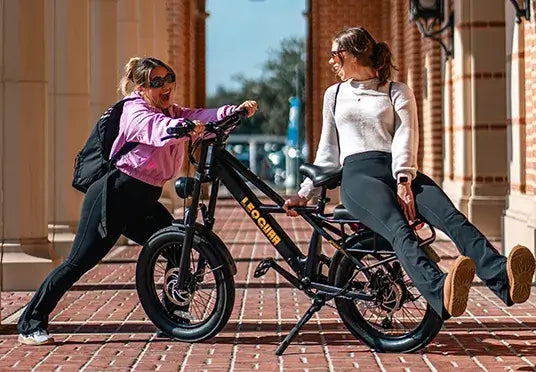
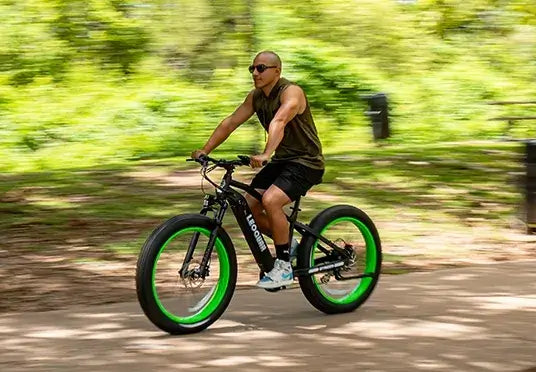
The bike that is best for you will depend on how you intend to use it; commuters may prioritize comfort and range, whereas those who ride on weekends might prefer wider tyres and superior hill-climbing ability. When space, weight and storage are a concern, these factors will be most important. The Leoguar Fastron stands out among bikes under $1500 since it has a 750W motor, fat tyres, hydraulic disc brakes, and a 720Wh battery, all at a lower price.
The guide explains what to consider when purchasing an e-bike, the compromises you may need to make, and how to choose one that is affordable and meets your requirements.
The $1500 Sweet Spot
Bikes with a price of under $1500 reach an optimal level of value since, at that price you don't just get the basic features but also start to come across features that sincerely enhance ride quality, safety, and reliability.
The idea that this price increase is merely a rumour is false. The bike roundup that BikeRide carried out in March 2026, which included 241 electric bikes under $1500 and was based on the opinions of hundreds of experts and the reviews of thousands of users, demonstrates just how crowded this category is and highlights the importance of comparing specifications. At this price level, the best-value electric bike is seldom the cheapest; it is usually the model that provides the best balance among safety, brakes, drivetrain quality, and ride feel.
It is important to understand the various compromises involved at this price if you are to make a wise purchase and also to realise what true value is. This will also enable you to avoid possible disappointment later on. As Consumer Reports' thorough buying guide points out, it is essential to concentrate on the main components if you are to have a satisfactory and safe ownership experience.
Gains Over Cheaper Bikes
If you spend a bit over $1000 you'll get some real improvements; you're not simply paying for the brand name, you're obtaining better, safer, and longer-lasting components which will prove useful to you for many years.
The improved battery quality is the most significant improvement at this price level. The bikes mentioned usually incorporate battery cells from reputable companies such as Samsung, LG, or Panasonic, and these batteries are more likely to have survived rigorous safety tests designed to prevent fires and other hazards. Make sure that both the battery and the electrical system are certified to the UL 2849 or UL 2271 standards regarding fire safety.
If you are looking for an inexpensive electric bike, check that the UL certification applies to the entire electrical system, not just to a single battery component mentioned in the advertisements.
Brakes have improved: within this price category,, it's common to see a shift from mechanical to hydraulic disc brakes, and we believe this upgrade is necessary for both safety nd performance, since hydraulic brakes stop more effectively, require less hand effort, and need fewer adjustments than mechanical brakes.
In the budget segment, this improvement is even more significant because hydraulic brakes are still uncommon when the price is below $1000. As shown in the eBike Escape tests from 2026, the inclusion of hydraulic disc brakes is a clear indication that a cheap bike is providing real value rather than just being cheap. For the average person, brakes are one of the best areas in which to spend a little extra money.
In the entry-level range you can still find derailleurs and shifters made by reputable brands such as Shimano or SRAM; these parts are constructed to last longer and offer more reliable shifting than the generic ones used on extremely cheap bicycles.
When it comes to sensors, most bicycles under $1000 have a basic cadence sensor that switches the motor on or off depending on when you're pedalling. Those in the $1000 to $1500 price range tend to have more bikes equipped with torque sensors, which measure how hard you pedal and then adjust the motor power accordingly, thus granting a smoother and more natural riding experience.
Trade-offs vs Premium Bikes
A bike that costs $1500 offers good value, but it's worthwhile to be aware of the things you might fail to get when compared with bikes that cost $2000 or more.
Mid-Drive Motors: Most inexpensive electric bikes have hub-drive motors, which are situated in the hub of the rear wheel or, in some cases, the front wheel. Although they are reliable and powerful, more upscale e-bikes usually come with mid-drive motors made by companies such as Bosch, Brose, or Shimano STEPS and are positioned at the pedals. This arrangement provides a more even weight distribution and greater efficiency, particularly when climbing steep hills and navigating difficult terrain.
With regard to suspension, bikes that cost under $1500 generally have a simple coil-spring fork whenever they do have suspension at all; although it functions, it cannot be adjusted. More expensive bikes usually come with lighter, adjustable air-sprung forks which perform better on difficult trails.
Affordable e-bikes tend to be heavier, usually weighing between 50 and 75 pounds, as a way of keeping prices low, while higher-end models use better materials such as advanced aluminum or carbon fiber in order to reduce weight and make the bikes easier to move and handle.
Top-quality components—such as high-grade colour screens, app integration, and built-in lighting—are uncommon at this price level, and you'll also find fewer additional features like concealed cables or stylish grips and saddles.
Our Top Picks Under $1500
We've looked at and examined a large number of models in order to identify the best budget-friendly ebikes currently on the market. The ones we've chosen are the result of considering real-world performance, the quality of the components, the brand's reputation, and the overall value. Below are our top selections for 2025. When your goal is to stay under $1,000, pay special attention to battery safety, reliable brakes, and a frame that will last through one season.
In conclusion, the best electric bicycle under $1000 for the average shopper is not the model that has the highest motor rating listed on the product page; it is the one which has a safely certified battery, reliable brakes, and a frame that you can count on for everyday use. In this price range, a top-quality budget electric bicycle ought to prioritize core reliability. Less important than these solid fundamentals are the fancy extra features.
| Bike Model | Price (Approx.) | Best For | Key Feature |
|---|---|---|---|
| Leoguar Fastron | $1,489 | Trail & Off-Road Power | 750W Motor + 8-Speed + 60-Mile Range |
| Aventon Soltera.2 | $1,399 | Urban Commuting | Smooth Torque Sensor |
| Ride1Up Turris XR | $1,295 | Light Trails & Gravel | 100mm Suspension Fork |
| Ride1Up Portola | $995 | Compact Storage | Folds in Seconds |
Best Overall: Leoguar Fastron Fat Tire Ebike
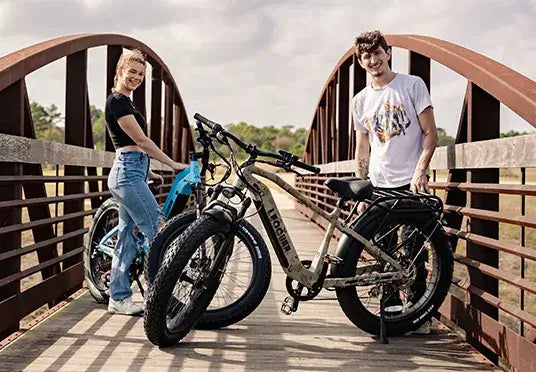
The Leoguar Fastron establishes a new benchmark for all-terrain ebikes under $1,500, thanks to its durable wide tyres, powerful motor, and high-quality frame, making it well-suited for both everyday commutes and off-road excursions.
The specifications are a 750W rear hub motor, a 720Wh battery (48V 15Ah), Shimano 8-speed gearing, Tektro hydraulic disc brakes, a top speed of 28 mph (which can be unlocked), and 70 lbs. This model includes a cadence sensor and a CANbus LCD together with anti-theft security and USB charging.
The reason it makes the cut is that the 750W motor, together with the 26-inch by 4.0-inch tyres, gives it excellent control and stability on sand, snow, gravel, or pavement. Since it has a range of up to 60 miles, the bike is designed for riders who require long-range performance. Unlike a lot of cheap electric bikes, it features a smart LCD screen which is waterproof, along with advanced diagnostics and a secure passcode system. Both the front suspension and the ergonomic design offer comfort for a wide variety of rider heights (5’3” to 6’5”). Although it is heavier than certain other models, its performance for the price is difficult to match.
Bear in mind that affordable electric bikes with fat tyres generally give up extra stability and comfort to carry more weight, so take into account the implications of using them when going up stairs, using car racks, and handling them on a daily basis.
For whom: The rider who wants a single powerful e-bike for all sorts of things—such as tough weekend rides and daily travel in the city. It's suitable for people who want trail-grade durability without giving up the convenience of commuting.
Best for Commuting: Aventon Soltera.2
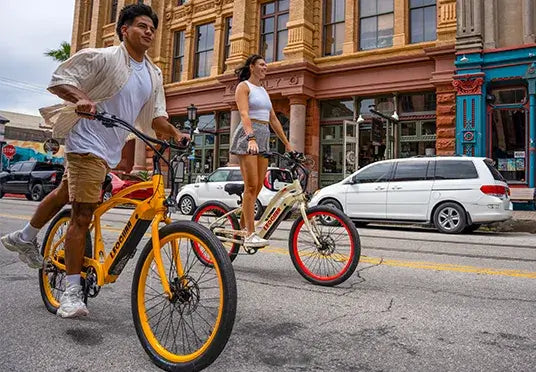
The Aventon Soltera.2 is a stylish and elegant electric bicycle which focuses on ride quality rather than on raw power; it has the appearance and feel of a regular bicycle and is therefore a pleasure to use on city streets and on bike paths without showing the bulky look that is common among many other e-bikes. When it comes to daily commuting, an inexpensive electric bike is considerably more practical if it is ready for actual weather conditions and real errands—for example, it should have lights, fenders, and the possibility of fitting a rack without having to carry out complicated modifications.
The specifications are a 350W hub motor, a 36V 9.6Ah battery, hydraulic disc brakes, a top speed of 20 mph (Class 2), and 46 lbs; the lower weight makes it considerably easier to use each day and store.
The reason it makes the cut is due to its torque sensor, a feature that is uncommon at this price level. While we were riding the bike, the torque sensor provided a very natural and intuitive riding experience one that bikes with cadence sensors are unable to replicate. It also has integrated headlights and taillights that double as turn signals, a major safety advantage when riding in cities. Although the 350W motor is efficient, it might seem underpowered for people riding in extremely hilly areas or those who often carry heavy loads.
For whom: The city commuter who wants a light design, good ride quality, and a simple, minimalist style that will not seem out of place in a professional environment.
Best for Light Trails: Ride1Up Turris XR
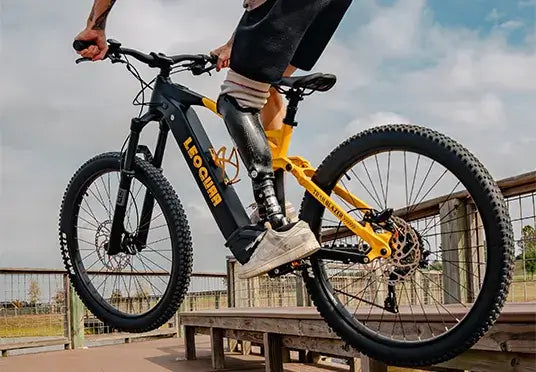
If your idea of fun calls for exploring beyond the pavement, the Ride1Up Turris XR is an excellent entry into the world of electric mountain bikes. It offers a component package that is surprisingly capable for its price, bridging the gap between road and trail riding.
The specifications are a 750W hub motor, a 48V 15Ah battery, hydraulic disc brakes, and 100mm of suspension fork travel. Since the battery is larger it offers a great range for longer trips off the beaten track.
The reason this bike makes the cut is that the 100mm travel suspension fork together with hydraulic disc brakes gives you the confidence to go onto dirt roads and non-technical trails. On gravel paths the front suspension effectively smoothed out the bumps and thus offered a significantly more comfortable and controlled ride than that of a rigid bike. Although its hub motor and general construction are not appropriate for aggressive, technical singletrack, it is ideal for fire roads and trails at a beginner level. It also performs very well on tarmac, which makes it a real hybrid option.
For whom: The rider who is adventurous and wants to extend their riding experience to include gravel roads, off-road tracks, and light-duty trails without having to spend a lot of money on a specialist cheap electric mountain bike.
Best Folding/Compact: Ride1Up Portola
For people who are limited by space, a folding e-bike is a real breakthrough when it comes to storage and transport.
If you're commuting and storage is your main concern together with having mostly smooth pavement for your route, then a folding e-bike under $1000 is a worthwhile option. The drawback is that compact wheels and a shorter frame design generally make the bike feel less stable when travelling at higher speeds than a full-size commuter bike. For people who live in cities and have limited space in their apartments, this compromise may still mean that the most affordable folding e-bike is the better everyday choice.
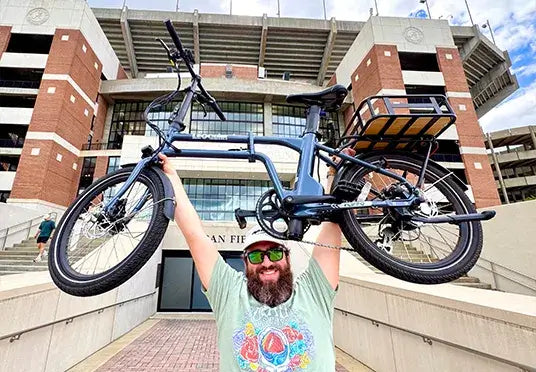
An electric bike which is affordable is only to be considered as 'portable' when you actually have the comfort to move it—thus both weight and the size when folded are just as important as the motor's wattage. The Ride1Up Portola manages to include a surprising deal of power and usefulness in a small and easy-to-store design.
The specifications are a 750W hub motor, a 48V 13.4Ah battery, hydraulic disc brakes, and when folded the dimensions are 35" x 18" x 27" with a weight of 59 lbs; the folding mechanism is well designed and works smoothly without affecting the structure's integrity.
The reason it makes the cut is that, even though it is small, we were pleased with the swift way it accelerates thanks to the 750W motor, which is comparable to that of many bigger bikes. It folds down quickly and has a considerate design that enables it to be rolled when folded, which makes transporting it a lot easier. The fact that hydraulic brakes are included at this price level on a folding bike represents a significant benefit for both safety and performance. Although the smaller 20-inch wheels and compact frame may seem a bit tight for riders who are over 6'2", most people get used to the riding position rather quickly.
Who is it for? It is for anyone who lives in an apartment, owns an RV, or is a commuter who needs to combine their bike ride with public transport or a car.
How to Choose Your Bike
Besides our top picks, knowing a few key technical basics will help you judge any e-bike you’re looking at. These tips will help you make a smart choice that fits your needs and riding style.
Motor Power and Type
Most bikes in this price range use a rear hub motor, which gives steady, reliable power. They’re affordable and give a “pushing” feel that many riders like. 500W is a good all-around choice, while 750W gives extra power for heavy loads or steep hills.
If you’re choosing between a single-speed and a geared budget ebike, geared models suit more people. Single-speed bikes are simple to maintain and work well on flat city routes, but they’re less flexible on hills and in heavy traffic. For most buyers under $1500, a 7-speed or 8-speed drivetrain is a better value because it makes daily riding easier.
Battery Range and Safety
The capacity of a battery, expressed in Watt-hours (Wh) or Amp-hours (Ah), indicates how far you being able to travel. The higher the figure, the greater the range, but the actual distance covered will vary according to factors such as the terrain, the mass of the rider, and the level of assistance used. According to Electrek's guide from February 2026, more affordable electric bikes commonly compromise on battery size or power, even if their range appears good on paper. Hence, when looking at a budget electric bike you should assess it on the basis of its useful range rather than just the largest number in the advertisement.
In actuality, even an affordable electric bike with a long range will experience a diminution in its range when the weather is cold, when travelling on soft ground such as sand, or when carrying goods. Therefore, it's a good idea to choose a bike that has a bit more range rather than simply selecting the one that has the highest figure listed.
If you have a commute that ranges between 20 and 30 miles and use moderate assistance, then the standard battery that is available on a budget electric bicycle is generally sufficient. However, it does make sense to replace the battery if you ride at a fast pace, carry goods, or want to charge it less frequently. It is usually better to purchase the correct battery size initially rather than attempting to upgrade it later.
Safety is absolutely the top priority and must never be exchanged for a lower price; you should only purchase an e-bike that has a battery and charging system certified to UL 2849, since this means it has been tested to prevent fires.
E-Bike Classifications
- In Class 1, the bikes provide only pedal assistance (there is no throttle), and the maximum speed with assistance is 20 mph; they can be used on most bike paths and trails in which traditional bikes are allowed.
- Class 2: Has both pedal-assist and a throttle, with a maximum speed of 20 mph for both modes. Some areas restrict where these can be ridden due to the throttle capability.
- Class 3: Pedal-assist only (some may have a throttle that cuts out at 20 mph) with a maximum assisted speed of 28 mph. These are often restricted from certain bike paths and trails but are excellent for road commuting.
Brakes and Frame
For safety and dependability, it's important that your bike is fitted with disc brakes at the very least. Hydraulic disc brakes are superior to mechanical ones since they are stronger and require less maintenance. The majority of the bikes in this range have aluminum frames, as this setup provides a good balance between strength, weight and cost. A step-thru bike may be a good option for people who cycle every day because it makes it easy to mount the bike, particularly if you are wearing work clothes or have a bag.
When deciding between a budget fat-tire bike and a commuter-style e-bike, the better value will depend on where you ride the most; commuter bikes are more efficient, handle lighter loads, and are easier to store, whereas fat-tire bikes are the better choice if you ride on rough roads, mixed surfaces, or if you want a steadier and cushioned ride.
When you need to take your bike with you frequently, it's a good idea to check the total weight of the bike. Additionally, you should look at the weight capacity that the manufacturer has recommended to ensure that the bike can cope with your weight together with any luggage.
Test Rides and Support
If you can, go for a test ride on the bike so that you can get a proper sense of the way the engine responds, how well it brakes, and the general comfort. There's no substitute for actually being on the bike and observing how it handles. For brands that sell directly to consumers, this is not always possible, but a number of them do provide generous return policies. If this is the case, then it's a good idea to consult detailed reviews from a variety of different sources and to check the company's record with regard to customer support and warranty service.
The durability of an affordable electric bike usually comes down to simple factors such as being able to obtain parts, having clearly stated warranty terms, and receiving quick help if you need a new battery or controller.
When you're buying one, it's easy to miss this point. Electric Bike Review commonly emphasizes that the value of an affordable e-bike isn't only determined by the motor or the battery at the start, since it also depends on how easy it is to obtain support one or two years down the line; a budget e-bike from a brand that offers replacement parts, has available batteries, and provides a a clear warranty will typically last longer than a cheaper bike that has poor support.
If you're looking for long-term value then choose an inexpensive electric bike which will allow you to make upgrades later on, for example by fitting a larger battery, better tyres, or adding commuter features such as racks and fenders.

Your Pre-Purchase Checklist
- Primary Use: Is this for commuting, leisure, trails, or hauling cargo? Match the bike to your main activity to ensure you get the features that matter most for your riding style.
- Range Needs: How far is your typical ride, and do you have access to charging at your destination? Choose a battery that comfortably exceeds your typical distance to account for battery aging over time.
- Legal Class: Does the bike's class (1, 2, or 3) comply with your local trail and path regulations? Check with local authorities if you're unsure about where you can legally ride.
- Storage & Weight: Where will you store the bike, and can you lift it if necessary? Consider whether you need to carry it up stairs or load it onto a vehicle regularly.
- As to the assembly, are you capable of carrying out some mechanical assembly or do you need a bike that is ready to ride when it is shipped? If you're not inclined towards mechanical work then you should take into account the assembly costs at local bike shops.
Choosing an electric bike is an exciting step which can change both the way you get about and the kind of fun you have. The good point is that there are currently more high-quality, reliable and enjoyable models under $1500 than there have ever been. If you have realistic expectations regarding weight, range and after-sales support, an inexpensive electric bike under $1500 is in fact able to take over short car trips and at the same time remain enjoyable to ride.
When you understand the benefits that your money will provide and concentrate on the features that are important for the way you ride, you'll be in a position to choose the correct affordable electric mountain bike and begin your new venture with confidence.
Frequently Asked Questions
1. How long do the batteries last on cheap electric bikes?
Most of the batteries that fall within the $1000 to $1500 price range will remain usable for 3 to 5 years if used regularly. The length of time a battery lasts is determined by how frequently you charge it, the way in which you store it, and the quality of the cells themselves. In order to get the best battery life, you should choose ones that have Samsung, LG, or Panasonic cells. Taking proper care of the battery—such as avoiding very high temperatures and not allowing it to be fully drained—can greatly increase its lifespan.
2. Q: Is it possible for me to ride an electric bike in the rain?
Yes, the majority of electric bikes are built so that they can cope with light rain and wet weather, but you should steer clear of riding through deep puddles or during heavy showers since this could damage the electrical parts. After any ride in the rain, make sure to thoroughly dry your bike and keep it in a dry location. You should also check the IP rating of your bike—while most cheap e-bikes have a basic level of water resistance they are not fully waterproof.
3. Q: Is it necessary for me to have a licence and insurance for an electric bike?
In most of the US states, no licence or insurance is required for Class 1 and Class 2 e-bikes; the requirements for Class 3 e-bikes will depend on the state in which you live. In some areas, helmets are mandatory for certain age groups or for certain e-bike classes. It is important that you check the laws in your local area and in your state before buying one, since the regulations differ greatly from one jurisdiction to another.
4. Q: How much does it cost to charge an electric bike?
Charging an e-bike battery typically costs between 10-20 cents per full charge, depending on your local electricity rates. Most batteries hold 400-700 watt-hours of energy, so even with daily charging, you're looking at less than $50 per year in electricity costs. This makes e-bikes incredibly economical compared to driving a car or using public transportation.
5. Q: What maintenance do electric bikes require?
Electric bikes need similar maintenance to regular bikes - chain lubrication, tyre pressure checks, and brake adjustments. The electrical components typically require minimal maintenance, but you should keep connections clean and dry. Plan for annual tune-ups at a bike shop, and expect to replace the battery every 3-5 years. Most mechanical issues can be handled by any qualified bike mechanic.
6: Is a folding budget ebike worth it for commuting?
Yes, if easy storage and portability matter more to you than full-size ride feel. A folding budget ebike works especially well for apartment living, mixed transit commutes, and short to medium city rides. If you ride longer distances every day or want the most stable handling possible, a full-size commuter model is usually the better option.
7. Q: Should I choose a single-speed or geared budget ebike?
For most riders, a geared bike is the better choice. A 7-speed or 8-speed setup gives you more flexibility on hills, in traffic, and on longer rides. A single-speed budget ebike can still be a good fit for flatter areas and riders who want the simplest possible maintenance routine, but it is usually the more limited option overall.


Leave a comment