




What Are the Best Affordable Electric Bikes Under $1,600?
Looking for an electric bike can be a exciting experience. In 2026, a greater number of riders are coming to the realisation that the best budget e-bike is not just the one that has the lowest price; it is one that is reliable and at the same time provides real comfort and good performance.
Some of the best e-bike models are remarkably pricey, frequently reaching $3,000, $4,000, or even higher. Although there are a number of more economical choices available, the market can seem confusing. Because of the many unfamiliar brands, the specialist language, and the fact that various models look very similar, it's easy to become concerned about spending too much or choosing a bike that isn't suitable for you.
The purpose of this guide is to simplify your decision by explaining the relationship between price, comfort, and performance. The most affordable e-bike for you will vary according to your requirements—whether you're commuting five miles or just taking a ride on the weekend. Our aim is to help you achieve the best value for your money.
For most people the most worthwhile budget electric bike is under $1,000, since those in this price range usually manage to combine durability, ride quality and everyday usefulness. When you're looking for an electric bike that costs less than $1,000, it's not enough to look only at the lowest price; you should also check that the bike has good brakes, a safe battery and solid components. It is precisely those features that distinguish the best value bikes from the cheapest ones available online.
Hands-on reviews carried out in January 2026 indicate that a large number of e-bikes priced under $1,000 have to give up too much in quality or durability. The best e-bike available on a budget is not the one that costs the least; rather, it is the model that involves the fewest hidden compromises when it comes to the brakes, the battery, and the overall construction.
In 2026, independent laboratory tests showed large differences among cheap e-bikes. Although some models priced under $1,000 with 500Wh batteries achieved only 25 to 30 miles per charge, other e-bikes in the same price category managed 35 to 40 miles. This difference can be the deciding factor when looking for the best value.
What Affordable Really Means
Shopping is simpler when you have realistic expectations since the term 'affordable' has different meanings for different people, so it's worth considering what your budget typically allows you to purchase. For the majority of riders the best e-bike available on a budget is in the range of $800 to $1,500, where dependability becomes more important than the compromises made in the case of very cheap models.
A large number of people who are buying a bike for the first time are attracted by e-bikes that cost $500, but the best value models generally have safety-tested batteries and dependable components as standard features. Even though you may come across bikes that are advertised at less than $600, genuine quality and safety usually only start to become available from about $800 to $1,000. This opinion is one that experts, such as those employed by Consumer Reports, share.
When assessing value, Consumer Reports also advises comparing the real-world range, performance, and safety features. The reason is that the most useful discussions about budget e-bikes generally begin with models that have better components and battery systems, not simply those that are cheaper.
It is important to have battery safety certification, particularly with regard to bikes that cost more than $1,000. The CPSC has actually recalled tens of thousands of e-bike batteries because of overheating and fire hazards, so battery compliance should be a necessary feature rather than just a pleasant extra when you're selecting an e-bike on a budget.
A battery that is certified by UL (look for UL 2271 or UL 2849) has undergone rigorous safety tests in order to help avoid fire hazards, so you can have your mind at ease. The following gives a realistic view of what you can expect according to different price ranges:
The Core Trio Framework
Instead of being put off by all the specifications, use a simple decision-making method known as the Core Trio; when you examine the factors of Comfort, Speed/Power, and Price for each e-bike, you will be able to concentrate on the aspect most important to yourself and end up with a choice that meets your requirements.
| Price Range | What You Typically Get | Best For |
|---|---|---|
| Under $800 | Basic hub motor (250W-350W), cadence sensor, mechanical disc brakes, smaller battery, basic parts. | Short, flat commutes; very casual riders; those willing to accept big compromises in performance and how long it lasts. |
| $800 - $1,200 | More powerful hub motor (500W+), larger battery, often includes fenders and a rack, better build quality. | Daily commuters on mostly flat or moderately hilly terrain, riders looking for a solid, functional workhorse. |
| $1,200 - $1,600 | 750W motor, hydraulic disc brakes, front suspension, sometimes a torque sensor, branded components (Shimano, Tektro). | Riders wanting higher performance, more comfort on bumpy roads, and features that rival more expensive bikes. |
Pillar 1: Ride Comfort
Comfort entails more than just a soft seat; it's about how the bike feels during the entire time you're riding it. The frame's shape has an impact on your posture. Bikes with an upright design are good for relaxed rides and provide better visibility, whereas a forward-leaning position aids efficient pedalling. Bikes with a step-thru frame make it much easier to get on and off, particularly when you have limited mobility.
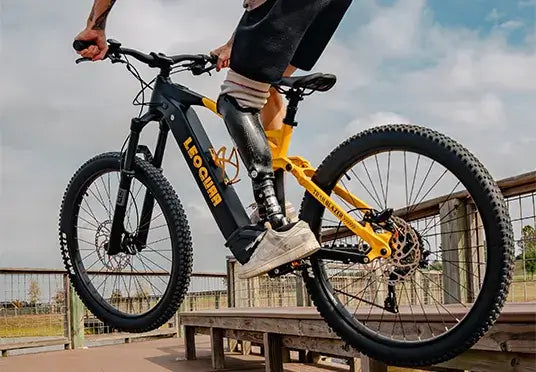
 Suspension and the tyres are also important; without it, you'd feel each bump through the handlebars. A simple front suspension fork can smooth out rough roads and make cycling in the city a lot more comfortable. Tires that are wider and have lower pressure provide additional cushioning too.
Ask yourself:
What condition are the roads in on my regular route—are they smooth or do they have potholes?
- Should I choose an upright and relaxed position or a more athletic one? Is there any mobility issue of mine that would suggest a step-thru frame is better?
Pillar 2: Speed and Power
It's the motor that gives the e-bike its 'e' and provides that extra power boost. The majority of cheap e-bikes have hub motors, which are located in the middle of either the front or rear wheel. Hub motors are dependable and cheap. When choosing one, you should focus on the watts (W) as a measure of power and the Newton-meters (Nm) for torque, since this assists with climbing hills.
The size of the battery is just as significant. Watt-hours (Wh) indicate how much energy the battery holds. A 500Wh battery typically provides around 25 to 45 miles, the exact figure depending on your weight and how heavily you use the motor. Bigger batteries, such as 672Wh or 720Wh, can deliver between 40 and 55 miles. Two bikes that cost the same can seem very different if one of them has a larger battery.
For commuters, a good budget e-bike should at least have a 500W motor, together with sufficient torque and battery power so that it can cope with everyday stop-and-go journeys without any problems.
When trying to find the best commuter e-bike, daily reliability is more important than maximum speed; city traffic, frequent stopping, and many weeks of riding will quickly reveal whether the bike's components are of weak quality. A genuine value commuter bike should be able to withstand months of use, not just perform well during a short test ride.
Ebikes are also put into classes:
A large survey carried out in North America showed that the majority of e-bikes have a top speed of around 20 mph, whereas approximately one in five riders have models that go as fast as 28 mph. Therefore, when choosing the best e-bike within a budget it will usually come down to whether or not you actually need Class 3 speed or merely want a good commuter bike.
- Class 1: It offers only pedal assistance, with a speed limit of 20 mph.
- In Class 2, there is a throttle which allows for power to be delivered without using the pedals, up to a speed of 20 mph; in Class 3, pedal-assist is the only feature available, with a top speed of 28 mph (however, some Class 3 bikes also have a throttle that cuts off at 20 mph).
On the basis of our experience, a 500W hub motor together with about 50Nm of torque is suitable for the majority of commuters. Such motors typically offer a torque of 40 to 60Nm, which is sufficient for use in towns and for climbing mild hills. If you upgrade to 750W, you will get a torque of 70 to 90Nm, resulting in quicker acceleration and improved ability to climb hills, but this also increases the weight and causes greater battery consumption. For most commuters, however, the 500W class still provides the best value.
A 500-watt motor provides a good burst when you first start moving and is well suited to tackling mild inclines without being excessive, while a 750-watt motor has a more motorcycle-like character and is exciting, although it could be too powerful for quiet bike paths.
Ask yourself:
- Are there steep hills on my commute that require more torque?
- Do I want a throttle for cruising without pedaling? Is reaching a top speed of 28 mph important for keeping up with traffic?
Pillar 3: The Price and Its Trade-offs
The pillar acts as a unifying factor; whenever you save a dollar on an affordable e-bike you are generally having to give up some aspect of the design or the parts. If you understand these compromises you will be in a better position to decide which features are most important to you.
The main areas where compromises are made are the brakes, the sensors, and the battery. If you are searching for the best cheap e-bike, you should carefully consider how the brakes work, how responsive the sensors are, and whether the battery has been certified. It is these points that usually distinguish a good value from a temporary bargain.
Brake discs that are mechanical in nature and operated by a cable are cheaper and easier to keep in good condition than hydraulic brake discs which use fluid and give a softer and more responsive sensation.
The main thing that influences the way a ride performs is the sensor. Tests carried out in 2026 found that a smoother delivery of power has a greater effect on comfort than simply having more power. Riders favoured torque sensors because of their natural feel and the quieter ride they provided. Although the bikes had the same top speed, a smoother assist made long rides more comfortable.
The greatest improvement you can make is to go from a cadence sensor to a torque sensor. A cadence sensor operates like an on/off switch—whenever you're pedalling, it registers power. A torque sensor, on the other hand, functions like a volume control, adjusting the motor's power in accordance with your effort. As a result, the ride becomes smooth and natural, almost as if you had superhuman legs. It's generally worth spending a little more money on this feature.
Ask yourself:
- Am I willing to trade the natural ride feel of a torque sensor for a lower price?
- Are basic mechanical brakes enough for my mostly flat, lower-speed rides? How much range do I truly need? A bigger battery costs more, but you may not need it for a short commute.
Top Picks for Best Affordable Ebikes
The best budget e-bike brands are generally the ones that offer good customer support, have reliable quality control, and provide designs which are easy to upgrade. It's best to steer clear of cheap brands that have no service network. If you are looking for an e-bike that is both dependable and affordable, then you should look for long-term support, a strong warranty, and the availability of spare parts since these points turn a low price into real value.
We have found four excellent ebikes that provide outstanding value in various categories after having tested numerous models and applied our Core Trio framework.
Large comparisons carried out in 2026 in the commuter, folding, and fat-tire categories reveal similar value patterns. For instance, a commuter equipped with a 500Wh battery that achieved a range of 35 miles costs about $1,099, whereas a 672Wh Class 3 model attains 45 miles at a price of approximately $1,499. Although the greater price results in more speed and range, it is not the case that every rider needs this upgrade in order to find the best e-bike value for their money.
They fulfill the promises made of them and provide one of the best combinations available on the market right now.
| Model | Approximate Price | Best For | Key Feature |
|---|---|---|---|
| Lectric XP 3.0 | ~$999 | Ultimate Utility & Portability | Robust folding frame, high payload capacity |
| Aventon Pace 500.3 | ~$1,399 | Smooth Urban Commuting | Responsive torque sensor, integrated lights |
| Ride1UP 700 Series | ~$1,495 | Best All-Around Performer | Hydraulic brakes, 28 mph top speed |
| Rad Power Bikes RadRunner 2 | ~$1,299 | Customizable & Fun | Moped-style utility, huge accessory ecosystem |
Lectric XP 3.0: The Folding Powerhouse
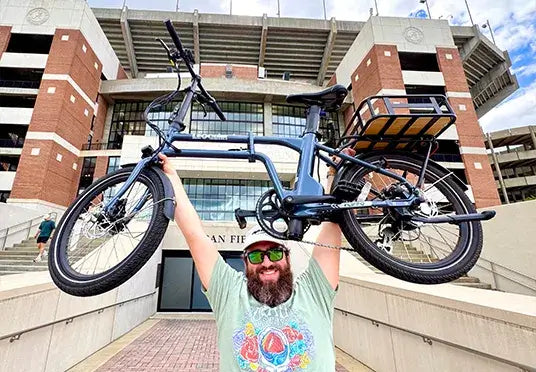
The Lectric XP 3.0 has earned its status as an icon in the budget ebike sector for a solid reason: it's more of a folding utility vehicle than a bicycle. It comes ready to use right out of the box, thanks to its powerful motor, its heavy-duty tires, which absorb shocks, and the inclusion of a solid rear rack. A major advantage of this model is its usefulness – it can transport groceries, handle poor road conditions, and then be folded up and kept in an apartment closet or in the boot of a car. Although it is heavy and doesn't offer the most refined riding experience, its sheer capability combined with its price of less than $1,000 makes it without equal. If your main concern is getting the most function for your money and you need a bike that can cope with any task, then this is the one for you.
The Aventon Pace 500.3: The Polished Commuter
For those who value ride quality above all else, the Aventon Pace 500.3 is amazing in this price range. Its prominent feature is the torque sensor, which delivers power so smoothly and naturally that it feels like an extension of your own body. The bike feels nimble, responsive, and far more expensive than it is. Aventon also nails the details: the frame is clean with integrated lights and battery, the color display is modern, and turn signals are a welcome safety feature. It's the perfect choice for the urban commuter who wants a bike that looks as good as it rides and provides a genuinely enjoyable, natural-feeling bike ride without giving up power for the hills.
Ride1UP 700 Series: The Feature-Packed Speedster
The Ride1UP 700 Series is for the rider who wants it all without paying a premium. This bike blurs the line between being affordable and performing well. When people are looking for the best electric bike under $2000, bikes in this price category usually offer the best value. You'll find hydraulic brakes, bigger batteries, and Class 3 capability all included in one unit. For most riders, this range represents the genuine best electric bike value for the money. riders, this range defines the real best e bike for the money.
This is a real Class 3 e-bike, reaching up to 28 mph with pedal assist, so it can even replace a car for longer commutes. What really sets it apart are the features: hydraulic disc brakes providing strong stopping power, a front suspension fork for comfort, and a tough Shimano drivetrain. It also comes with fenders, a sturdy rear rack, and lights. If you want the most features and speed for your money, the 700 Series is hard to beat.
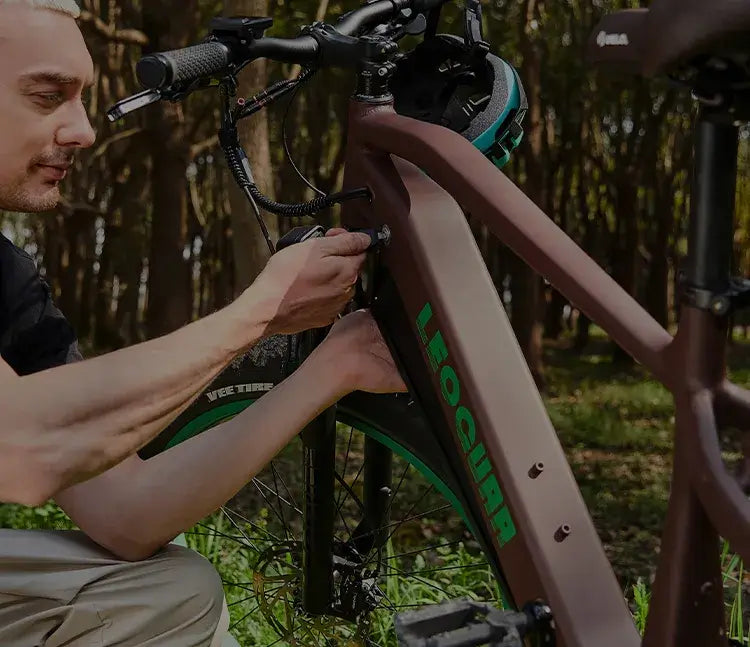
Leoguar Sprint: The Everyday Utility All-Rounder
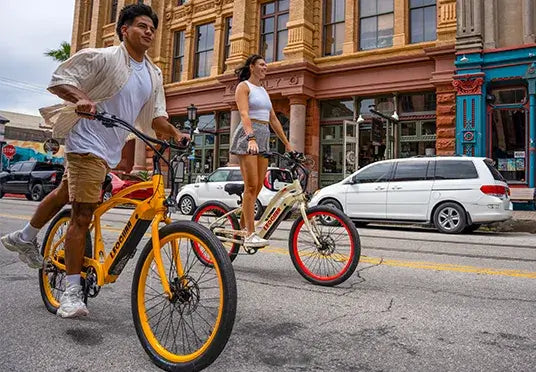
The Leoguar Sprint Utility Electric Bike was designed for individuals who want a single e-bike that is capable of handling all sorts of tasks. For those in the market for an affordable e-bike to use every day, the Sprint is distinguished in that it stresses comfort, a design suitable for carrying passengers, as well as practicality in real-life situations rather than just speed.
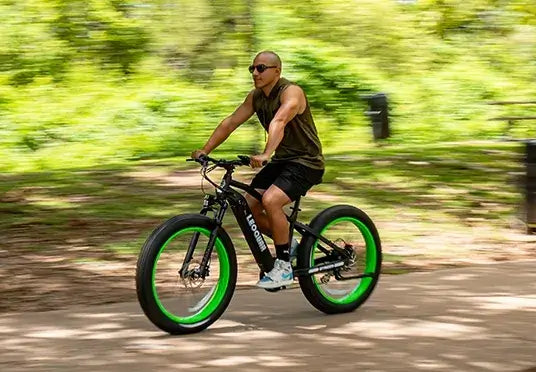
Because of its compact fat-tire frame and upright seating position, the Sprint is immediately stable and comfortable no matter if you are commuting, running errands or riding with a passenger. The smooth 350W motor, together with the responsive cadence sensor, provides steady acceleration without feeling jerky, which makes it easy for new riders yet still powerful enough for everyday use.
What makes the Sprint so attractive is the combination of practicality as well as comfort. It has a built-in rear rack which can be used to carry goods, groceries or a child seat, and the low-step frame means it's easy to get on and off. The 614Wh battery provides a range of up to 55 miles, enough so that most people can ride all week on a single charge. The 20-inch by 3.0-inch fat tyres deal with rough roads and curbs smoothly. Because of its dual-crown suspension fork, wide and comfortable saddle, bright LED lights, and powerful 180mm disc brakes, the Sprint is clearly built with real-world use in mind. If you are looking for an affordable utility e-bike that is comfortable, versatile and easy to use, then the Leoguar Sprint is an excellent all-rounder and offers more than you would expect for the price.
Budgeting Beyond the Bike
The fact that your investment ends with the bike itself should not be disregarded, so we strongly advise setting aside an additional amount of money between $150 and $300 for necessary equipment and for any possible expenses.
Safety gear comes first. You’ll need a good helmet and a strong lock to protect your new bike. Many of our recommended bikes include lights, but if yours doesn’t, be sure to get front and rear lights for visibility.
You should also think about assembly and maintenance. Most affordable e-bikes are sold directly to you and arrive in a box. Putting them together is usually simple—attach the handlebars, pedals, and front wheel. But if you’re not comfortable with tools, a local bike shop can assemble it for $100 to $200. Call ahead, since not all shops work on direct-to-consumer brands.

Our Final Verdict
Finding the best affordable ebike isn't about finding the cheapest option. Ultimately, the best budget e bike is the one that delivers lasting reliability, safe components, and ride comfort at a price that really makes sense for everyday life. The best e bike for the money is not defined by price alone. It is defined by how well the bike fits your daily routine and how few compromises it forces you to accept. Smart value always outperforms a low sticker price.
What actually matters is obtaining the best value in relation to your own requirements. If you use the Core Trio—that is, managing Comfort, Speed/Power, and Price—you can get rid of the marketing and concentrate on the things that are important to you.
You can see from the bikes we've mentioned that it's possible to have a reliable, enjoyable and life-changing e-bike without having to spend a lot of money. If you're looking for a folding type of bike such as the Lectric XP 3.0 or a smooth commuter like the Aventon Pace 500.3, then there's a good choice available to you. The ideal bike exists and you now know how to locate it.
Frequently Asked Questions
Q: What should the lowest budget be if you want a reliable e-bike?
A: Although you can find electric bikes that cost less than $600, we suggest setting aside at least $800 to $1,000 if you want to ensure reliable quality and safety. Bikes in this price range generally come with better components, UL-certified batteries for safety purposes, and will last longer when used regularly.
Q: What is the difference between a cadence sensor and a torque sensor?
A: A cadence sensor works like an on/off switch - it provides power whenever you're pedaling, regardless of how hard you pedal. A torque sensor is like a volume dial that corresponds to the motor's power to your pedaling effort, creating a more natural cycling experience that feels like you have superhuman legs.
Q: Do I need a Class 3 ebike that goes up to 28 mph?
A: It depends on your needs. Class 3 ebikes are great for longer commutes where you want to keep up with traffic or cover distance quickly. For casual rides, neighborhood trips, or bike paths, Class 1 or Class 2 ebikes that top out at 20 mph are usually sufficient and frequently more affordable.
Q: Should I buy an ebike online or from a local bike shop?
A: Many of the best affordable ebikes come from direct-to-consumer brands sold online, offering better value for money. However, buying from a local shop provides prompt support and professional assembly. If you buy online, budget an extra $100-$200 for professional assembly if you're not comfortable doing it yourself.
Q: How important is it to have front suspension on an affordable ebike?
A: Front suspension significantly improves comfort, especially on rough urban roads or paths with cracks and bumps. While it adds to the cost, it's one of the most noticeable upgrades for ride quality. If your routes are mostly smooth pavement, you might prioritize other features, but for mixed terrain, front suspension is worth the investment.


Leave a comment