




Are Electric Bikes Safe for Seniors Citizens?
Electric bikes help seniors regain freedom, fitness, and fun. But one question matters most: how do you choose a safe electric bike for seniors? We'll give you a clear answer and show you how to pick the right ebike and ride safely.
Yes, electric bikes can be very safe for seniors, but this answer comes with important conditions. Safety depends on choosing the right e-bike and building good riding habits. The challenges are real and you must respect them:
- Heavier: E-bikes weigh much more than regular bikes (often 50-70 lbs vs. 20-30 lbs) because of the motor and battery. This extra weight makes them harder to handle at slow speeds, when walking the bike, or if you lose balance while stopped.
- Faster: The motor helps you keep higher speeds easily. While this sounds great, it also gives you less time to react and makes any crash more serious.
- Sudden Speed: A badly set pedal-assist system or hitting the throttle by accident can make the bike jump forward without warning. If you're not ready for this, you can easily lose your balance.

These factors don't make e-bikes unsafe by themselves. They just mean seniors must approach them in a different way. This means getting a more stable electric bike design and learning more slowly and carefully. The serious results of falls for seniors show why this careful approach cannot be skipped.
The Real Risks Seniors Should Know Before Buying an Ebike
Knowing exactly what causes accidents helps you prevent them. For older adults, the risks aren't about going super fast or doing dangerous tricks. They're about specific moments where the bike's features can be too much for the rider to handle.
Bike Weight Problems: The extra weight from the motor and battery shows up most when you're stopped or going very slow. The most common accidents we see are simple tip-overs while getting on, getting off, or trying to move the bike in a garage or on a sidewalk. A 60-pound bike that starts to lean is hard for anyone to catch.
Motor Turning On When You Don't Expect It: This causes many balance-loss accidents. It often happens when you're stopped, forget the pedal assist is on a high setting, and push down on a pedal to get comfortable. The bike jumps forward and surprises you. Also, hitting a throttle by accident while getting on or off can do the same thing.
Body Changes That Come With Age: It's normal for reaction time, balance, and core strength to change as we get older. An e-bike can quickly reach 15-20 mph, which means you need to make decisions faster and control the bike better. A pothole or person walking that was easy to avoid on a regular bike needs a quicker response on a faster e-bike.
More Serious Injuries: The science is simple here. A fall from a heavier, faster-moving bike can cause worse injuries. Recent studies on e-bike injuries show that broken bones happen more often in e-bike crashes compared to regular bikes, which is very important for senior riders to know.

Key Features of a Safe Electric Bike
Picking an e-bike with the right features is the best way to reduce the risks above. Think of this as your must-have shopping list.
Your E-Bike Safety List
- Step-Through Frame
- Upright Riding Position
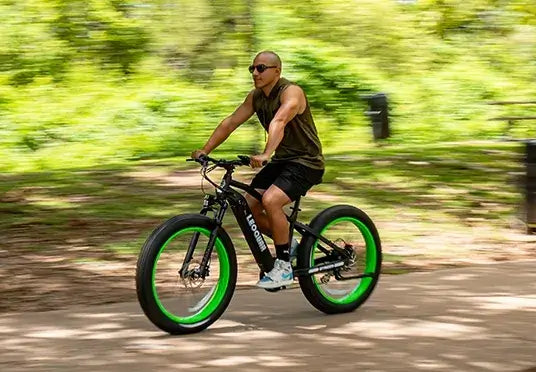
- Wide, Stable Tires
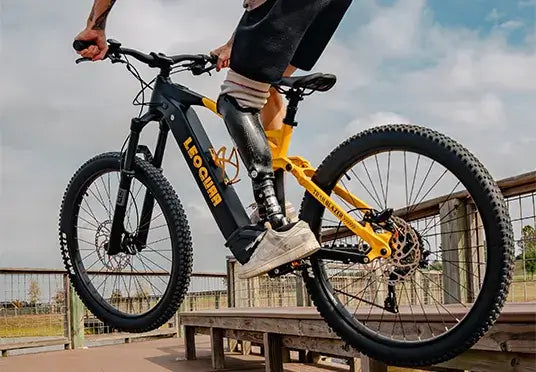
- Strong, Easy-to-Use Brakes
- Smooth, Predictable Motor
Step-Through Frame
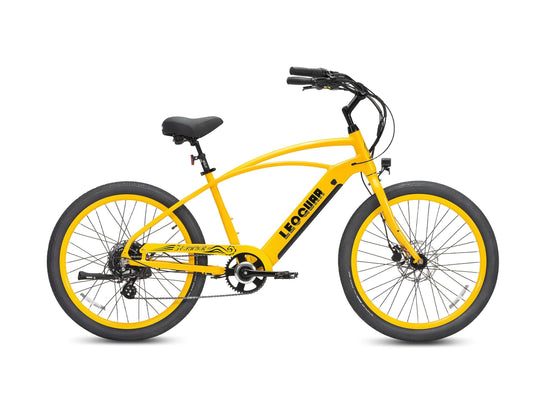
This might be the most important safety feature for e bikes for seniors. A step-through (or low-step) frame has a very low top tube that lets you walk through the frame to get on and off.
Why it's important: It almost completely stops the risk of falling while getting on or off. You don't need to swing a leg high over the back of the bike, which is when you can lose stability, especially if you have hip, knee, or balance problems. An easy-to-mount step-through ebike builds confidence from your very first ride.
Upright Position and Seat
Look for an ebike that lets you sit fully upright, with handlebars that curve back toward you. This is often called "cruiser" or "Dutch-style" design.
Why it's important: An upright position reduces strain on your back, shoulders, and wrists, making rides more comfortable. More importantly for safety, it keeps your head up, giving you a better view of the road and what's around you. You can see and be seen more easily. A wide, cushioned seat supports this position and adds comfort.

Wide Tires and Shock Absorption
Tire width has a huge impact on electric bike stability and rider confidence. We recommend tires that are at least 2 inches wide.
Why it's important: Wider tires create a bigger contact area with the ground, which naturally makes the bike more stable and less jumpy. They also soak up small bumps, cracks, and road problems, stopping the handlebars from being jolted and keeping the ride smooth and predictable. For extra comfort and control, front shock absorption can help a lot, especially if your local roads are in bad shape.
Hydraulic Disc Brakes for Safer Stopping
The extra weight and speed of an e-bike need better braking power. Hydraulic disc brakes are the best choice here.
Why it's important: Unlike older cable brakes, hydraulic disc brakes give powerful, consistent stopping power in all weather with very little hand effort. You can bring the bike to a safe, controlled stop with just one or two fingers. This isn't a feature to skip; it's a crucial safety part for managing the bike's speed.
Why a Smooth Motor Makes an Ebike Safer
Not all motors are the same. You want a system known for smooth, predictable power, not one that feels "jumpy."
Why it's important: A gentle motor won't surprise you. When you start pedaling, the power should come on gradually, giving you time to feel secure. Many of the best electric bikes for seniors have multiple assist levels; a good system will have a very low "eco" mode for gentle starts and slow-speed moving. If the bike has a throttle, use it carefully, mainly as a tool for getting started from a stop on a hill, not for high-speed riding until you have lots of experience.

E-Bike vs. Electric Trike: Which Is More Stable?
For some older adults, especially those with big balance concerns or who haven't ridden a bike in decades, the most stable choice is actually an electric trike.
| Feature | E-Bike (2-Wheels) | E-Trike (3-Wheels) |
|---|---|---|
| Stability | Needs balance, especially at slow speeds and when stopped. | Very stable. Cannot tip over when standing still. |
| Easy Movement | Quick and nimble. Easy to navigate tight spaces and bike paths. | Wider turning circle. Can be hard to handle in tight spaces. |
| Storage/Size | Similar size to a regular bike. Easier to store. | Much larger and heavier. Needs more storage space. |
| Learning | Familiar feel for past cyclists, but needs practice with motor and weight. | Almost no balance learning needed. Some practice needed for steering. |
The choice is clear: an e-bike offers a more traditional, quick cycling experience, while an electric trike offers unmatched stability but is bigger and less nimble.
A Safe Learning Plan for First-Time Senior Riders
Your first week with a new e-bike is crucial for building safe habits. Don't just jump on and ride in traffic. Follow this step-by-step plan.
Day 1: Get Familiar (No Power)
Location: An empty parking lot or quiet, flat park area.
Goal: Learn how the bike feels with the power OFF.
To-Do List:
- Practice walking the bike around. Feel its weight.
- Adjust the seat height so you can comfortably place the balls of your feet on the ground while seated.
- Practice getting on and off the bike many times.
- Coast for short distances and practice using the electric bike brakes. Get a feel for how much pressure you need to stop smoothly.
Day 2-3: First Power Use
Location: Same empty parking lot.
Goal: Add the motor in a controlled way.
To-Do List:
- Set the pedal assist to the lowest possible level (Level 1 or "Eco").
- Start pedaling and feel the motor turn on gently. Ride in a straight line for 50 feet and practice coming to a complete, smooth stop. Do this 10-15 times.
- Practice making wide, gentle turns. Don't try sharp turns yet.
- If you have a throttle, don't use it yet. Focus only on the pedal assist.

Day 4-5: Building Control
Location: Same empty lot or a very quiet, low-traffic neighborhood street.
Goal: Master slow-speed control and turning.
To-Do List:
- Practice starting and stopping more often.
- Work on making tighter turns (like figure-eights).
- Practice riding as slowly as possible while keeping balance. This is a crucial skill for navigating intersections and crowded areas.
- If you choose to practice with the throttle, do it only from a complete stop to get moving, then start pedaling.
Day 6-7: Your First Real Ride
Location: A bike path or a quiet neighborhood route you know well.
Goal: Put your skills together in a real-world (but safe) place.
To-Do List:
- Plan your route ahead of time.
- Ride during a time with little traffic and good daylight.
- Focus on being predictable: ride in a straight line and use hand signals.
- Keep your ride short and finish feeling successful and confident.
Essential Gear for Safety
The right bike and good habits are your first protection. The right gear is your backup protection.

- Helmet: This cannot be skipped. Modern ebike helmets are light, comfortable, and proven to prevent serious head injuries. Look for one with MIPS (Multi-directional Impact Protection System) technology for extra safety.
- Gloves: Padded cycling gloves not only improve grip and comfort but also protect your palms from scrapes if you have a minor fall.
- Lights and Reflectors: Your bike should have built-in front (white) and rear (red) lights. Always ride with them on, even during the day, to help cars see you. Make sure your bike has reflectors on the wheels and pedals. Wearing bright or reflective clothing also helps a lot with safety.
Pre-Ride Safety Check
Before every single ride, take 30 seconds to do this simple safety check. It can prevent a mechanical problem that could cause an accident.
- Brakes: Squeeze both brake levers to make sure they feel firm and work properly.
- Tires: Give both tires a firm squeeze. They should feel hard, not soft. Check your tire pressure with a pump at least once a week. Proper pressure is essential for stability and control.
- Quick Releases/Bolts: Check that the levers or bolts holding your wheels and seat post in place are tight and secure.
- Chain: Give the chain a quick look to make sure it's clean and looks properly oiled.
Summary
A safe electric bike starts with the right features: stable handling, hydraulic disc brakes, an easy-to-mount frame, and smooth motor support. The best safe electric bike for seniors is not the most powerful one. It is the one that feels comfortable, predictable, and easy to control. Whether you choose a step-through ebike, a stable electric bike, or an electric trike, the goal is the same: to ride more safely, feel more confident, and enjoy more freedom on every trip.
Frequently Asked Questions
1. Are electric bikes safe for seniors over 70 or 80?
Yes, electric bikes can be safe for seniors over 70 or 80. Age matters less than your individual mobility, balance, and willingness to learn. Many riders in their 70s and 80s use e bikes for seniors safely by choosing the right model (often a step-through bike or electric trike) and riding carefully within their limits.
2. Is a throttle or pedal assist safer for seniors?
For most seniors, a smooth pedal-assist system is safer for regular riding because it feels more like a traditional bike and keeps you active. However, a throttle can be a helpful safety tool for getting started from a stop, especially on a hill, because it eliminates the wobbly "first pedal" movement. The key is to use the throttle carefully and on purpose, not as your main power source.
3. What is the easiest e-bike to get on and off?
A step-through e-bike is definitely the easiest and safest style to get on and off. Look for models with the lowest "standover height" for the best accessibility.
4. What features make an electric bike more stable?
The three most important features for stability are a step-through frame (for stable mounting and dismounting), wide tires (for better ground contact), and an upright riding position (for better balance and vision). For the ultimate stability, an electric trike is the best choice.
5. How much should I expect to spend on a safe e-bike for seniors?
You can find safe, quality e-bikes for seniors starting around $1,200-$1,500 for basic models with essential safety features. Mid-range options with better components typically cost $1,800-$2,500. While you might find cheaper options, investing in quality brakes, a reliable motor, and a well-built frame is crucial for safety and shouldn't be compromised.


Leave a comment