





How to Extend Your Electric Bike Battery Life
Why Your Battery Gets Old
An electric bike battery powers your rides. But it won't last forever, and replacing it early costs a lot of money. The good news is that you can control how long your battery lasts with the right care. Most lithium ion battery for ebike units are made to work for 3 to 5 years, but smart habits can make them last much longer and save you hundreds of dollars. This guide shows you exactly how to do it with tips that really work.
Why Batteries Age
You need to know why batteries get old to take care of them properly. This isn't about blaming companies - it's about understanding a normal process that happens inside all batteries. Learning this basic science helps you see that our care tips aren't random rules but real steps to protect your investment.
The Science Inside
Your battery works like a high-tech sponge that stores energy. When you charge it, tiny particles called lithium ions move from one side (the cathode) to the other side (the anode) where they stay until you need them. During each ride, these ions move back to release power for your motor. But each time this happens, small reactions occur that can't be undone. After hundreds of charge cycles, these reactions slowly damage the parts inside, making the battery hold less energy. This permanent drop in power is called capacity loss, and it's like the sponge becoming less able to soak up water over time.
Understanding Charge Cycles
People often say a lithium ion battery for ebike lasts for 500 to 1,000 charge cycles. This number matters a lot, but most people don't understand what it really means. A charge cycle isn't just plugging in your charger and unplugging it later. One full cycle means using the battery from 100% all the way down to 0%.
The count adds up over time. For example:
- Using your battery until it reaches 50% and then charging back to 100% counts as half a cycle.
- Doing this twice equals one full charge cycle.
This means that using smaller amounts of battery power and charging more often is much easier on your battery than draining it completely. Understanding this fact is the first step to building better charging habits that can double how long your battery lasts.
The 3 Golden Rules
You can do many small things to help your battery, but these three rules give you the biggest benefits. Master these, and you'll handle the most important parts of keeping your battery healthy for years.
Rule 1: The 20-80 Sweet Spot
The best way to make your battery last longer is to avoid charging it to 100% or letting it drop to 0%. Lithium-ion cells work hardest when they're completely full or completely empty, which wears them out faster. Keeping your battery between 20% and 80% charge creates a sweet spot that greatly reduces this stress.
Research on battery health shows that charging to only 90% instead of 100% can double how many charge cycles your battery can handle. The 20-80% rule puts this science to work in real life.
Here's how to use this rule every day:
- Don't charge to 100% unless you need the full range for a long ride. For daily trips or shorter rides, charging to 80% works great. If you know you have a long ride coming up, it's okay to charge to 100%, but do it right before you leave, not the night before.
- Never leave your battery plugged in overnight after it finishes charging. Once the battery reaches its target charge level, the charger should stop, but leaving it connected keeps the battery in a high-stress, fully charged state for hours. Unplug it as soon as it's ready.
- Don't let your battery drop to 0% if you can help it. Try to charge it when it gets down to around 20%. Running it completely dead on a regular basis is one of the fastest ways to cause capacity loss.
Rule 2: Avoid Extreme Temperatures
Your electric bike battery is picky about temperature - it doesn't like being too hot or too cold. Temperature ranks as the second biggest factor in battery health, right after your charging habits.
Heat damages batteries fast. High temperatures speed up the chemical reactions inside the battery, which makes it wear out sooner. Never leave your battery in a hot car, in direct sunlight for long periods, or near heat sources like radiators. Riding in hot weather usually works fine because moving air cools the battery, but storage in hot places causes real damage.
Cold weather hurts performance but doesn't cause permanent damage like heat does. When it's cold, the battery can't release energy as well, so you'll notice your range drops a lot. More importantly, you must never charge a frozen battery. Charging a battery below 32°F can cause lithium plating, which can't be fixed and might create dangerous short circuits.
| Condition | Best Temperature Range | What To Do |
|---|---|---|
| Riding | 41°F to 95°F | Works best in this range. |
| Storage | 50°F to 77°F | Keeps the battery healthy longest. |
| Charging | 50°F to 86°F | Always warm up a cold battery to room temperature before charging. |
Rule 3: Use Smart Storage
If you won't ride your e-bike for more than a few weeks, like during winter, you need to store the battery the right way. Leaving it fully charged or completely empty for months will damage it badly.
- Set the charge level to 40-60%: This charge level puts the least stress on lithium-ion batteries. It slows down the natural process where batteries lose charge over time. Most modern e-bike displays show the charge level, so just ride or charge until it reaches this range.
- Store it somewhere cool and dry: Pick a spot that stays within the good storage temperatures listed above. A closet inside your climate-controlled house works perfectly. Don't use basements or garages that might be damp or have big temperature changes.
- Check on it regularly: Even when stored properly, batteries slowly lose charge on their own. For storage longer than 3 months, check the charge level every 2-3 months. If it drops close to 20%, charge it briefly to bring it back to the 40-60% range.
Advanced Care and Maintenance
Once you've learned the golden rules, a few extra steps can help you get the most performance and life from your battery.
Use the Right Charger
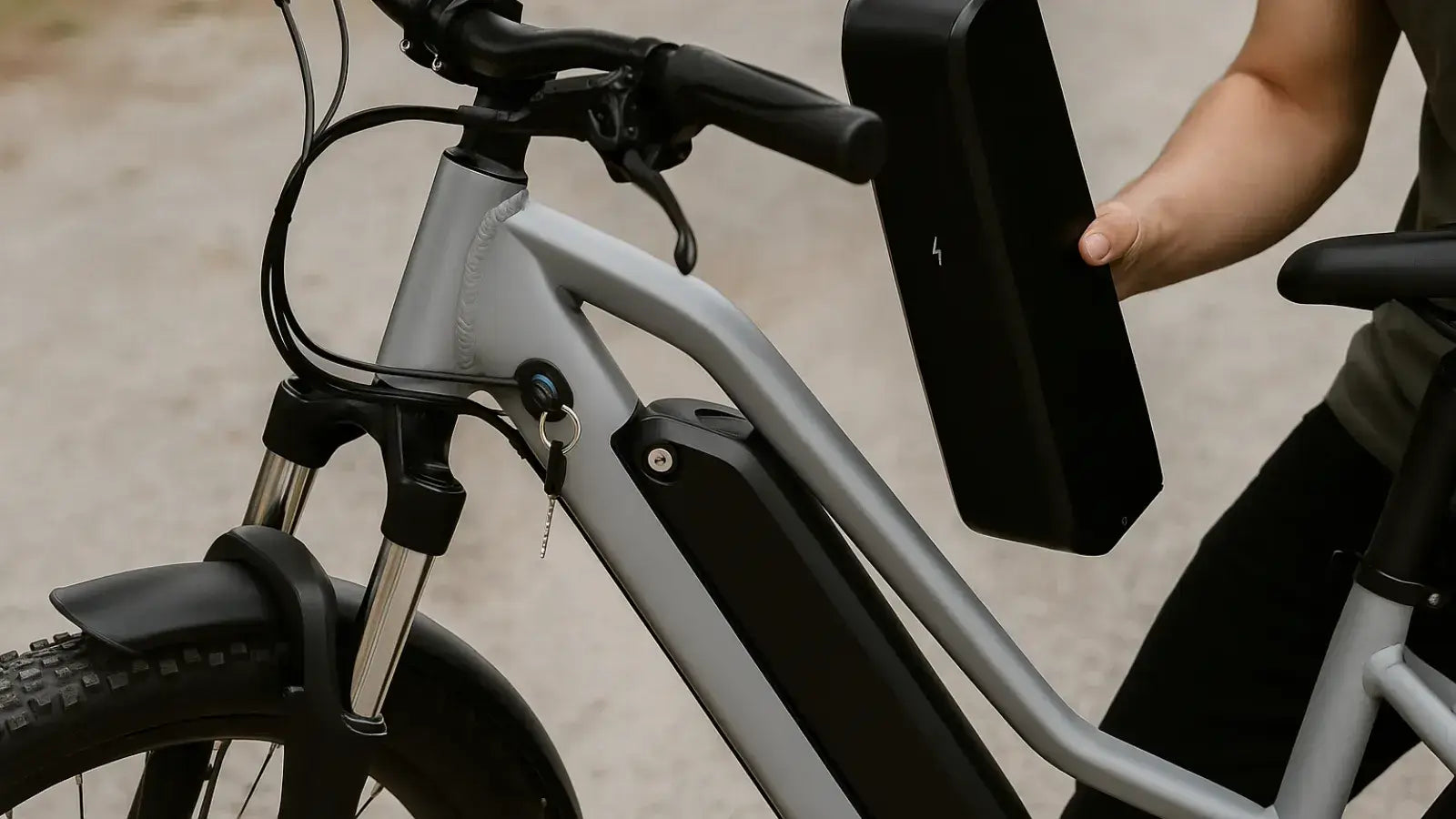
Always use the charger that came with your electric bike battery. It's not just a power cord - it's a smart device made to work with your battery's management system (BMS). The BMS acts like the battery's computer, protecting it from overcharging, over-discharging, and overheating. A different charger might have the wrong voltage or power output, or it might not communicate properly with your battery, which could damage the BMS or battery cells and create fire risks.

Balancing Battery Cells
Your battery pack contains many individual cells connected together. Over time, these cells can end up with slightly different charge levels. Cell balancing is a process managed by the BMS that makes all cells have the same charge level so the whole pack works together properly. This process usually only happens at the very end of charging, as the battery gets close to 100%.
While we suggest not charging to 100% regularly, we do recommend doing a "balancing charge" to 100% about once every month or two. This helps reset the BMS and keeps the whole pack healthy. Let the battery stay on the charger for an hour or so after it reaches 100% to give the BMS time to balance all the cells.
Physical Care and Cleaning
This step is simple but people often forget about it. Keep your battery's case and charging contacts clean and dry. Use a dry cloth or one that's barely damp to wipe them down. If the contacts look dirty or have corrosion, gently clean them with a cotton swab and a small amount of rubbing alcohol. Make sure they're completely dry before putting the battery back in your bike. Also, handle your battery carefully. Dropping it can damage the cells inside or the BMS, which can cause it to fail.
Common Battery Myths Debunked
Wrong information can hurt your battery just as much as bad charging habits. Let's clear up some common myths that many people believe.
Myth: Always Drain to 0%
This old advice comes from nickel-cadmium (NiCd) batteries, which had a "memory effect" problem. Modern lithium ion battery for ebike technology doesn't have memory effects. In fact, as we've explained, draining your battery to 0% is one of the most stressful things you can do to it and should be avoided.
Myth: Freezers Make Batteries Last Longer
This myth is dangerous and completely false. While very cold temperatures do slow down chemical reactions, putting a battery in a freezer can cause water to form inside the case, leading to short circuits and rust. Also, charging a frozen battery creates serious safety hazards. Always keep your battery at stable, room-temperature conditions.
Myth: Any Charger Works Fine
As we mentioned earlier, this is false and risky. Using the wrong charger can lead to undercharging, overcharging, or in the worst cases, battery failure and fires. Your charger's voltage, power output, and connector are all specifically matched to your battery. Stick with the original charger that came with your bike.
When to Replace Your Battery
Even with perfect care, your battery will eventually wear out and need replacement. Knowing the warning signs helps you plan for a new battery before you get stuck with a dead one.
Signs of a Failing Battery
- Range drops dramatically: This is the clearest sign of battery problems. If a charge that used to give you 30 miles now only gives you 15 miles, your battery's capacity has faded significantly.
- Won't hold a charge: You charge it to 100%, but it drops to 70% overnight without being used.
- Shuts off without warning: The battery cuts power under load, like when climbing hills, even when the display shows plenty of charge left.
- Physical damage: Any swelling, cracks, or leaking from the battery case means critical failure. If you see this, stop using the battery immediately and ask a professional about safe disposal.
Choosing a Replacement
When you need a new electric bike battery, you'll want to make a smart choice. Today, lithium-ion technology is the clear industry standard, having replaced older, heavier types like lead-acid and Nickel-Metal Hydride (NiMH). Within lithium-ion batteries, you'll see different types like NMC (Nickel Manganese Cobalt), which is common in e-bikes because it balances energy and power well, and LiFePO4 (Lithium Iron Phosphate), known for lasting a long time and being very safe, though it's often heavier.
For most riders, buying a replacement battery from your bike's original manufacturer is the safest and easiest choice. If you're thinking about a third-party option, you must match three key specifications:
- Voltage (V): This must match your original battery and motor exactly. A 48V system needs a 48V battery.
- Amp-Hours (Ah): This is like the size of a gas tank. A higher Ah rating means longer range. You can often upgrade to a higher Ah battery for more miles, as long as the voltage matches and it fits your bike physically.
- Watt-hours (Wh): This is the total energy capacity. It equals Volts multiplied by Amp-hours (for example, 48V x 10Ah = 480Wh). It's the most accurate way to compare the "size" of different batteries.
Take Control of Your Battery's Future
Your e-bike battery represents amazing technology, and you have more control over how long it lasts than you might think. By moving beyond just "plug it in and hope for the best" and building some smart habits, you can fight back against normal wear and tear. Remember the three golden rules - charge between 20-80%, avoid extreme temperatures, and use proper storage practices - and you'll do more than anything else to protect your investment. Take good care of your battery, and it will give you thousands of miles and years of reliable, powerful performance.
Frequently Asked Questions
Q: How often should I charge my e-bike battery?
A: Charge your battery when it drops to around 20% rather than waiting for it to die completely. For daily use, charging to 80% is ideal unless you need the full range for a longer ride.
Q: Can I leave my e-bike battery on the charger overnight?
A: It's best to avoid leaving your battery on the charger overnight. Once it reaches your target charge level (80% or 100%), unplug it to prevent keeping it in a high-stress, fully charged state for extended periods.
Q: What should I do with my battery during winter storage?
A: Store your battery at 40-60% charge in a cool, dry place between 50-77°F. Check the charge level every 2-3 months and top it up if it drops close to 20%.
Q: How do I know when my e-bike battery needs replacement?
A: Watch for signs like dramatically reduced range (half of what you used to get), failure to hold a charge overnight, unexpected shutoffs under load, or any physical damage like swelling or cracks in the battery case.
Q: Is it safe to use a different charger for my e-bike battery?
A: No, always use the original charger that came with your electric bike battery. Third-party chargers may have incorrect voltage, amperage, or communication protocols that could damage your battery or create safety hazards.


Leave a comment