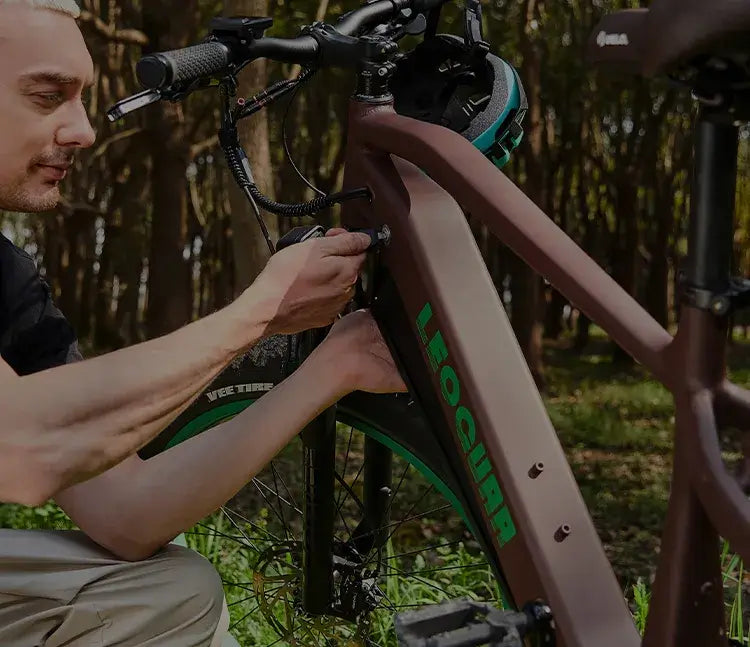
Woman standing next to a pedal e bike on a snowy road, showcasing its features and design in winter.

Pedal E Bike Sensor Issues Fixing: Fast-Complete Guide

It's one of the most frustrating e-bike moments: you start pedaling, expecting that familiar, smooth boost of power, and get... nothing. Your pedal assist system (PAS) has failed. Your high-tech ride suddenly feels like a very heavy, ordinary bicycle. Before you worry about expensive repairs, take a breath. Most e bike pedal assist sensor issues are surprisingly simple to diagnose and fix right at home with minimal tools. We're here to guide you through the process. This starts with the quickest checks, moves to a detailed diagnostic guide, and finishes with pro-tips to prevent it from happening again.

Quick Pedal Assist Checks

Before diving into the components, let's run through a five-minute checklist. These simple steps solve the vast majority of pedal assist problems. They are often overlooked in a moment of frustration. We've seen countless riders solve their issue right here.

Check Display & PAS Level: This may sound obvious, but it's the most common culprit. Is your e-bike's display turned on? More importantly, is the Pedal Assist System (PAS) level set to 1 or higher? If it's set to 0, the motor is intentionally disengaged, and no assistance will be provided. Cycle through the levels to be sure.

Confirm Battery Connection: A slightly loose battery can cause intermittent power cuts to the entire system, including the e bike pedal assist sensor. Remove your battery, check the contact points for any dirt or debris, and then firmly re-install it. Make sure it clicks and locks securely into place.

Inspect Brake Levers: Nearly all e-bikes have a motor cutoff safety feature built into the brake levers. If a lever is even slightly pulled, it sends a signal to the controller to cut power to the motor. Check that both brake levers are fully disengaged. Sometimes a sticky lever won't return all the way forward after being used. Gently push them forward to ensure they are fully reset.

Test the Throttle (If Equipped): If your e-bike has a throttle, does it work? This is a crucial diagnostic step.

  • If the throttle works but pedal assist doesn't: This is great news. It strongly suggests the issue is isolated to the pedal sensor system (the sensor, magnet ring, or its wiring) and not a larger problem with the motor or controller.
  • If neither the throttle nor pedal assist works: The problem is likely more systemic. It could be related to the controller, motor, or the main power supply from the battery.

Cadence vs. Torque Sensors

To effectively troubleshoot, it helps to know what kind of pedal sensor your e-bike uses. There are two main types: cadence and torque. Understanding the difference will clarify why your system might be failing. Think of a cadence sensor as a simple on/off light switch and a torque sensor as a sophisticated dimmer switch.

Cadence Sensors

A cadence sensor is the most common type found on commuter and budget-friendly e-bikes, especially those with hub motors. It works by using a ring of magnets mounted on your crank arm and a stationary sensor mounted to the bike frame. When you pedal, the magnets pass the sensor, which detects rotation. It only knows that you are pedaling, not how hard. It tells the motor to deliver a preset amount of power based on your chosen assist level.

Torque Sensors

A torque sensor is a more advanced technology typically found on mid-drive systems and premium e-bikes. It measures the actual force or "torque" you are applying to the pedals. It uses a precision strain gauge to do this. The harder you pedal, the more power the motor delivers, creating a seamless and intuitive amplification of your own effort. This provides a very natural ride feel.

Feature Cadence Sensor Torque Sensor
Measures Pedal rotation (RPM) Pedal force
Ride Feel "On/Off" surge of power Smooth, natural, intuitive
Common On Commuter, budget e-bikes Mid-drive, performance e-bikes
Troubleshooting Often related to alignment/magnets Can be more complex, internal

For a more technical deep-dive into how these systems are designed, e-bike specialists offer detailed explanations on the different types of pedal assist systems.

Diagnosing Your Pedal Sensor

If the quick checks didn't solve your problem, it's time to perform a more detailed inspection. The following steps are methodical and designed to pinpoint the exact cause of your pedal sensor failure. This process is focused on cadence sensors, as they are far more common and more prone to simple physical issues.

1. Visual Inspection

First, locate the pedal sensor. On most bikes, it will be a small electronic sensor mounted to the frame's chainstay or seat tube, very close to the pedals on the non-drive side (the left side). You will see a corresponding plastic or metal disc with several small magnets embedded in it, attached to the inside of the crank arm. Get a good look at this area. Is it caked in mud or road grime? Is the sensor dangling by its wire? Has the sensor body been knocked sideways or does the magnet disc look warped?

2. Check Sensor and Magnet Alignment

This is the single most common point of failure for a cadence-based pedal assist system. The gap between the magnetic disc and the sensor needs to be very small and consistent. We've seen countless pedal assist issues resolved right here. A bike falling over in the garage is often enough to knock the magnet disc just far enough away to stop it from working. The ideal gap is typically between 1-3mm. A good rule of thumb is the thickness of a credit card. Slowly rotate the crank and watch the gap. Does it stay consistent, or does the disc wobble and move further away?

The Fix: If the gap is too large, you can often gently bend the sensor's mounting bracket to move it closer to the magnet ring. If the magnet ring itself has slid down the crank arm, push it back up into position. Ensure it's close but not touching—you should be able to rotate the crank freely without any scraping or contact.

3. Inspect Wiring and Connectors

Your pedal sensor has a wire that runs from the sensor up to the main wiring harness, where it connects to the controller. Carefully trace this wire along its entire path. Look for any obvious signs of damage: cuts, scrapes, or areas where the wire has been pinched or stretched.

Next, find the connector. Most pedal sensors have a small, waterproof quick-disconnect plug, often located near the bottom bracket area. It will typically have 3 pins. Carefully unplug it. Inspect the inside of the connector. Are any of the pins bent, broken, or green with corrosion? Blow out any debris and plug it back in firmly, ensuring it's fully seated and the connection is secure. A loose connection here is another frequent and easy-to-fix culprit.

4. Test the Sensor's Output

This step is for more advanced users who are comfortable with basic electronics and have a multimeter. If the physical inspection and alignment checks didn't work, testing the sensor's electronic output is the final step before declaring it faulty.

  1. Set your multimeter to the 20V DC setting.
  2. Unplug the sensor connector. You will need to probe the pins on the sensor side of the plug. Wire colors vary by manufacturer, but typically you'll find a black (Ground), red (5V Power), and a third color like green, blue, or white (Signal).
  3. With the bike's battery on, connect the multimeter's black probe to the ground wire's pin and the red probe to the signal wire's pin.
  4. Slowly rotate the crank so the magnets on the disc pass by the sensor.
  5. You should see the voltage on the multimeter pulse between a low value (near 0V) and a high value (often near 5V) as each magnet passes the sensor.

If the voltage remains stuck at 0V, 5V, or doesn't change at all as you rotate the pedals, the sensor itself has likely failed and needs to be replaced. If you're unsure about this process, many comprehensive e-bike troubleshooting guides can offer additional visuals.

A Simple Diagnostic Flowchart

To simplify the process, follow this logical path to find your problem.

  • Start Here: Does your throttle work?
  • YES -> The problem is in the Pedal Assist System.
    • Next Question: Is the sensor/magnet disc clean and aligned (1-3mm gap)?
    • NO -> Clean and align it. This is your most likely fix. Test the bike.
    • YES -> The physical setup is okay.
      • Next Question: Are the wire and connector secure and undamaged?
      • NO -> Secure the connector or check for wire damage. Test the bike.
      • YES -> The wiring looks good. The pedal sensor itself has likely failed. It's time to consider a replacement.
  • NO (or I don't have a throttle) -> The problem could be the pedal sensor, controller, or motor.
    • Action: Go through all the pedal sensor checks above first. If nothing works, the issue is more likely with the controller or motor, and it may be time to see a professional.

Prevention and Upgrades

Once you have your pedal assist working again, a little proactive care can prevent future headaches. You can also consider upgrades to improve your ride experience.

Proactive Maintenance Tips

  • Regular Cleaning: After a wet or muddy ride, take a moment to wipe down the pedal sensor and magnet disc area with a damp cloth. Keeping this area clean prevents grime from interfering with the sensor's reading.
  • Periodic Inspection: Once a month, give the area a quick 30-second visual check. Confirm the sensor-to-magnet gap is still tight and that the wiring hasn't come loose.
  • Secure the Wire: Make sure the wire coming from the pedal sensor is neatly secured to the bike frame with zip-ties. A loose, dangling wire is at risk of being snagged by a branch, your shoe, or the pedal itself.

Considering an Upgrade?

  • More Magnets, Smoother Response: If you have a basic cadence sensor with 6 or 8 magnets, upgrading to a disc with 12 magnets can make a noticeable difference. More magnets mean the sensor detects pedal movement more quickly, reducing the "lag" before the motor kicks in and providing a smoother engagement.
  • Torque Sensor Conversion: For the ultimate ride-feel upgrade, some e-bike systems can be converted from cadence to torque sensing. This is a complex job that usually requires replacing the bottom bracket and sometimes the controller. However, the result is a highly intuitive and natural-feeling assist that truly feels like an extension of your own power.
ebike torque sensor

When to Call a Pro

DIY repair is empowering, but it's also important to know your limits. It's time to visit your local e-bike shop if:

  • You have performed all the checks in this guide, and the pedal assist is still not working.
  • You see error codes on your display that you can't clear.
  • You suspect the problem is with the motor or the controller (e.g., you smell burning electronics).
  • You are not comfortable or confident working with electronic components and wiring.
  • Your e-bike is still under warranty. Performing these repairs yourself could potentially void it, so check with the manufacturer first.

Conclusion

Losing your pedal assist function can be a major disappointment, but as you've seen, the solution is often simple and requires no special tools. By following a logical process—checking the basics, inspecting the sensor alignment, and examining the wiring—you can solve the majority of pedal sensor issues yourself. Remember that a misaligned sensor and magnet disc is the number one culprit. By taking control of your electric bike maintenance, you not only save time and money but also gain a deeper understanding of how your incredible machine works. Happy riding!

Frequently Asked Questions

Q: How do I know if my e-bike has a cadence or torque sensor?
A: The easiest way to tell is by how your bike responds when you pedal. If the motor kicks in with a noticeable surge after you start pedaling, you likely have a cadence sensor. If the power feels smooth and increases gradually with how hard you pedal, you probably have a torque sensor. You can also look for a magnet disc on your crank arm - this indicates a cadence sensor.

Q: What's the ideal gap between the pedal sensor and magnet disc?
A: The ideal gap is typically between 1-3mm, about the thickness of a credit card. The gap should remain consistent as you rotate the crank. If the gap is too large or varies significantly, the sensor won't read the magnets properly and your pedal assist won't work.

Q: Can I ride my e-bike if the pedal assist sensor is broken?
A: Yes, you can still ride your e-bike manually like a regular bicycle, though it will feel heavier than normal. If your bike has a throttle, you can also use that for motor assistance. However, you won't have the benefit of pedal assist until the sensor is repaired or replaced.

Q: How much does it cost to replace a pedal sensor?
A: A replacement cadence sensor typically costs between $15-40 for the part itself. If you do the installation yourself, that's your only cost. Professional installation at a bike shop usually adds $30-60 in labor costs. Torque sensors are more expensive and complex to replace.

Q: How often should I clean and inspect my pedal sensor?
A: You should give your pedal sensor area a quick visual check once a month and clean it after any particularly muddy or wet rides. This simple maintenance takes less than a minute but can prevent most sensor-related problems. Regular cleaning is especially important if you ride in dusty or muddy conditions frequently.


Leave a comment

Your comment will be visible once approved. Don’t worry—your personal information (including your email address) will never be published or shared.

We're committed to protecting your privacy. Your email will only be used to verify your comment and will never be made public. This site is protected by hCaptcha and its Privacy Policy and Terms of Service apply.


Related Product

Flippo Folding Ebike
$1,069.00
Shop Now

Lastest Blog Post

Category