




High Power Electric Bike: How Motor Wattage Affects Max Speed
Does More Wattage Equal More Speed?
Yes, a higher wattage motor on a high power electric bike contributes to a higher potential top speed. But it's not a simple one-to-one relationship. The reality is more complex.
Think of wattage as the engine's muscle. It's more about raw power and acceleration than the final top speed you can reach. Higher wattage helps you get up to speed quickly and climb hills easily. In practice, other factors often matter more for your actual maximum speed. The battery's voltage, the bike's controller, the gearing, and legal rules all play important roles. This guide will break down all these parts so you can understand the full picture and make a smart choice when buying your first e-bike or upgrading.
Understanding Motor Wattage
To truly grasp e-bike performance, you first need to understand what "watts" represent. This basic knowledge will clear up common mistakes and give you the right terms to use.
Watts as a Measure of Work
A watt (W) is a unit of power, which is the rate at which energy is used or work is done. In an e-bike, it measures how quickly the motor can convert electrical energy from the battery into mechanical force to turn your wheels. Here's a simple comparison: If torque is the raw strength your legs have to push down on the pedals, wattage is how fast you can apply that strength to spin the cranks. A high-wattage motor can deliver a lot of energy very quickly, resulting in strong performance.
Nominal vs. Peak Wattage
When you see a wattage number advertised, it's important to know whether it's nominal or peak power. Nominal Power is the continuous power output a motor can maintain over a long period without overheating. It's the most reliable figure for comparing the baseline performance of different motors. Peak Power is the maximum power the motor can output for short bursts, used for a few seconds during hard acceleration or when starting on a steep hill.
Many manufacturers show peak power because the number is bigger and more impressive. Be aware that a motor rated at 750W nominal might be capable of peaking at 1200W or more. Always look for the nominal rating for a true comparison.
How Wattage Impacts Your Ride
Higher wattage translates directly to a more dynamic riding experience. Here is what you will feel:
Acceleration: A higher-wattage motor provides quicker, more forceful acceleration from a standstill. This is especially useful in city traffic for getting ahead of cars at an intersection. Hill Climbing: This is where wattage truly shines, as more watts mean more power to fight gravity, allowing you to maintain speed on steep inclines without having to stand on the pedals and strain.
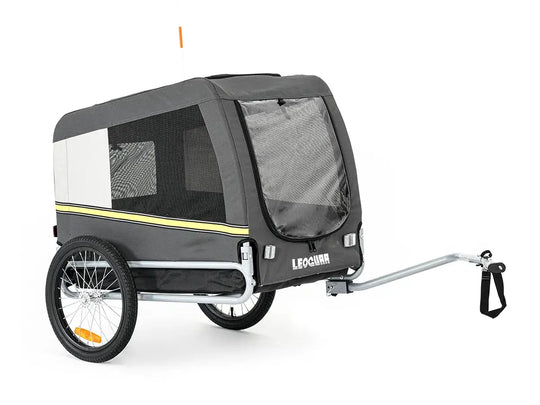
Hauling Capacity: If you plan on carrying heavy cargo, using a trailer, or are a heavier rider yourself, a high-wattage motor provides the necessary power to move the extra weight without struggling.
Beyond Just Wattage
A high power electric bike is a complex system, and the motor is just one piece of the puzzle. Focusing only on wattage is like judging a car's performance only by its horsepower. To understand what controls your e-bike's true speed and capability, you must consider the entire electrical and mechanical system.
Voltage: The Force Behind Power
If wattage is the rate of work, voltage (V) is the "pressure" that pushes that electrical energy to the motor. A higher voltage system (e.g., 52V, 72V) can deliver power to the motor more efficiently and forcefully than a lower voltage system (e.g., 36V, 48V). This allows the motor to reach its peak performance more easily and maintain higher speeds with less strain. For high-performance applications, higher voltage is key to unlocking a motor's full potential.
The Controller: Your E-Bike's Brain
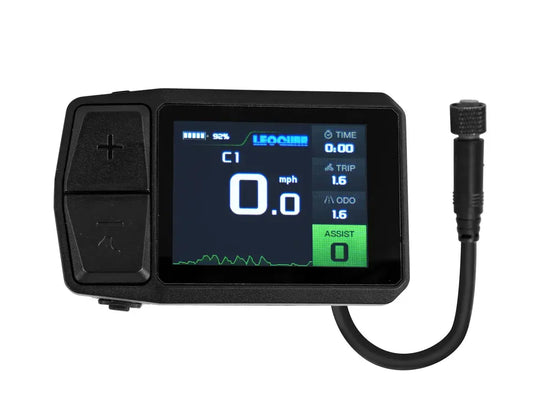
The motor controller is the electronic brain of your e-bike. It's a small box of circuits that draws power from the battery and precisely controls how much of it is fed to the motor based on your throttle or pedal-assist input. Importantly, the controller is often what limits your e-bike's top speed. A motor might be capable of 35 mph, but if the controller is programmed to cut off assistance at 28 mph to comply with rules, that's as fast as you'll go on motor power.
Torque: The Secret to Acceleration
Torque, measured in Newton-meters (Nm), is the rotational force of the motor. It's the twisting power that gets you moving from a dead stop. This is the force you feel when you first hit the throttle and the bike lunges forward.
For riders who tackle steep hills or carry heavy loads, high torque is arguably more important than high wattage. A powerful motor that produces 100 Nm of torque will feel incredibly capable on inclines. While wattage and torque are related, a high-wattage motor doesn't automatically mean high torque, especially in hub motors designed for high-speed riding on flat ground.
Legal Classes and Speed Limiters
This is perhaps the most significant factor determining your bike's top assisted speed. In the United States, there are three e-bike classifications that dictate legal use on public roads and bike paths. Note that rules in the EU and UK are much stricter, typically limiting motors to 250W and assisted speeds to 25 km/h (15.5 mph).
| Class | Max Assisted Speed | Throttle? |
|---|---|---|
| Class 1 | 20 mph | No (Pedal-assist only) |
| Class 2 | 20 mph | Yes |
| Class 3 | 28 mph | No (Pedal-assist only) |
Many bikes are sold as Class 2 but can be unlocked via the display settings to reach Class 3 speeds, where legally permitted.
Physical Factors
Finally, real-world physics always has a say. The bike's gearing must be tall enough to allow you to pedal effectively at high speeds. Fat, knobby tires will create more rolling resistance than slick road tires, lowering your top speed. Furthermore, your body weight, riding position (upright vs. tucked), and the terrain (flat vs. hilly, pavement vs. gravel) all introduce resistance that the motor must overcome.
The Real-World Feel of Power
Specifications and numbers only tell part of the story. To truly understand the difference, we need to talk about what these power levels feel like in the real world. As a team that has ridden everything from 250W commuters to 5000W+ custom builds, we can translate these specs into real experiences.
The 750W Sweet Spot
A 750W nominal motor is the gold standard for a reason. It's the powerful all-rounder. The feeling is one of confidence and capability. Acceleration is strong and brisk, allowing you to easily keep pace with city traffic. Most urban hills are conquered with minimal effort. The power is immediate and satisfying, yet it remains controllable and easy to use, never feeling like it will get away from you.
It still feels like you are riding a bicycle, just a very, very powerful one. This power level is the upper limit for Class 3 e-bikes and is the perfect match for most commuters and recreational trail riders.
The 1500W-2000W Zone
Riding a bike in this power range is a significant step up. You're now entering light electric moped territory. The acceleration is no longer just "brisk"—it's aggressive. A careless twist of the throttle from a standstill can easily lift the front wheel. The motor's presence is dominant, and hills become completely trivial, flattened with a surge of power. These machines feel less like bicycles and more like lightweight off-road motorcycles. Bikes with this much power are almost always intended for off-road use on private land, as they far exceed legal power limits for public roads in most regions.
The 3000W+ Beast
Welcome to the world of extreme performance. A bike with a 3000W+ motor is a specialized machine built for enthusiasts. The experience is defined by raw, unrelenting power.
The acceleration is violent, pushing you back in the saddle. The motor's whine is a constant reminder of the immense energy being unleashed. These are not bicycles anymore; they are purpose-built electric machines that require a heavy-duty frame, powerful motorcycle-grade brakes, and a high degree of rider skill to manage safely.
Their use is strictly limited to private property and dedicated off-road racing environments, as any bike that exceeds 250w of power is illegal for public road use in places like the UK and EU.
Your Perfect Power Match
The best e-bike isn't the one with the most power; it's the one with the right amount of power for you. Let's match your needs to the ideal motor wattage.
For the Urban Commuter
Your needs are reliability, efficiency, and the ability to safely navigate traffic. You need enough power for stop-light getaways and flattening overpasses, all while complying with local bike lane laws.
Recommendation: A 250W to 750W nominal motor is your sweet spot. A 500W or 750W motor provides a fantastic safety margin for quick accelerations, while a 250W or 350W motor is often lighter and more efficient for flatter commutes.
For the Weekend Trail Biker
You need power for challenging climbs and durable performance for long days on the trail. Here, torque is just as important as peak wattage to claw your way up steep, loose terrain.
Recommendation: A 750W to 1500W motor is ideal. We strongly suggest a mid-drive motor for this application, as it leverages the bike's gears for incredible climbing torque. Look for a motor with at least 80-120 Nm of torque.
For the Cargo Hauler
Whether you're delivering goods, carrying groceries for the week, or taking a child to school, your priority is torque. You need the muscle to get a heavy load moving from a standstill and up hills.
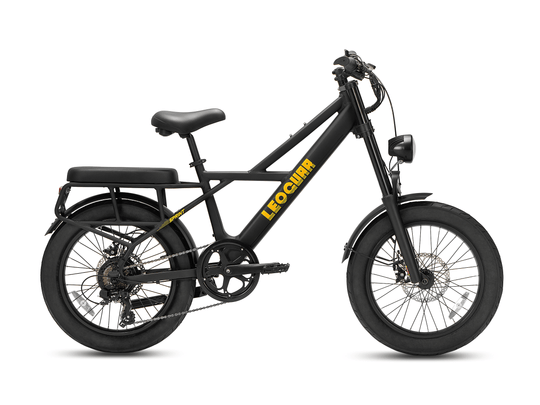
Recommendation: A 750W or higher nominal motor with a focus on high torque is essential. Look for ratings of 85 Nm or more. A robust geared hub motor or a powerful mid-drive are both excellent choices here, paired with a sturdy frame built for utility.
For the Off-Road Speed Enthusiast
Your goal is maximum performance on private land or designated OHV (Off-Highway Vehicle) trails. You want thrilling acceleration and the ability to maintain high speeds over rough terrain.
Recommendation: A 2000W+ motor is your starting point. These are specialized systems that must be paired with high-voltage batteries (60V or 72V), powerful hydraulic brakes, and robust full-suspension frames to handle the forces involved.

Conclusion: Power with Purpose
When choosing a high power ebike, it's easy to get fixated on a single number: wattage. However, a motor's watt rating is not a simple indicator of top speed. It's a measure of the motor's ability to do work—to accelerate you quickly, to power you up steep hills, and to haul heavy loads.
The actual top speed you experience is a result of a complete system working in harmony: the motor's power, the battery's voltage, the controller's programming, and the legal speed limits. The most important takeaway is that the ideal e-bike isn't just the one with the highest wattage. The ideal e-bike is the one whose power, torque, and design are perfectly matched to your specific riding needs.
By understanding these components, you can choose a bike that delivers not just power, but power with a purpose.
Frequently Asked Questions
Q: Can I increase my e-bike's speed by upgrading to a higher wattage motor?
A: Not necessarily. Your e-bike's top speed is often limited by the controller's programming and legal class restrictions rather than just motor wattage. You'd need to upgrade multiple components including the controller, battery, and possibly the frame to safely handle more power.
Q: Is a 750W motor always faster than a 500W motor?
A: Not always. Speed depends on many factors including voltage, controller settings, gearing, and bike weight. A 500W motor with higher voltage and better gearing might outperform a 750W motor with lower voltage in certain conditions.
Q: What's the difference between hub motors and mid-drive motors in terms of power delivery?
A: Hub motors deliver power directly to the wheel and are great for flat terrain and speed. Mid-drive motors work through the bike's gears, providing better torque multiplication for hills and cargo hauling, making them feel more powerful in challenging conditions.
Q: Are higher wattage e-bikes legal to ride on public roads?
A: In the US, e-bikes are generally limited to 750W for legal road use. In Europe and the UK, the limit is typically 250W. Higher wattage bikes may only be legal for private property or designated off-road areas. Always check your local regulations.
Q: How does battery voltage affect motor performance beyond just wattage?
A: Higher voltage allows the motor to reach peak performance more easily and maintain power at higher speeds. A 750W motor on a 48V system will feel less powerful than the same motor on a 52V or 60V system, even though the wattage rating is identical.



Leave a comment