




Fat Tire vs Mountain Bike: Which Ebike is Right for You?
When to Choose Each Bike Type
Pick a fat tire ebike if you want to ride anywhere. These bikes work great on sand, snow, and mud. They also give you a comfortable and stable ride for daily trips or easy rides. Choose a traditional mountain bike if you care most about trail performance, quick handling, light weight, and a real physical workout. This bike gives you the pure challenge of powering yourself up hills and through tough terrain.
This is your main choice: the motor-powered, go-anywhere ability of a fat tire ebike versus the quick, athletic performance of a classic mountain bike. One bike masters tough surfaces with ease. The other is a precise tool for handling challenging trails. They might look similar, but they serve very different purposes.
We will break down the key differences between a fat tire vs mountain bike to help you decide. We'll look at their basic design, compare how they work on different terrains, and figure out which rider fits each bike best.
- Core Design: What makes them totally different?
- Terrain Performance: Where does each bike really excel?
- Rider Profiles: Which bike matches your specific needs and goals?
- Ownership Costs: What are the hidden realities of maintenance and transport?
- Final Verdict: A clear, side-by-side summary to finalize your choice.
Core Design Differences
You need to understand the "why" behind their performance by looking at their basic parts. Each bike's design is built for a specific purpose, which creates very different riding experiences.
Tires: The Obvious Contrast
The most important feature is the tires. This one part controls much of how the bike behaves.
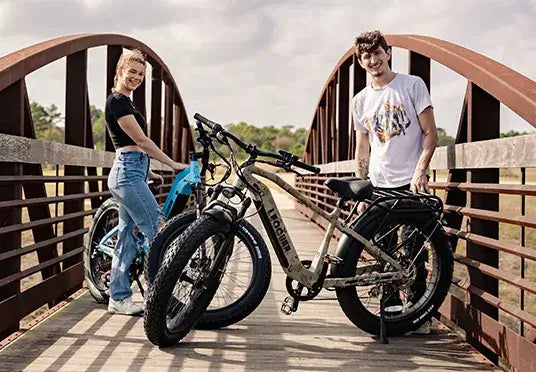
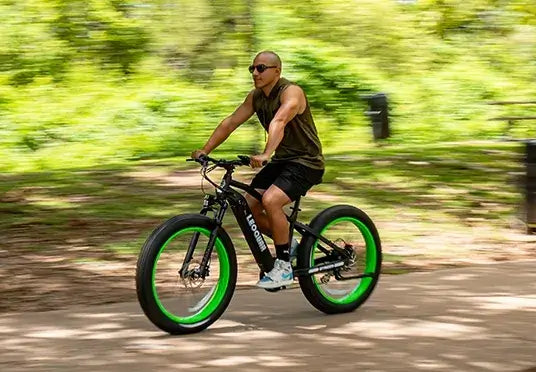
- Fat Tire Ebike: These bikes have very wide tires, usually 4.0 to 5.0 inches. They run at very low pressure, typically between 5-15 PSI. This low pressure lets the tire flatten out, creating a huge contact area with the ground. The result is a "floating" effect that lets the bike glide over soft surfaces like sand and snow instead of sinking in.
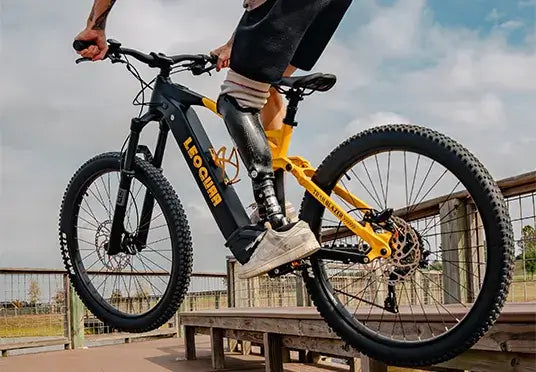
- Mountain Bike: A mountain ebike uses narrower tires, usually between 2.1 to 2.6 inches. These are pumped up to higher pressure, around 20-35 PSI. This design works best for grip on packed dirt and mixed trail surfaces while reducing rolling resistance, making them more efficient on firm ground.
Weight and Geometry
The frame and total weight are designed for two different jobs: stability versus quick handling.
- Fat Tire Ebike: These are heavy machines, often weighing 60-80 lbs (27-36 kg). The weight comes from the massive wheels, a strong frame built to handle them, and the added motor and battery system. The frame geometry is usually relaxed and upright, focusing on rider comfort and straight-line stability over sharp handling.
- Mountain Bike: A traditional mountain bike is much lighter, usually in the 25-35 lbs (11-16 kg) range. This lack of weight is key to its quick nature, making it easier to climb, speed up, and flip around corners. Its geometry is more aggressive, putting the rider in a forward-leaning position for better control and response on technical terrain.
The Power Factor
This is the great equalizer. The motor on a fat tire ebike completely changes everything.
- Fat Tire Ebike: Equipped with either a hub or mid-drive motor, the electric assist negates the major problems of the bike's weight and high rolling resistance. Pedaling feels surprisingly easy, and the motor gives the needed torque to push through terrain like deep mud or steep, loose hills where a human-powered bike would stop.
- Mountain Bike: This is a purely human-powered experience. Every foot of elevation is earned through physical effort. This creates a more intense workout and a more direct, unfiltered connection between the rider and the trail. The lack of a motor is a main reason it can stay so lightweight.
Suspension Systems
While both bikes can have suspension, its role and importance differ. Fat tires provide significant "passive" suspension through their sheer volume and low pressure, absorbing small bumps and trail chatter effectively.
Many fat tire ebikes use this to their advantage, sometimes only including a front suspension fork. Mountain bikes, especially those built for aggressive trail riding, rely on more sophisticated and finely-tuned front and rear suspension systems designed to handle high-speed impacts from rocks and roots. As our guide to fat tire e-bikes notes, the combination of wide tires and a motor creates a unique riding experience focused on unstoppable momentum.
Performance on Terrain
Here's how a fat tire ebike vs mountain bike stacks up in real-world riding scenarios.
| Terrain | Winner |
|---|---|
| Soft Surfaces (Sand, Snow, Mud) | Fat Tire Ebike |
| Technical Singletrack | Mountain Bike |
| Steep Climbs | It Depends |
| Pavement & Commuting | Fat Tire Ebike |
Soft Surfaces
Fat Tire Ebike: The wide, low-pressure tires provide incredible flotation. Combined with the motor's consistent power, it can plow through deep sand, fresh snow, or sticky mud with confidence.
Mountain Bike: The narrower tires will almost immediately sink and dig into soft ground, bringing you to a frustrating halt. The bike just wasn't built for these conditions.
Verdict: The fat tire ebike is the clear champion. It's what the bike was born to do.
Technical Singletrack
Mountain Bike: This is the MTB's home turf. Its light weight, responsive geometry, and nimble handling are essential for navigating tight switchbacks, hopping over logs, and choosing precise lines through rock gardens.
Fat Tire Ebike: On tight, twisty trails, a fat tire ebike feels clumsy and slow. From first-hand experience, trying to muscle its 70-pound bulk through a sharp, uphill corner is a lesson in frustration. It lacks the "flickable" nature needed for dynamic trail riding.
Verdict: The mountain bike wins by a landslide. It offers the agility and control necessary for both safety and fun on technical trails.
Steep Climbs
Fat Tire Ebike: The motor is a game-changer. It allows riders to spin up steep, sustained climbs without exhausting themselves. The wide tires also provide immense traction on loose, gravelly ascents where a narrower tire might spin out.
Mountain Bike: Climbing requires serious fitness. However, on technical climbs with large roots or rock ledges, the MTB's light weight makes it easier to lift the front wheel and maneuver over obstacles.
Verdict: It's a draw, depending on the climb. For pure, non-technical climbing power, the fat tire ebike is superior. For navigating tricky, obstacle-laden ascents, the mountain bike's maneuverability gives it an edge.
Pavement and Commuting
Fat Tire Ebike: The "cushion" from the large tires provides an incredibly smooth ride, absorbing potholes and rough pavement. While the tires have high rolling resistance, the motor makes this irrelevant, turning the bike into a comfortable and stable utility vehicle for all-weather commuting.
Mountain Bike: An MTB is more efficient on pavement if you're comparing it without a motor, but it's less comfortable. The knobby tires are noisy and create drag, and you'll feel every crack in the road.
Verdict: For comfortable, stable, and all-season commuting, the fat tire ebike is the better choice. It's a versatile urban assault vehicle, a point echoed in discussions from experienced riders on MTBR.com.
Which Rider Are You?
Forget the specs for a moment. The best way to choose is to match the bike to your personality and goals.
The All-Weather Adventurer
Who you are: You refuse to let snow, sand, or a muddy trail stop your ride. You need a dependable, year-round machine for exploring local beaches, forest service roads, or simply commuting to work no matter the forecast.
Our Recommendation: Fat Tire Ebike. Its unmatched traction and stability in poor conditions are its greatest strengths. The electric assist ensures you can get where you're going without being defeated by the elements or the bike's own weight.
The Technical Trail Enthusiast
Who you are: You live for the challenge of singletrack. Your ideal ride involves flowing through tight corners, navigating rock gardens, and maybe even getting a little air. The physical exertion is a core part of the experience.
Our Recommendation: Mountain Bike. A fat tire ebike is simply too heavy and unwieldy for this kind of riding. The lightweight, responsive nature of a modern mountain bike is non-negotiable for performance, fun, and safety on technical trails.
The Comfort-Seeking Rider
Who you are: Your priority is a smooth, comfortable, and low-impact ride. You might be returning to cycling after an absence, managing joint pain, or simply want to enjoy scenic bike paths without physical strain.
Our Recommendation: Fat Tire Ebike. The high-volume, low-pressure tires act as giant shock absorbers, creating a supremely plush ride. The stable, upright riding position and the gentle push from the motor inspire confidence and make cycling feel effortless and enjoyable, a sentiment often shared in discussions about real-world user feedback on bike comfort.
The Fitness-Focused Purist
Who you are: For you, cycling is first and foremost a workout. You want to maximize your calorie burn, strengthen your legs and lungs, and feel the direct reward for every ounce of effort you put into the pedals.
Our Recommendation: Mountain Bike. The absence of a motor guarantees that you are providing 100% of the power. It delivers a superior cardiovascular workout and a pure, unfiltered connection to the simple act of riding a bicycle.
Practical Ownership Costs
Beyond the ride itself, the day-to-day realities of owning each bike are quite different. These are the practical considerations often overlooked.
Maintenance and Repairs
Fat Tire Ebikes: We've found that finding replacement tires and tubes can be more difficult and expensive. A flat tire on the rear wheel of a hub-motor ebike is significantly more complicated to repair than on a standard bike. Long-term, you also have to consider the health and eventual replacement cost of the battery.
Mountain Bikes: Parts are standardized, affordable, and available at any bike shop. Repairs are generally simpler and cheaper for the average home mechanic.
Transportation and Storage
Fat Tire Ebikes: Their immense weight (60-80 lbs) makes them a serious challenge to lift onto a car rack. Furthermore, their wide tires won't fit in many standard bike racks. You will likely need to invest in a specific, heavy-duty ebike-rated rack. Their sheer size can also make them difficult to store in small apartments or sheds.
Mountain Bikes: Being light and slender, they are easy to lift, fit on any standard bike rack, and can be stored much more easily. You can even hang them on wall hooks in tight spaces.
Price and Value
Fat Tire Ebikes: The initial cost is higher due to the inclusion of a motor, battery, and controller. A quality entry-level model typically starts around $1,500 - $2,000. However, its value comes from its versatility as a potential car replacement for commuting and its ability to open up year-round riding.
Mountain Bikes: You can get a very capable entry-level hardtail mountain bike for under $1,000. The value is in its focused performance as a recreational and fitness tool. As noted by experts at BikeRadar in their guide to e-bike costs, the price premium for an ebike buys you accessibility and power.

The Final Verdict
The choice between a fat tire ebike vs mountain bike isn't about which is "best," but which is the right tool for the job you have in mind.
| Feature | Fat Tire Ebike | Mountain Bike |
|---|---|---|
| Primary Goal | Versatility & Comfort | Performance & Fitness |
| Best Terrain | Sand, Snow, Mud, Pavement | Technical Singletrack, Packed Dirt |
| Agility | Low | High |
| Stability | Very High | Moderate |
| Weight | Very Heavy (60-80 lbs) | Lightweight (25-35 lbs) |
| Workout Intensity | Low to Moderate | High |
| Maintenance | More Complex & Costly | Simpler & Cheaper |
| Ideal Rider | Commuter, Adventurer, Comfort-Seeker | Trail Enthusiast, Fitness Purist |
Your decision should be guided by where and how you plan to ride. If your vision involves exploring snowy trails, cruising down a sandy beach, or having a robust, comfortable commuter that laughs at potholes, the fat tire ebike is your clear winner.
If, however, your heart is set on the athletic challenge of technical trails, the thrill of speed and agility, and the pure physical reward of a great workout, the classic mountain ebike remains the undisputed king. Both bikes excel in their intended roles, so choose based on your riding style and goals.
Frequently Asked Questions
1. Can I use a fat tire ebike on mountain bike trails?
Yes, you can use a fat tire ebike on many mountain bike trails, but it works best on wider, less technical trails. The bike's weight and size make it challenging to handle tight switchbacks and technical obstacles that mountain bikes navigate easily. Check local trail regulations first, as some areas restrict ebike access.
2. How much more does it cost to maintain a fat tire ebike compared to a mountain bike?
Fat tire ebikes typically cost 2-3 times more to maintain than mountain bikes. Replacement tires cost $60-100 each versus $30-50 for mountain bike tires. You'll also need to budget for battery replacement every 3-5 years, which can cost $400-800. However, the motor and electrical components generally require minimal maintenance.
3. Which bike is better for beginners who want to start cycling?
A fat tire ebike is generally better for beginners because the motor assistance makes riding less intimidating and physically demanding. The stable, comfortable riding position and ability to handle various terrains without advanced skills make it more approachable. Mountain bikes require more fitness and technique to enjoy fully.
4. Can I ride a fat tire ebike in winter conditions?
Fat tire ebikes excel in winter conditions. The wide tires provide excellent traction on snow and ice when run at low pressure, and the motor helps you power through challenging conditions. Many riders use fat tire ebikes year-round, including for winter commuting. Just ensure you protect the battery from extreme cold.
5. How far can I ride on a single charge with a fat tire ebike?
Most fat tire ebikes provide 20-50 miles of range on a single charge, depending on factors like terrain, rider weight, assist level, and weather conditions. Riding in soft sand or snow, using high assist levels, and cold weather will reduce range. On pavement with moderate assist, you can expect closer to the upper end of this range.


Leave a comment