



Best Budget Electric Mountain Bike: How Low Can You Go?
The Big Question
You're looking for the best budget electric mountain bike. or 2025 and 2026, the search for the best e mountain bike is shifting toward real trail-ready mid-drive builds, not just cheap bikes with bigger batteries or flashy styling. You're asking the right question: How low can you go on price without giving up quality and safety? The internet has tons of options, from $800 "e-mountain bikes" on Amazon to $4,000 models from well-known brands. Across the broader e-bike market, most mainstream models cluster around $1,500–$1,700, while premium trail-focused electric mountain bikes often reach $5,000 or more, which is why true “budget” eMTBs occupy such a narrow but important middle tier.
The price gap is huge. The marketing claims can trick you. As industry experts who have ridden, fixed, and tested countless bikes, we're here to help you understand what's real and what's not.
This guide isn't trying to sell you anything. For beginners buying their first best e mountain bike, understanding these fundamentals is what separates a safe entry-level ride from an expensive mistake. It's here to teach you how to spot true trail-ready value. We will give you the knowledge to tell a real e-MTB from a cheap bike with a motor stuck on it. We'll explain the parts you can't skip. We'll break down the important choice between hardtail and full-suspension bikes when you're on a budget, and we'll show you the real price points where quality starts.
The Sub-$1500 Trap
Let's talk about the biggest problem: the super-cheap electric bikes you see on Amazon, Walmart, or other big stores. A bike sold as an "electric mountain bike" for under $1500, especially under $1000, is not a mountain bike. It's a city or casual bike made to look like one. Taking these bikes on real mountain bike trails isn't just annoying - it's dangerous.
The problems are everywhere. They use weak hub-drive motors that don't have enough power for steep hills and give jerky, unnatural power. The batteries often don't have safety certificates, which means they could catch fire, and they don't last long enough for a real trail ride. Frames aren't built for off-road stress. Brakes are too weak to stop a heavy e-bike going downhill, and the "suspension" forks are just bouncy sticks that don't actually control anything. Parts break fast when you use them on trails.
We see this in our shops constantly. A customer brings in a broken online bike, and fixing it to make it safe costs more than they paid for it. Stay away from this trap. A real e-MTB experience costs more for good reasons.
What Makes a Real E-MTB
So what makes a real, trail-ready best budget electric mountain bike different from the fakes? It comes down to parts designed to work together under the tough conditions of off-road riding. These are the four main things that make a quality e-MTB.
The Motor Matters Most
The biggest difference is the motor. A real e-MTB uses a mid-drive motor, not a hub-drive motor. Mid-drive motors from good brands like Bosch, Shimano, Brose, or Yamaha attach at the bike's pedal area. In 2025, riders comparing the best e mountain bike motor options often look at Bosch for proven durability, Shimano for smooth trail tuning, and newer systems like TQ or DJI for lighter performance-focused builds. This spot gives several key benefits: it feels natural by putting power through the bike's gears, it keeps the bike balanced for better handling on trails, and it gives better power for climbing steep, technical terrain.
Hub motors sit in the center of the rear wheel. They make the bike feel unbalanced and don't have the smart sensors that make a mid-drive feel like it's boosting your own power. For real mountain biking, a quality mid-drive motor is a must.
Battery and Range
The battery is your fuel tank. On a budget e-MTB, look for a battery with at least 500 watt-hours (Wh) of power. At the same time, some of the best e mountain bike designs right now focus on lightweight trail setups, where smaller batteries and compact motors reduce overall weight for a more agile ride.
Anything less, and you'll worry about running out of power on rides longer than an hour. More importantly, the battery must be from a trusted maker (like Samsung, LG, or Panasonic cells) and have safety certificates like UL 2849. This means it's been tested hard against breaking and fire risk. A quality battery that fits cleanly into the frame shows a well-designed e-MTB.
A Trail-Worthy Frame
An e-MTB frame takes huge forces from the rider, the trail, and the extra weight and power of the motor. A proper e-MTB frame, usually made of aluminum in the budget range, has modern trail geometry. Look for a "slack" head tube angle (around 65-67 degrees) for stability going downhill and a "steep" seat tube angle (around 75-77 degrees) for good climbing position. This geometry makes a bike feel confident and capable on different terrain, unlike the old, twitchy geometry of cheap fake bikes.
Brakes and Drivetrain
Controlling a 50-pound bike down a steep trail needs serious stopping power. This is why hydraulic disc brakes are required. Look for brakes from brands like Shimano, SRAM, or Tektro with at least 180mm rotors. Mechanical disc brakes or rim brakes are completely wrong for e-MTB use.
The drivetrain (shifter, derailleur, cassette) should be from a known mountain bike part line, like Shimano Deore or SRAM SX Eagle. These systems handle the high power of a mid-drive motor and shift reliably under pressure.
Hardtail or Full-Suspension?
This is the biggest choice you'll make when buying a budget e-MTB. Your choice affects cost, performance, and upkeep in major ways. A hardtail e-MTB has a suspension fork at the front but a solid rear frame. A full-suspension eMTB has both a suspension fork and a rear shock. For the same price, a hardtail will always have better parts than a full-suspension bike. The money saved by not having the rear shock, joints, and complex frame design goes into a better fork, stronger brakes, a more reliable drivetrain, and a higher-quality motor or battery.
A high-quality budget hardtail is incredibly capable and fun. It's efficient on climbs, teaches you to be a smoother rider, and needs much less maintenance. It's perfect for riders on smoother singletrack, fire roads, and flow trails. A budget full-suspension bike forces compromises. To hit a low price, makers must use a cheaper fork, more basic brakes, a lower-tier drivetrain, and a very simple rear suspension design. While it absorbs big bumps better than a hardtail, the suspension performance is often poor, feeling either bouncy or harsh.
However, if your local trails are constantly rocky and technical, the added grip and comfort of a full-suspension setup might be worth the part downgrade. The key is understanding this trade-off: better parts on a hardtail versus rear-wheel comfort on a full-suspension. For most new riders on a budget, we recommend a quality hardtail. That recommendation also matches broader market trends: analysts estimate the global e-mountain bike market at over $6 billion in 2025, with hardtail models remaining especially attractive to price-sensitive riders because they deliver lighter weight and better efficiency at lower cost.
Finding The Sweet Spot
The market for the best budget electric mountain bike breaks down into realistic price ranges. Understanding these brackets will help you set a practical budget.
| Price Tier | Price Range (USD) | Bike Type | Key Features |
|---|---|---|---|
| Danger Zone | Below $1,500 | "MTB-style" E-bike | Hub motor, uncertified battery, weak brakes, unsafe for trails. |
| True Entry-Level | $2,000 - $3,000 | Mostly Hardtails | Reputable mid-drive motor, certified 500Wh+ battery, hydraulic brakes, proper trail geometry. |
| Budget Performance | $3,000 - $4,500 | Quality Hardtails & Entry-Level Full-Suspension | Better suspension forks, stronger brakes, wider-range drivetrains, larger batteries (625Wh+). |
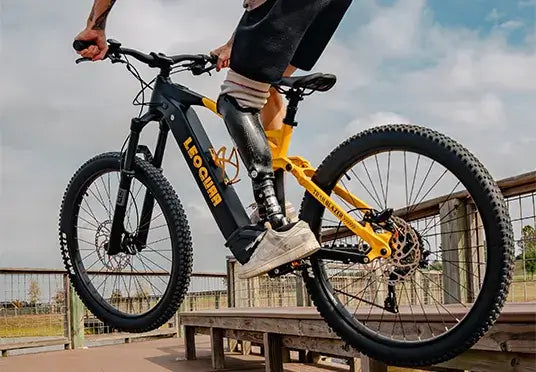
The real "sweet spot" for a first-time buyer looking for a durable, safe, and capable machine starts around the $2,500 mark. This is exactly where the best value best e mountain bike category lives — the under-$3,000 range that delivers real mid-drive performance without cutting safety corners. For example, value-tier builds in this bracket often deliver full-power trail specs—like the Leoguar Trailblazer at $2,899 with 85Nm of torque and a 720Wh battery—showing what a properly equipped best e mountain bike looks like before prices jump into flagship territory.
In this range, direct-to-consumer and some traditional brands offer hardtails that check all the essential boxes. Bikes like the Aventon Ramblas have made a name for themselves in this space by offering a real mid-drive system and solid parts at a price that was previously unheard of. As you move into the $3,000 to $4,500 range, you start to see big upgrades.
Suspension forks will have better damping and adjustability, brakes will be more powerful four-piston models, and you may find entry-level full-suspension bikes from brands like Polygon or Giant that offer a good path to rear suspension without critical safety compromises.

Our Top Budget Picks
While the "best" bike depends on your local trails and budget, we consistently recommend starting with a high-quality hardtail. It offers the best performance and reliability for your money. For pure value, the Aventon Ramblas is hard to beat. It was one of the first bikes to bring a proprietary but well-regarded mid-drive motor and a full Shimano drivetrain to the sub-$3,000 price point.
It's a benchmark for what a true entry-level e-MTB should be. If you can stretch your budget slightly, brands like us (a direct-to-consumer brand) often provide exceptional value, sometimes offering entry-level full-suspension models in the $3,500-$4,000 range that feature reliable Shimano or Bosch systems. For riders who want a best budget electric mountain bike that balances trail geometry, certified batteries, and reliable mid-drive support, direct-to-consumer builds are becoming the smartest choice heading into 2026. These bikes represent a smart entry point into the world of full-suspension without the severe compromises of cheaper alternatives.
Final Expert Advice
Investing in the best budget electric mountain bike is about buying into a system of quality parts that ensures safety, reliability, and fun on the trail. Resist the temptation of a price that seems too good to be true. Focus on the core pillars: a mid-drive motor, a certified battery, proper trail geometry, and hydraulic disc brakes. For most riders, a quality hardtail in the $2,500-$3,500 range is the smartest investment you can make. It will provide a fantastic riding experience and serve as a reliable partner as you explore the world of electric mountain biking.
Frequently Asked Questions
1. Q: Can I really get a good electric mountain bike for under $2,000?
A: Unfortunately, no. While you might find bikes marketed as electric mountain bikes under $2,000, they typically use hub motors, uncertified batteries, and components that aren't safe for trail riding. The true entry point for a quality e-MTB starts around $2,500.
2. Q: What's the difference between a hub motor and a mid-drive motor?
A: A hub motor is located in the rear wheel and makes the bike feel unbalanced with jerky power delivery. A mid-drive motor mounts at the pedal area, providing natural power through the bike's gears with better balance and climbing ability. Mid-drive is essential for real mountain biking.
3. Q: Should I buy a hardtail or full-suspension e-MTB on a budget?
A: For most budget buyers, a hardtail is the better choice. You'll get higher quality components like better brakes, drivetrain, and motor for the same price. Hardtails are also more reliable and need less maintenance. Only consider budget full-suspension if your local trails are extremely rocky and technical.
4. Q: How important is battery capacity for trail riding?
A: Very important. Look for at least 500 watt-hours (Wh) of capacity for trail riding. Anything less will leave you with range anxiety on longer rides. Also ensure the battery has safety certifications like UL 2849 and uses cells from reputable manufacturers like Samsung or LG.
5. Q: Are direct-to-consumer e-MTB brands reliable?
A: Many direct-to-consumer brands offer excellent value by cutting out dealer markups. Brands like Aventon, Polygon, and Vitus have proven track records. However, consider that you may have limited local service options compared to traditional bike shop brands. Research the brand's warranty support and find a local shop willing to service the bike.



Leave a comment