




5 Best Dog Carriers for Ebikes in 2026
In 2026 the choice of the best electric bike with a dog carrier will depend on your dog's weight, the mounting points on your bike, and the degree of stability you require when braking or turning. For the majority of riders a front basket is suitable for small dogs. A trailer is the safer option when it comes to heavier dogs. For calm dogs using utility-style eBikes a rear rack crate or basket generally provides the best balance.
| Rank | Dog Carrier Type | Best For | Typical Dog Size | Main Strength | Main Tradeoff |
|---|---|---|---|---|---|
| 1 | Front basket carrier | Small dogs who like eye contact | Toy and small breeds | Easy monitoring, simple loading | Steering feels heavier |
| 2 | Rear basket carrier | Calm small-to-medium dogs | Small to mid-size dogs | Better balance than front loads | You can’t watch your dog as easily |
| 3 | Bike trailer | Larger dogs and nervous riders | Medium and large dogs | Best stability and weight capacity | Wider, slower, harder to store |
| 4 | Cargo rack crate | Utility riders with trained dogs | Small to medium dogs | Strong, modular setup | Needs a strong rack and secure crate |
| 5 | Backpack or soft carrier | Very small dogs and short rides | Very small dogs only | Portable and low-cost | Less comfortable for longer rides |
What Makes a Good Electric Bike With Dog Carrier Setup?
An electric bike equipped with a dog carrier will keep your dog in place, make the bike more predictable, and provide you with adequate braking control whenever the extra weight causes a shift. While the carrier is important, the eBike itself is also significant—frame stability, tire grip, rack compatibility, braking, and electrical safety all have an effect on the ride.
Begin by weighing your dog. Then look at the weight limit stated for the carrier, the weight limit for the bike rack, and the total payload rating of the bike. The smallest of these figures is the one that applies. Even if the rear rack has a lower rating than the basket, the rack will still be the limiting factor.
Now consider the places where the carrier is attached. The carrier should be secured by bolts or straps to a solid part of the bike, not be loose on a rack that doesn't hold firmly or dangle from a handlebar which was never intended to carry a load. With an ebike that has a dog carrier, the motor makes it easy to forget that you're carrying extra weight; the brakes won't forget.
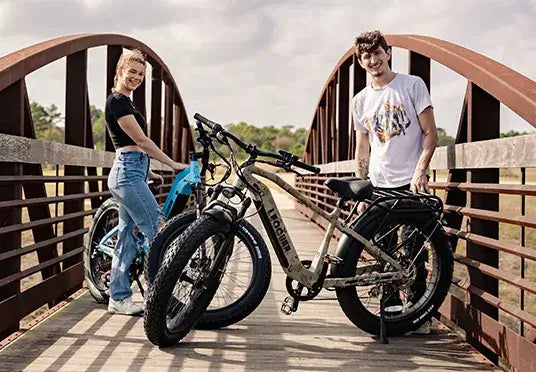
It is also the case that the type of bike is important. Depending on how you intend to ride, Leoguar provides dog owners with a number of options. The Sprint Fat Tire Utility eBike is equipped with a 3-in-1 rear mount for cargo, has a 350W motor, features fat tires, and offers a range of up to 55 miles, making it a practical choice as a base for rear-mounted pet equipment. The Fastron ST and Fastron SO include fat tires and full suspension for use on more difficult routes. The Zephyr cruiser models are suitable for leisurely rides on boardwalks and in the neighbourhood. It is also worth looking at the safety certification, particularly when you are fitting accessories and transporting a living passenger. Leoguar has full-bike UL-certified models, which gives riders yet another reason to feel confident when riding every day.
To clarify, UL describes its UL 2849 eBike electrical system certification as a safety standard for eBike electrical systems. PeopleForBikes also sets out the U.S. eBike classification system in its policy toolkit, since some routes do limit the use of a throttle or Class 3 speeds. When riding with a dog, going slower is generally better anyway.
1. Front Basket Carrier: Best for Small Dogs Who Want to See You
The front basket is the most rider-friendly type of dog carrier for small dogs since you are able to see your dog, talk to them, and pick up on signs of stress before it develops into panic. It is usually the simplest first configuration to set up for a toy breed or small terrier.
It is clear that you should have your dog sit in front of you, maintain visual contact with it, and thus make the loading process easy. For a dog that is anxious, the ability to see you can be of help; and for one that is curious, the front view keeps it interested without having to turn around.
However, fitting a front basket does affect the steering; even a dog weighing 12 pounds can make the handlebar seem slower and heavier, particularly when moving at low speed. If you also add a carrier, a leash attachment, a blanket, and a water bowl, the total weight increases. With an electric bike designed for dogs, this change in steering is more significant since the pedal assist can move the bike forward before you've finished adjusting.
A front basket should only be used within the dog weight limit that has been published by the carrier. When choosing a carrier, look for one that has a rigid base, a safety tether, sufficient depth to stop the dog from jumping, and a mounting system designed for bicycles. A basket that is merely intended for casual storage is not the same thing.
This is suitable for people who have small dogs and who take local rides, runs around the coffee shop, loops in the park, and low-speed trips on the paths.
People should avoid this: those with medium-sized dogs, dogs that rush at squirrels, or anyone who intends to do fast Class 3 riding. A front-loaded arrangement should not be combined with a 28 mph assist.
The best choice of bike would be an upright eBike, for example the Leoguar Zephyr ST or Zephyr SO, for short and casual rides; if you need more traction then a model with fat tyres will give you more confidence when riding on uneven surfaces.
2. Rear Basket Carrier: Best All-Around Choice for Calm Small-to-Medium Dogs
A rear basket is generally the cleanest option when it comes to electric bikes fitted with a dog carrier for people who need better handling than that offered by a front basket but who do not require a full trailer; the dog sits either on or near the rear rack, which in turn keeps the handlebar lighter and makes the bike easier to steer.
Rear baskets are most suitable for calm dogs since your dog is situated behind you and so you won't be able to see all its movements; if it stands up, shifts from side to side or barks at the bikes passing by, you will feel this through the frame. It is essential to use a good tether and a carrier with high sides.
Rack design is also an important factor here. While some eBikes have rear racks which are suitable for panniers but not well suited for a live load, others are constructed with utility riding in mind. The Leoguar Sprint is the most appropriate model in the Leoguar range since its 3-in-1 rear mount is designed for use with cargo, a children's seat, or gear bags. It doesn't mean that every dog basket will fit out of the box, however; what it does mean is that you'll have a more practical mounting surface to begin with.
When you are considering buying one, you should check four points: the rack's weight limit, the size of the rack deck, the mounting hardware, and the heel clearance. Your foot must not strike the carrier as you pedal. The basket should not prevent the saddle from reaching its correct height. And if the carrier is situated high, then you should practice stopping in an empty lot before taking your dog for a ride.
A rear basket matches well with a great many essential ebike accessories, such as mirrors, lights, and a bell. Mirrors are useful since they allow you to look back without having to twist your shoulders. Effective lights are important because drivers might not anticipate a bike carrying a dog braking suddenly.
This is suitable for people who have calm small to medium-sized dogs, for owners of utility eBikes, and for those who want a neat arrangement for carrying out regular errands.
People should leave it out if their dogs need continuous reassurance or if the dogs move about a lot. In that case, you should use a front basket or trailer.
3. Bike Trailer: Best for Medium and Large Dogs
A trailer is the most suitable kind of carrier for medium and large dogs since it shifts the dog's weight off the bike frame and places it on the trailer's own wheels. If your dog is too heavy for a basket, then do not attempt to use a basket and should instead use a trailer.
For many dog owners this is the most safe option, even though it isn't the most stylish. Trailers generally have a broader stance, a lower centre of gravity and more space for the dog to lie down. This is beneficial for older dogs, heavier dogs and those that tire easily. Furthermore, it provides a more tolerant arrangement for nervous riders since the bicycle isn't having to support the entire weight of the dog above the rear wheel.
The result is that you use more space. Since the trailer is wider than your bike, the way in which you pass poles, parked cars, trail gates, and other riders is affected. You'll need a greater amount of room when turning and you'll also have to reduce your speed earlier on because the trailer can push a little when braking, particularly when going downhill.
Make use of a trailer that is fitted with a suitable hitch, a flag, reflectors, ventilation, and an internal tether. The dog must not be loose inside the trailer even when the trailer is zipped up. The animals could be pushed forward if the trailer is suddenly braked. A padded mat will help to improve both grip and comfort.
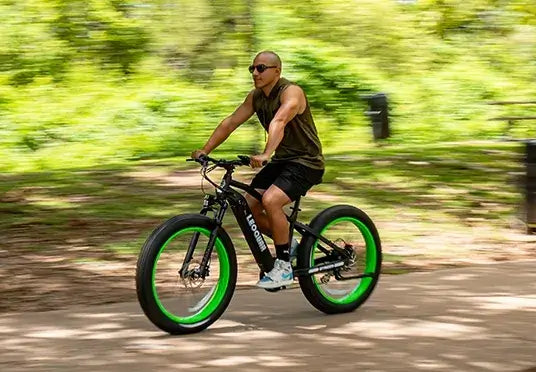
A fat-tired eBike is a good choice since the wider tyres provide better traction and comfort. Both the Leoguar Fastron SO and Fastron ST have 4-inch-or-greater fat tyres as well as front suspension, meaning they are more appropriate for mixed terrain than a commuter bike with narrow tyres. The Trailblazer is the performance model in the range, featuring a MotiNova mid-drive motor, a 720Wh battery, a range of up to 100 miles and a win in the 2025 E-Dirty Cross eMTB race. Nevertheless, the fact that a bike is high-performance doesn't mean that you should pull a dog along technical trails. Dog trailer rides should be limited to controlled surfaces.
This is suitable for owners of medium or large-sized dogs, for senior dogs, for dogs that are recovering from injury, and for riders who place a greater importance on stability than on compact storage.
People should leave it out if they have no storage space for their apartment, if they have to use narrow bike lanes, or if they need to take the setup up stairs every day.

4. Cargo Rack Crate: Best for Utility Riders With Trained Dogs
The cargo rack crate is the do-it-yourself version of the rear basket. Rather than purchasing a basket that is specific to a particular pet, you attach a solid crate or box to the cargo rack and then add a liner, a tether point, and maybe a cover. When it is carried out well, it is practical; when done in a casual way, it is risky.
The most suitable option is to begin with a utility eBike and a rack capable of carrying the load. The crate has to be secured in such a way that it won't slide, rotate or bounce. Zip ties by themselves are not sufficient when dealing with a moving dog. It is necessary to use hardware that is suitable for the rack and to regularly check it.
The crate should be the right size for your dog's body, not just according to its weight. A dog which can sit comfortably without being able to turn dangerously is easier to handle than one that slides about in a crate that is too large. Include a non-slip floor and add some padding, but don't make a soft bed that would make the dog unsteady.
This option is ideal for people who already consider cargo when they ride. Should you be using your bicycle for picking up groceries, carrying tool bags or running errands, a cargo crate might seem like a natural choice. The Sprint's practical design combined with its starting price of $1,050 through the manufacturer makes it the best Leoguar model for this kind of use. Thanks to its wide tyres it has good traction, and the rear mount provides a useful foundation for cargo-oriented arrangements.
The drawback is that all crates are not pet carriers; pet carriers generally have safety tethers, shaped bases, and tested mounting systems. A crate setup places greater demands on the rider, who has to check the bolts, the fit, the height, and the dog's behaviour.
This is suitable for people who have small to medium-sized dogs that are calm and who own a bike with a genuine rear cargo platform.
People should leave it alone if they are new to riding dogs, if they have a nervous dog, or if they don't want to frequently check the hardware.
For mounting-compatible gear, start with Leoguar’s eBike accessories collection and compare it against the carrier maker’s fit notes before buying.
5. Backpack or Soft Carrier: Best for Tiny Dogs and Short Trips
A backpack or soft carrier will do for small dogs on short journeys, but it is by far the worst option on this list since it means that the weight of the dog is borne by your body rather than the bicycle, which seems straightforward until you have to brake suddenly or go longer than you anticipated.
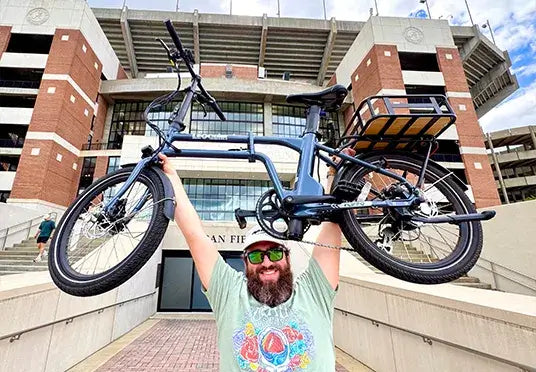
A backpack carrier is useful for small dogs since you don't have to change the equipment when you go into a store, take the dog on transit or carry it after the journey. It also means there's no need to worry about rack compatibility. People who ride compact folding eBikes might appreciate this simplicity. The Leoguar Flippo Folding eBike, with its quick-fold feature and emphasis on urban commuting, is the kind of bike that would suit a short trip around the city for which a soft carrier could be appropriate.
Comfort decreases quickly as the weight increases. The load is taken on by your shoulders, your lower back, and your balance; if the dog moves, then you move as well. On a hot day both of you can get overheated. A soft carrier provides less impact protection than a trailer or a rigid basket.
Go for a backpack that has ventilation, a solid base, secure closures, and either a collar or a harness tether. Do not use a normal backpack. Do not ride with a dog free in a sling. And do not think that a 'small dog' means it's safe; some small dogs are strong enough to twist free when startled.
This is suitable for people who have very small dogs, who ride on short city routes, and who have limited bicycle storage.
People should avoid it if they have back pain, have longer commutes, own heavier small dog breeds, or if their dogs don't like being in enclosed spaces.
How to Choose the Right Dog Carrier for Your eBike
Start by considering the weight. When your dog is close to the carrier's weight limit, it's better to choose a larger carrier of a safer type rather than using one that is nearly at its limit. A dog weighing 24 pounds in a basket rated at 25 pounds leaves very little room for movement, for accessories, or for the stresses that might occur in real life. For a full walkthrough of sizing, mounting and training your dog, see our guide to choosing a dog carrier for your electric bike.
Now match the carrier to the mounting points; front carriers require either a handlebar or a frame mount, while rear carriers need a rack that is capable of supporting both static weight and movement. Trailers must have a compatible axle or hitch area. If the manufacturer of the carrier advises against certain frame shapes or axle types, then you should follow that advice.
It is more important to brake than to go fast. When you have a dog on board, your braking distance increases and your room for error decreases. Until you know how the bike behaves, keep the pedal assistance at a low level. If you are using a Class 3 eBike, reserve the higher level of assistance for when you are riding alone. Dogs do not need speed; what they need is smooth starts and predictable stops.
Consider the surface as well—beach paths, tarmac trails, and quiet streets are quite different from gravel, grass, and potholes. Since fat tires provide better comfort and traction, it is for this reason that a lot of riders choose utility or fat tyre eBikes when they are taking their dogs for a ride. If your journeys involve rough tarmac or light off-road terrain, then the Fastron models and the Sprint from Leoguar are suitable options.
You should also take account of how the dog thinks, not just its physical dimensions; even a carrier that fits exactly might fail if the dog hates it.
Dog Acclimation: The Part Most Buyers Rush
When at home, place the carrier on the floor and allow your dog to smell it. Put a blanket into the carrier. Add some treats. After that, attach the carrier to the bike while the bike is parked and carry out a number of short sessions before you start moving it.
Now walk the bike with your dog in the carrier, without using the motor or pedalling, merely relying on movement, sound, and balance. If your dog remains calm, have a two-minute ride in a quiet area and stop before they become panicked.
Proceed slowly since five minutes may well turn into ten and then afterwards fifteen. Be on the lookout for signs of stress such as panting even when it's not hot, freezing, whining, pawing at the carrier, or attempting to jump. While some dogs enjoy the ride right away, others take weeks to get used to it and a few never enjoy it at all, in which case forcing the matter can only make each subsequent ride worse.
For the carrier, use a harness instead of a collar. It is important that a sudden stop does not place pressure on your dog's neck and that the tether be short enough to stop the dog from jumping but long enough to allow the dog to sit or lie naturally.
On warm days take along some water and stay away from the midday heat since the heat from the pavement has an effect on dogs even when they are riding, particularly if you stop to let them walk.
Best Leoguar eBike Pairings for Dog Carrier Setups
The Sprint Fat Tire Utility eBike is the Leoguar model most easy to recommend when it comes to rear baskets and cargo crates. It is affordable at $1,050, features a 3-in-1 rear mount, is fitted with a 350W motor and provides a range of up to 55 miles. The bike is designed with utility in mind, which is precisely what most dog carrier setups require.
The Fastron ST and Fastron SO are good choices when using trailers or going over poorly surfaced paths since both models have wide tyres and front suspension. You should choose the Fastron ST if easy mounting is important to you, and the Fastron SO if you prefer the step-over frame style.
For casual rides around the neighbourhood and along the coast, the Zephyr ST and Zephyr SO are suitable when used with small-dog carriers; their upright riding position and cruiser style make them appropriate for slower routes on which dog riding is in fact a pleasure.
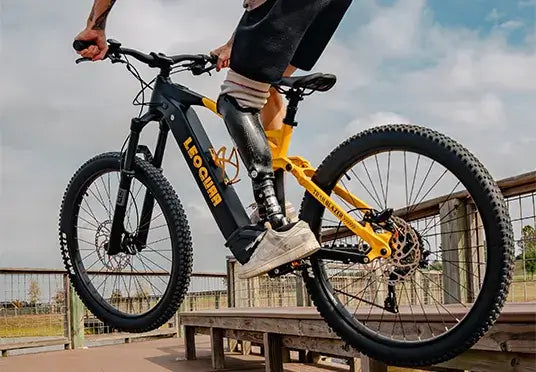
The Trailblazer is the top model for riders who are looking for serious eMTB performance, featuring a MotiNova mid-drive motor, a 720Wh battery and a range of up to 100 miles. However, it's important to keep the use of a dog carrier separate from aggressive trail riding, since although the Trailblazer's victory in a race is impressive, the dog carrier should be used on controlled routes only.
You can compare the full lineup in the Leoguar electric bike collection. Every model is full-bike UL certified, and Leoguar backs its bikes with a 2-year warranty and 14-day return policy. The company also ships from a U.S. warehouse in Sugar Land, Texas, which helps avoid customs delays for U.S. buyers.
Safety Checklist Before Every Ride
Check the carrier attachment before your dog gets in. Tug it side to side and front to back. If it moves by hand, it will move more on the road.
Clip the dog to a harness tether. Close every zipper, latch, strap, and cover. Check tire pressure, brakes, lights, and battery level. If you’re towing a trailer, check the hitch pin and safety strap.
Start with low assist. Avoid throttle bursts. Brake earlier than usual. Take turns wider. Ride like the dog’s weight will shift at the worst possible moment, because one day it will.
Also check local path rules. Some parks allow eBikes but limit speed or restrict certain classes. PeopleForBikes’ eBike class framework is a good starting point, but local rules still control where you can ride.
Closing Thoughts
If you’re building a dog-friendly eBike setup, Leoguar Bikes gives you practical options across utility, fat tire, cruiser, folding, and trail-ready models, all with full-bike UL certification and factory-direct pricing.
FAQ
Can you put a dog carrier on an electric bike?
Yes, but the carrier must match your dog’s weight, your bike’s rack or frame mounts, and your riding speed. A proper electric bike with a dog carrier setup should feel stable when starting, turning, and braking.
What is the safest eBike dog carrier?
For medium and large dogs, a trailer is usually the safest option because it keeps the dog low and carries the weight on separate wheels. For small dogs, a well-mounted front or rear basket can work if it has a rigid base and harness tether.
Can a dog ride in a front basket on an eBike?
A small dog can ride in a front basket if the basket is rated for the dog’s weight and the mount is secure. Keep speeds low because front weight changes steering.
Is a rear dog basket better than a trailer?
A rear basket is better for compact storage and calm small-to-medium dogs. A trailer is better for heavier dogs, nervous dogs, and riders who want more stability.
What eBike accessories do I need for riding with a dog?
At minimum, use a harness tether, lights, a mirror, water, and a carrier with secure mounting. You can browse Leoguar’s eBike accessories for gear that supports safer everyday riding.


Leave a comment