




Looking for the Best Electric Bike for Hunting? Here’s What to Know
If you are shopping for an electric hunting bike in 2026, a few trends are becoming hard to ignore. More hunters now want fat tire setups for soft ground, larger battery systems for longer days, and stronger rear racks that can handle real cargo instead of light commuter loads.
Another clear shift is toward better low-speed control. That matters more than top speed in the woods. A good electric hunting bike should feel steady when climbing, quiet when approaching a stand, and stable when towing gear through uneven terrain.
Why an Electric Hunting Bike Changes the Game
An e-bike isn't just a new toy. It's a strategic tool that fundamentally enhances your capabilities in the field. The advantages are immediate and significant. They validate why so many seasoned hunters are making the switch. From our experience, these are the core benefits:
Stealth & Silence: The quiet hum of an electric motor is worlds apart from the roar of an ATV or truck. You can glide into your hunting area, covering the last mile to your stand or blind with minimal noise. This dramatically reduces the chances of spooking game.
Extended Reach & Access: Cover miles of logging roads or two-track trails in minutes, not hours. This allows you to hunt deeper in public land. You can access remote honey holes that are off-limits to traditional motorized vehicles but too far to reach on foot before sunrise.
Reduced Scent & Fatigue: Arriving at your spot drenched in sweat is a liability. An e-bike's motor assist means you expend far less energy, keeping you cooler, drier, and minimizing your scent profile. You save your strength for the stalk and the pack-out, not the commute in.
Efficient Hauling: The dreaded pack-out becomes manageable. With robust frames and the ability to pull a cargo trailer, an e-bike allows you to transport tree stands, blinds, and other gear in. You can haul hundreds of pounds of game out with a fraction of the physical strain.

What Powers the Best Electric Bike for Hunting
To choose the right bike, you need to understand what makes it tick. Don't get lost in marketing jargon. Focus on these four critical areas that truly define the capability and performance of a hunting e-bike.
Motor Power and Type
The motor is the heart of your e-bike. The two primary types are mid-drive and hub-drive. The choice between them is arguably the most important decision you'll make, dictated entirely by your hunting terrain.
A mid-drive motor is located at the bike's crankset, delivering power directly to the chain. This allows it to leverage the bike's gears, just like you do when you pedal. As explained in resources detailing how mid-drive systems leverage the bike's existing gears, this results in incredible torque for climbing steep, technical terrain. A hub-drive motor is located in the hub of the front or rear wheel. It's a simpler, often more affordable system that provides power directly to the wheel.
| Feature | Mid-Drive Motor | Hub-Drive Motor |
|---|---|---|
| Best For | Steep hills, technical terrain, heavy loads | Flatter ground, budget-conscious buyers |
| Performance | High torque, uses bike's gears, natural feel | Simpler, less maintenance, good for speed |
| Weight Dist. | Central and low, better balance | On the wheel hub, can feel unbalanced |
| Hunter's Take | Ideal for mountain hunting and hauling game | Sufficient for Midwest plains or farm access |
Premium hunting brands often feature powerful 750W or 1000W mid-drive motors for this reason. A 2025 comparative field test of leading electric hunting bikes found that top-performing models equipped with dual mid-drive setups can deliver up to 2,000W peak power and 150–200 Nm of torque—capable of conquering technical climbs and hauling heavy trailers on rocky, backcountry terrain. These bikes also demonstrated consistent hill-climb performance and smooth low-speed control, reinforcing why high-torque mid-drive systems are favored in rugged hunting environments.
They are built for extreme conditions. Budget-friendlier but still highly capable models, like the Aventon Aventure.2, utilize robust hub-drive motors that are more than enough for rolling hills and flatter landscapes.
Battery Life and Range
Think of the battery as the gas tank. Its capacity is measured in Amp Hours (Ah) and, more importantly, Watt Hours (Wh). A higher Wh number means a larger "tank" and potentially longer range. However, manufacturer-claimed range can be misleading. In real-world hunting conditions—think hilly trails, 40+ lbs of gear, and frequent use of throttle—an electric hunting bike's range can drop by 30% or more compared to flat, unloaded road tests. This makes dual-battery systems or quick-swap spare batteries essential for longer or multi-day hunts in remote terrain. Real-world range is heavily influenced by your weight, cargo load, terrain (hills drain batteries fast), and how much you rely on the throttle versus pedal assist.
A loaded electric hunting bike will not deliver the same range as an unloaded bike on flat ground. Once you add hunting gear, extra layers, and a cargo trailer, battery use rises fast. In practical terms, a bike rated for 60 miles may feel more like a 25 to 40 mile machine in real hunting conditions.
The biggest range losses usually come from deep sand, mud, steep climbs, and heavy throttle use. If you plan to tow a trailer or pack out game, it is smarter to buy for worst-case range, not brochure range.
Expect a realistic range of 30-70 miles from a single, high-quality battery. For serious backcountry hunters or those planning multi-day trips, look for models that offer dual-battery compatibility. Some configurations can push the usable range to over 75 miles. This ensures you have enough power to get in, get out, and then some.
Frame, Suspension, and Durability
A hunting e-bike will be abused. It will be loaded down, ridden through mud and over rocks, and left out in the elements. A robust frame, typically made from 6061 aluminum alloy, is non-negotiable.
Suspension is another key consideration:
-
Hardtail: These bikes have suspension in the front fork but a rigid rear. This is the most common setup for hunting e-bikes. It offers a great balance of comfort, efficiency, and lower maintenance. It's sufficient for most logging roads and established trails.
-
Full-Suspension: These bikes have suspension in both the front and rear. Models like the Bakcou Storm are best-sellers because they provide unmatched comfort and control on extremely rough, rocky, and technical terrain. This is a premium feature for hunters tackling the most rugged environments.
Fat Tires and Brakes
The standard for any serious hunting e-bike is fat tires, typically 4 inches wide or more. These oversized tires act as a form of passive suspension. They provide a massive contact patch with the ground. This translates to incredible traction in mud, snow, sand, and loose soil—conditions you will inevitably encounter.
Just as important is stopping power. When you're rolling downhill with 50 pounds of gear and a 200-pound animal on a trailer, you need absolute confidence in your brakes. Hydraulic disc brakes are a must. They offer far superior stopping power and modulation compared to older mechanical disc or rim brakes. They perform reliably in wet and muddy conditions.
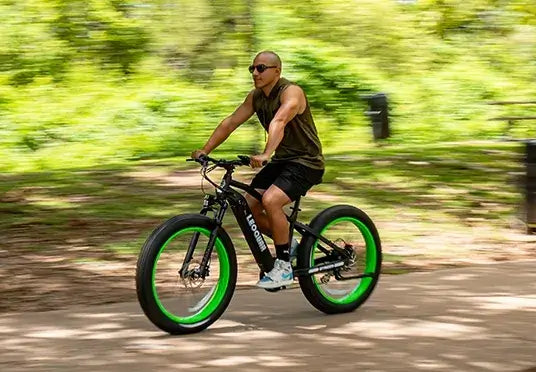
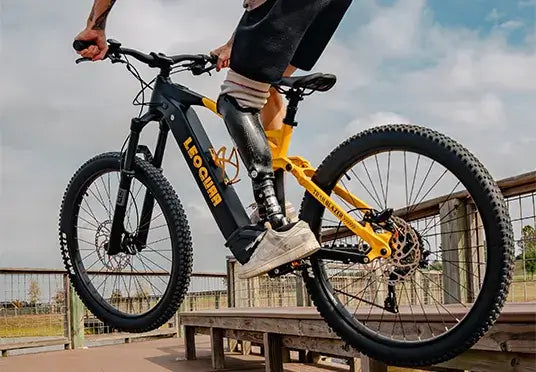
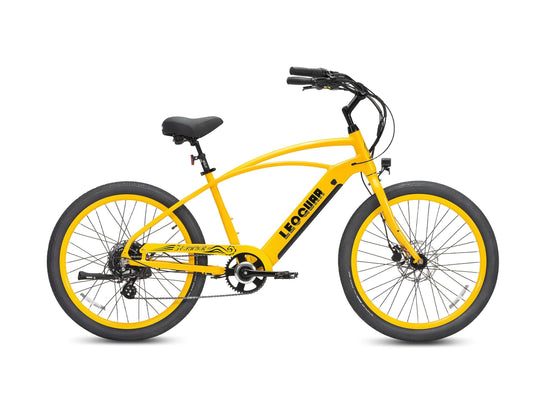
If you're looking for the best electric hunting bike tailored to serious backcountry use, prioritize models with 500-1000W mid-drive motors, 700–1400Wh battery systems, and payload capacities above 300 lbs. These purpose-built e‑MTBs dominate rugged terrain and long hauls with game-loaded trailers. For hunters on a tighter budget, fat-tire e-bikes like the Leoguar or Aventon Aventure still offer respectable torque and performance in flatter, wooded environments—at a fraction of the price.
In a 2025 gear roundup by Outdoor Life, electric hunting bikes were rated across real-use categories like “best for load hauling” and “best for rugged access.” Their editors consistently praised e-bikes for combining low noise, efficient energy use, and trail versatility—especially when compared to ATVs, which face more restrictions and higher operational costs.
Are Fat Tire Models Quiet Enough for Hunting? Yes, but tire choice and motor tuning matter. A fat tire electric hunting bike can stay very quiet on dirt, leaves, and soft ground if the tread is not overly aggressive and the drivetrain is well adjusted. In the field, sudden rattles from loose racks or fenders often create more noise than the motor itself.
For torque, most hunters should look beyond watt numbers alone. If you ride steep ground, tow gear, or hunt in snow and mud, strong low-end torque matters more than peak speed. That is why many hunters prefer an electric hunting bike that feels controlled under load instead of one that simply posts a higher top-speed claim.
Top Hunting eBike Features That Matter Most
Beyond the core bike components, several features and accessories separate a generic fat-tire e-bike from a purpose-built hunting machine. These are the details that show a company truly understands a hunter's needs. Specialist buyer’s guides in the hunting e‑bike niche recommend key features like walk-assist mode for steep inclines, integrated rear racks rated to 100+ lbs, and low-noise drivetrains with clutch-based chain tensioners. These aren’t luxury add-ons—they’re essential for safe, stealthy backcountry operation, especially when navigating tight game trails or hauling heavy meat loads in silence.
-
Heavy-Duty Cargo Racks: Standard commuter racks won't cut it. You need integrated, frame-mounted cargo racks with a high payload capacity—often rated for 50-100 lbs. These are essential for securely packing in your tree stand, blind, pack, and other bulky gear.
-
Game & Cargo Trailers: For hauling out big game, a trailer is a necessity. Look for brands that offer purpose-built trailers, like the single-wheel cargo trailers that attach to the rear axle. These are designed to track narrowly behind the bike. They navigate tight trails with ease while carrying significant weight.
-
Weapon Mounts: A dedicated, secure mount for your rifle or bow is a critical accessory. These mounts, often attached to the handlebars or rear rack, are designed to hold your weapon securely. They don't interfere with bike operation, protecting your investment and ensuring safety.
-
Noise & Finish: Stealth is key. The best hunting ebikes feature matte, non-reflective finishes in camouflage, olive drab, or sand colors to blend into the environment. Furthermore, high-quality components, from the motor to the chain guard, are designed for quiet operation. This minimizes noise in the field.

What Every Hunter Should Know Before the Ride
Are Electric Hunting Bikes Legal on Public Land and Trails? Sometimes yes, sometimes no. The answer depends on the land agency, the e-bike class, and whether the route is managed as motorized or non-motorized access. That is why an electric hunting bike may be legal on one service road but restricted on a nearby trail.
For hunters, the safest approach is to check the exact unit you plan to use. Public land rules are rarely uniform across an entire state. A quick check before the trip can save you from building your whole hunt plan around a route you cannot legally ride.
Owning the perfect bike is useless if you can't legally ride it where you hunt. E-bike regulations are a complex patchwork that varies dramatically by state, agency, and specific land management area. Understanding this is crucial to avoid fines and ensure you're a responsible user.
Compared to ATVs, electric hunting bikes are often seen as more trail-friendly and less disruptive. Many state agencies and federal bodies, such as the USFS and BLM, classify Class 1 and Class 2 e-bikes differently than motor vehicles—allowing access to certain non-motorized areas that ATVs cannot enter. This makes them a more versatile and legally flexible alternative in mixed-use lands.
First, know the three-class system used to define e-bikes in most states:
- Class 1: Pedal-assist only (motor engages only when you pedal), with a maximum assisted speed of 20 mph.
- Class 2: Throttle-on-demand (motor can be engaged without pedaling), with a maximum assisted speed of 20 mph.
- Class 3: Pedal-assist only, with a maximum assisted speed of 28 mph.
Many hunting-specific e-bikes are sold as Class 2 but can be programmed to operate under different classes. This is important because federal land managers like the U.S. Forest Service guidelines on e-bikes often restrict e-bike access to specific trails or areas. Generally, if a trail is open to motorized vehicles, an e-bike is allowed. If it's a non-motorized trail (open to hiking and traditional bikes), e-bike access is often prohibited or restricted to Class 1 only. State Wildlife Management Areas (WMAs) and state forests have their own unique rules. As many expert hunters who utilize e-bikes will tell you, the single most important step is to always check the specific regulations for the exact area you plan to hunt. A quick call to a local ranger station or wildlife office is the best way to get a definitive answer.
A Hunter's Final Checklist
Feeling ready to make a choice? From our experience in the field, this is the final mental checklist we run through before recommending a bike. Use these questions to guide your decision and ensure you get the right tool for your hunt.
-
Assess Your Terrain: Be honest about where you hunt 90% of the time. Are you climbing steep, rocky mountains in the West? Prioritize a high-torque mid-drive motor. Are you navigating rolling hills and muddy farm tracks in the Midwest or East? A powerful hub-drive motor will serve you well and save you money.
-
Calculate Your Load: What is the bike's total payload capacity? Remember to add your body weight, your gear's weight (pack, weapon, stand), and the potential weight of an animal. Many hunting models are rated for 300-350 lbs, but you must confirm this.
-
Evaluate Your Range Needs: How far is your typical round trip? If you're consistently pushing past 15-20 miles one way into the backcountry, a model with a large battery (750Wh or more) or a dual-battery option is a wise investment. Don't risk running out of juice miles from the truck. In hunting forums and rider communities, experienced users often recommend using lower-assist modes on the return trip when loaded with game to preserve battery life. Many also point out practical challenges like lifting 70–90 lb bikes into pickup beds or the need to reinforce rear wheels and racks to withstand rugged terrain when pulling trailers—details that first-time buyers often overlook.
-
Confirm the Local Laws: Before you add a bike to your cart, call your local land management office (USFS, BLM, State DNR). Ask specifically: "Are Class 2 e-bikes with a throttle allowed on the service roads/trails in [Your Hunting Area]?" Getting this confirmation first will save you a massive headache later.
-
Set a Realistic Budget: You can get a capable hunting ebike for around $2,000, but premium, feature-rich models from top brands can cost $5,000 or more. The higher price often gets you a more powerful mid-drive motor, full-suspension, higher-end components, and better warranty support. Determine what features are "must-haves" versus "nice-to-haves" to find the best value for your needs. For many hunters, a $2,000 electric hunting bike strikes the sweet spot between affordability and functionality. While it may lack the advanced torque or suspension of premium models, it can still cover 20–30 mile hunts, haul gear with add-on trailers, and offer a quieter, more cost-effective alternative to fuel-thirsty ATVs—especially when factoring in long-term savings on maintenance and permits.
The Final Verdict
The best electric bike for hunting is the one that reliably and effectively gets you and your gear where you need to go. It's a machine that extends your reach, enhances your stealth, and conserves your energy for the hunt itself. By focusing on the core components—motor, battery, and build quality—and matching them to your personal hunting landscape and legal requirements, you can confidently invest in a tool that will change the way you hunt for years to come.
Frequently Asked Questions
1. Q: What's the difference between a mid-drive and hub-drive motor for hunting?
A: Mid-drive motors are located at the bike's crankset and use the bike's gears for better torque on steep terrain. Hub-drive motors are in the wheel hub and are simpler but less effective on hills. Choose mid-drive for mountain hunting and hub-drive for flatter terrain.
2. Q: How far can I realistically travel on a single battery charge?
A: Expect 30-70 miles of real-world range depending on terrain, weight, and assist level. Hills, heavy loads, and throttle use drain batteries faster. For long backcountry trips, consider models with dual-battery options that can extend range to over 75 miles.
3. Q: Are electric bikes legal to use on public hunting lands?
A: It depends on the specific area and e-bike class. Generally, if motorized vehicles are allowed, e-bikes are too. Non-motorized trails often restrict e-bikes to Class 1 only. Always check with local land management offices before hunting.
4. Q: What payload capacity do I need for hunting?
A: Most hunting e-bikes are rated for 300-350 lbs total. This includes your body weight, gear, and potential game. Calculate your typical load including tree stands, packs, weapons, and the weight of animals you plan to haul out.
5. Q: Do I really need fat tires for hunting?
A: Yes, fat tires (4+ inches wide) are essential for hunting e-bikes. They provide better traction in mud, snow, sand, and loose soil while acting as passive suspension. The wide contact patch gives you stability and control in challenging terrain you'll encounter while hunting.
6. Q: Are electric hunting bikes more trail-legal than ATVs?
A: In many areas, yes. While ATVs are restricted to motorized routes, electric hunting bikes—especially Class 1 models—are permitted on some non-motorized trails. Always check with local land agencies, but e-bikes often offer greater legal flexibility for accessing sensitive terrain.
7. Q: How much range do I lose when carrying gear or towing a trailer?
A: Quite a lot in real hunting conditions. Once your electric hunting bike is loaded with gear or pulling a trailer, range can drop much faster than advertised. Hills, mud, sand, cold weather, and throttle-heavy riding all increase battery drain. If you expect to tow often, choose a larger battery than you think you need.



Leave a comment